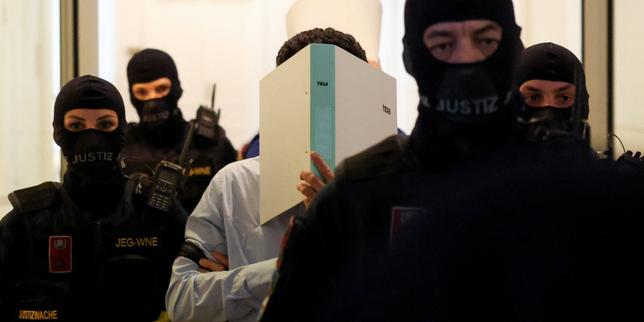
The headlines are predictable. They scream about a narrow escape, a averted tragedy, and a suspect who "pleads guilty to everything except attempted murder." Mainstream media treats this like a procedural drama, focusing on the legal semantics of a teenager's confession. They are missing the point. The real story isn't the plot itself; it’s the structural failure of how we protect mass culture and the naive belief that canceling a show equals solving a threat.
Safety is an illusion we buy with a ticket. When authorities pulled the plug on Taylor Swift’s Eras Tour dates in Vienna, they didn’t just stop a potential attack. They signaled a permanent shift in the power dynamic between disorganized extremism and global logistics. We are now living in an era where the mere intent of a 19-year-old with internet access can liquidate hundreds of millions of dollars in local economic activity.
The Myth of the Mastermind
The public is obsessed with the "criminal mastermind" trope. We want to believe that threats to our cultural icons are sophisticated, high-level operations. The reality is far more pathetic and, frankly, more dangerous. The Vienna suspect wasn't a tactical genius. He was a radicalized kid with a DIY chemistry set and a social media account.
By fixating on his plea—his claim that he didn't "intend to murder"—we are playing into a legalistic fantasy. Whether he intended to kill or just "scare" is irrelevant to the mechanics of security. If you build a bomb, the physics don't care about your heart’s intent. The media's focus on his psychological state provides a comfort blanket, suggesting that if we can just understand the "why," we can stop the "how."
I have spent years watching security protocols evolve from simple bag checks to biometric scanning and AI-driven crowd analytics. Here is the hard truth: no amount of technology stops a person who is willing to die in a parking lot. The "lazy consensus" says we need more surveillance. I argue we need a radical reappraisal of how we handle public assembly.
The Cost of Precautionary Cancellation
Canceling the shows was the "safe" move, but it was also a surrender. Every time a major event is scrapped due to a credible but unexecuted threat, the blueprint for future disruption becomes clearer. It costs a radicalized individual almost nothing to trigger a cancellation. It costs the organizers, the city, and the fans everything.
Consider the economic ripples:
- Hotel and Tourism Impact: Vienna lost an estimated 100 million Euros in direct and indirect spending.
- Insurance Premiums: Future tours will see astronomical spikes in "act of terrorism" coverage, costs that are passed directly to the fans.
- Psychological Toll: A generation of concertgoers is being conditioned to view joy as a high-risk activity.
We are teaching extremists that they don't even need to succeed to win. They just need to be loud enough to trigger a risk-assessment algorithm. The "intent" the suspect denies in court was achieved the moment the stage lights stayed dark.
The Security Theater Fallacy
Walk into any stadium today. You see the metal detectors, the clear bag policies, and the tactical vests. This is security theater. It is designed to make the consumer feel safe, not necessarily to make the venue impenetrable.
A perimeter is only as strong as its weakest point, which is usually the massive line of people waiting to get through the "secure" gate. We saw this at the Manchester Arena in 2017. The vulnerability isn't inside the hall; it's the bottleneck created by the security process itself. The Vienna plot reportedly targeted the area outside the stadium.
If we keep funneling tens of thousands of people into predictable, high-density zones under the guise of "checking bags," we are simply moving the target. True security requires decentralized entry, randomized timing, and a move away from the "fortress stadium" model.
The Confession as a Tactical Tool
The suspect's legal strategy—pleading guilty to the "minor" charges while dodging the "attempted murder" label—is a calculated move to exploit a soft legal system. It allows him to retain a degree of "activist" status while avoiding the harshest sentencing.
The industry insiders who actually manage these risks know that the legal outcome of one teenager is a footnote. The real concern is the democratization of terror. You don't need a cell, a handler, or a sophisticated weapon. You need a pressurized container and a crowd of 65,000 people.
The media focuses on his "guilt." We should be focusing on the vulnerability of our supply chains for joy. We have optimized our world for efficiency and massive gatherings, making us perfectly calibrated for maximum disruption.
Stop Asking if We Are Safe
People keep asking: "How do we make concerts safe again?" That is the wrong question. You cannot make a gathering of 70,000 people in a fixed location "safe" against a motivated actor. You can only manage the risk.
The honest answer that no promoter wants to admit is that we have reached the limit of what physical security can do. The next phase isn't better fences; it’s a fundamental change in how we consume mass media.
We are moving toward a bifurcated world:
- The Digital Spectacle: Hyper-secure, controlled, and ultimately sterile.
- The High-Risk Physical Event: Where the price of admission includes the unspoken acknowledgment that you are a target.
The Vienna suspect might be a delusional teen, but he exposed the fragile ceiling of our cultural security. He didn't need to kill anyone to prove that the current system is a house of cards held together by hope and expensive insurance policies.
Stop looking at the courtroom. Look at the empty stadium. That is where the real loss happened. We are trading our freedom of assembly for a sense of security that doesn't actually exist, and we are paying a premium for the privilege of being afraid.
If you want to protect culture, you don't cancel it. You harden the infrastructure and accept that risk is the price of a free society. Anything else is just a slow-motion retreat.
Pack the stadium or don't. But stop pretending a metal detector is a shield against a crumbling social fabric.