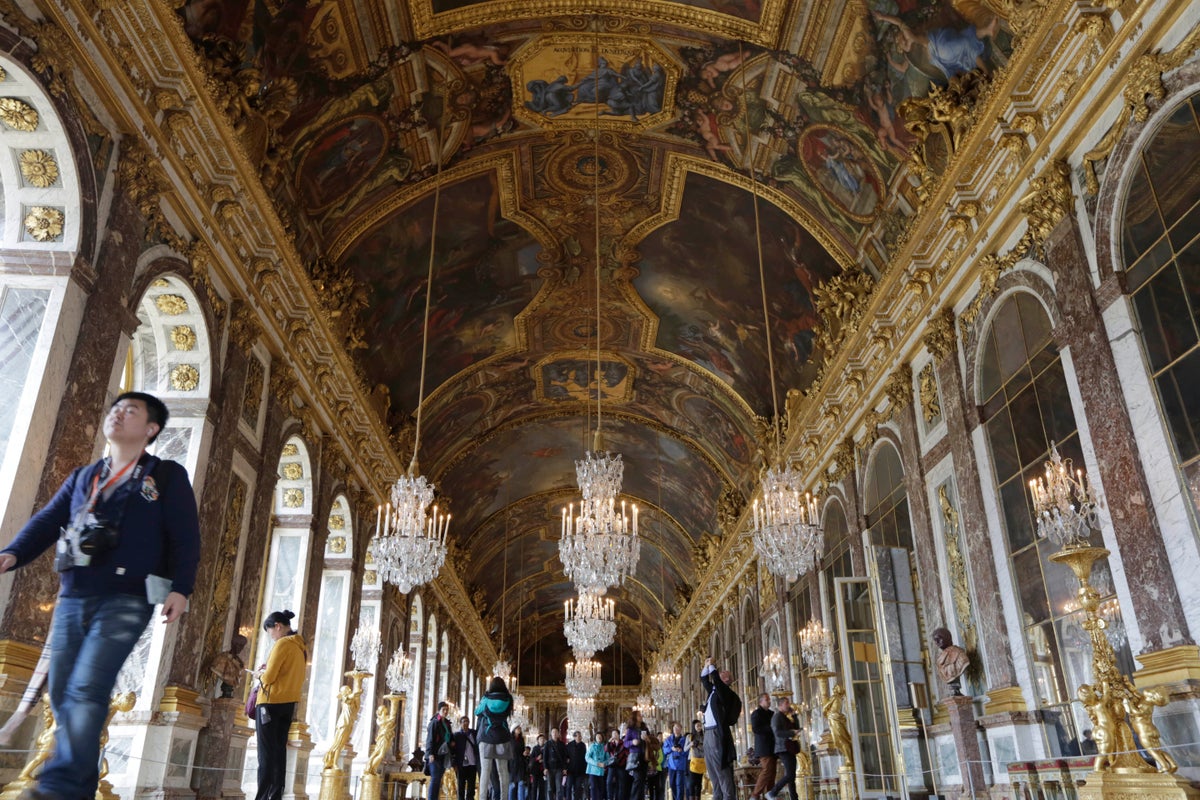
Political commentators love a good costume drama. When Emmanuel Macron rolls out the red carpet at Versailles, surrounding Donald Trump with gold leaf, mirrors, and the heavy weight of French history, the media fawns over the "masterclass in psychological diplomacy." They spin a narrative of a sophisticated European leader using grand tradition to tame an unpredictable American president.
It is a beautiful fantasy. It is also completely wrong.
The mainstream consensus views these high-stakes courtships as brilliant exercises in soft power. In reality, treating modern geopolitics like an 18th-century royal court is a fundamental misunderstanding of power dynamics. Macron’s reliance on historical theater does not project strength; it signals desperation. It assumes that a transactional, populist leader can be swayed by the ghost of Louis XIV.
The truth is far harsher. Versailles diplomacy is a relic that achieves nothing but fleeting photo ops and empty promises.
The Flawed Premise of the "Ego Trap"
Mainstream analysis repeatedly falls for the idea that foreign leaders can manage American populism through flattery and pomp. Journalists look at a dinner at the Eiffel Tower or a military parade on the Champs-Élysées and declare it a strategic triumph.
This view misunderstands the mechanics of modern leverage.
I have watched diplomatic strategy sessions where officials genuinely believed that a personalized gift or a historic venue could alter tariff policies or defense spending commitments. It never works. Transactional leaders operate on concrete data: trade deficits, domestic polling numbers, and tangible concessions. They do not trade steel tariffs for a nice view of the Hall of Mirrors.
When Macron uses Versailles, he is playing a game of optics that appeals to his domestic base and European elites who crave a sense of civilizational superiority. To the target of the courtship, however, the display confirms a different suspicion: that Europe is a living museum, rich in history but depleted of actual, hard-nosed leverage.
The Mirage of Soft Power
Let’s dismantle the premise of soft power in the current geopolitical era.
Political scientists like Joseph Nye defined soft power as the ability to co-opt rather than coerce. For decades, Europe relied on this currency. But soft power requires a shared respect for institutions and norms. When dealing with a political landscape driven by raw realism, soft power evaporates.
Imagine a scenario where a CEO tries to negotiate a merger by taking their rival to a historic opera house. The rival enjoys the show, eats the steak, and then goes back to the boardroom the next morning to demand a 40% discount on the acquisition price. The opera did not change the math. It just filled an evening.
The historical record bears this out. Macron’s initial attempts at "bromance diplomacy" during Trump’s first term—complete with white house tree-planting ceremonies and intimate dinners—yielded exactly zero policy shifts on the Paris Climate Accord, the Iran nuclear deal, or NATO funding. The optics were pristine; the policy outcomes were non-existent. Repeating the exact same playbook while expecting a different result is the definition of diplomatic stagnation.
What People Also Ask: Can Glamour Solve Hard Geopolitical Splits?
The common question framing this debate is flawed from the start. People frequently ask: How can European leaders best appeal to an American president's ego to protect trade?
The question assumes that foreign policy is dictated entirely by personal whims rather than systemic domestic pressures. No amount of French luxury can erase the political reality of an American administration elected on a platform of protectionism and industrial decoupling.
If you want to protect trade, you do not show off your history. You show off your vulnerabilities that carry mutual consequences, or you build credible economic deterrents.
- Flawed Question: "What historic venue will make the best impression?"
- Correct Question: "What economic retaliatory measures do we have ready if negotiations go south?"
Instead of designing menus, French strategists should be calculating tariff vulnerabilities in key electoral districts across the United States. That is the only language that registers in a transactional negotiation. Everything else is just expensive catering.
The Cost of the Versailles Illusion
There is a distinct downside to rejecting the glitz and choosing a colder, more transactional approach. It looks ugly. It lacks dignity. It forces a country to admit its limitations.
If France stops pretending it is the cultural arbiter of the West, it has to confront some uncomfortable metrics.
| Metric | The Illusion | The Reality |
|---|---|---|
| Defense Spending | Grand military parades on Bastille Day | Persistent reliance on US logistical support |
| Economic Growth | High-tech summits in royal châteaux | Stagnant GDP growth compared to US tech giants |
| Strategic Autonomy | Eloquent speeches at the Sorbonne | Fragmentation within the European Union |
By wrapping itself in the trappings of empire, France attempts to hide these structural weaknesses. But sophisticated actors look past the gold leaf. They see a country with high public debt, sluggish growth, and a fractured electorate. The contrast between the wealth of Versailles and the economic reality of modern Europe does not command respect—it invites cynicism.
Stop Courting Individuals; Start Managing Systems
The obsession with high-stakes courtships stems from a desire for a quick fix. It is far easier to host a lavish weekend than it is to reform an economy or build a unified European defense apparatus.
True diplomatic leverage is built over decades through industrial policy, technological sovereignty, and military capability. When Singapore negotiates trade terms, it does not rely on ancient temples or royal history. It relies on its status as an irreplaceable financial hub and a choke point for global trade. Its leverage is baked into the global infrastructure.
Europe must shift from a strategy of seduction to a strategy of substance. This means:
- Ditching the Historical Crutch: Stop using 18th-century aesthetics to solve 21st-century supply chain disputes.
- Quantifying the Value Proposition: Presenting clear, cold metrics on how European stability directly benefits American corporate and security interests.
- Building Credible Deterrence: Ensuring that any hostile economic or political action carries a specific, calculated cost that hurts the initiator's domestic agenda.
The era of the diplomatic whisperer is over. The belief that a leader can walk into a room, charm a populist counter-party, and save the international order is a luxury we can no longer afford.
Macron can keep the gold, the mirrors, and the history. He can keep pouring the finest champagne and hosting dinners that dominate the Sunday news cycle. But when the plates are cleared and the guests depart, the hard numbers on the spreadsheet will not have changed by a single digit. Power respects power, not interior design.