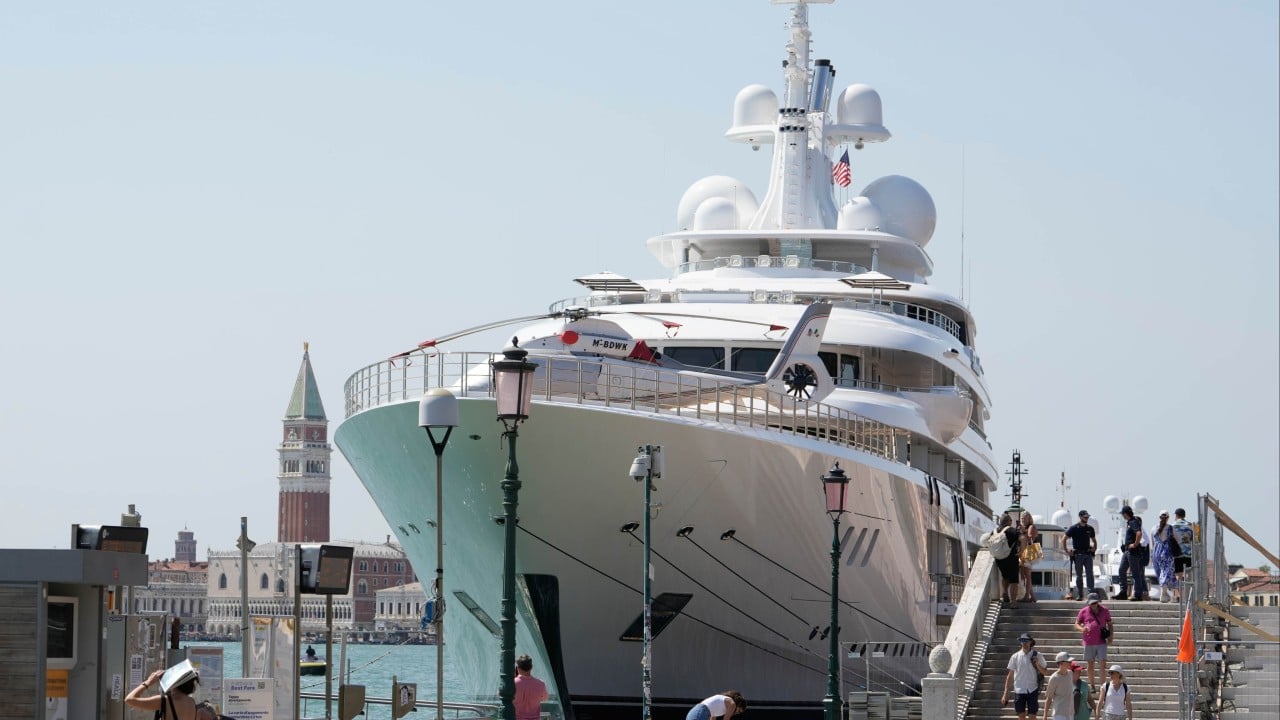
The media wants you to look at the billionaire envoy on a floating palace and feel a righteous flash of anger. They want you to cheer for the flag-waving activists on the Venetian docks, painting a neat picture of local resistance against elite excess.
It is a comfortable narrative. It is also entirely wrong.
The outrage machine missed the real story playing out in the canals of Venice. The arrival of a high-profile American envoy on a superyacht, met by a predictable chorus of local demonstrators, is not a failure of diplomacy. It is a masterclass in modern political optics, and the critics are playing their roles exactly as scripted.
While commentators obsess over the carbon footprint of a vessel or the optics of wealth, they ignore the stark reality of how power actually operates on the global stage.
The Theater of Outrage
Every single element of this clash was premeditated. To understand why the conventional commentary is so hollow, we have to look at what these protests actually accomplish.
They accomplish nothing.
Local activist groups in Venice have spent a decade protesting cruise ships, tourists, and rising tides. Yet, the moment a hull linked to Washington drops anchor, the grievance pivots instantly to geopolitics. This is not grassroots activism; it is performance art designed for social media feeds. The activists get their photos, the media gets its clickbait, and the envoy gets a public demonstration of their adversarial status, which plays beautifully to their base back home.
Consider the mechanics of power. If a diplomat wanted a quiet, backdoor meeting to negotiate real policy, they would fly into Marco Polo Airport on a private registration, take a covered water taxi to a private palazzo, and vanish.
You do not park a multi-million-dollar superyacht in the Venetian Lagoon if you want to blend in. You do it to project raw, unapologetic strength.
The Myth of Elite Vulnerability
The dominant media consensus relies on the idea that public shaming works against modern populist movements. The narrative suggests that by tracking the yacht, yelling from the piers, and throwing paint, the public forces a retreat.
This ignores the fundamental shift in international relations over the last decade. For a specific breed of modern diplomat, being hated by Western European activists is a badge of honor. It is political currency.
Imagine a scenario where the envoy arrived quietly, gave a polite speech about maritime cooperation, and left. The story would die in hours. Instead, the protest transforms a routine diplomatic visit into a cultural flashpoint. The imagery of an American power player standing firm against a crowd of shouting European leftists is a ready-made campaign ad.
The protesters think they are throwing a wrench into the machine. In reality, they are providing the fuel.
The Hypocrisy of the Venetian Economy
Let us talk about the data nobody wants to address. Venice is a city that exists almost entirely because of global capital and excessive tourism.
The city has been hollowed out of actual residents, dropping below 50,000 permanent inhabitants in recent years. The local economy survives on the exact concentrated wealth that the protesters claim to despise. The luxury hotels, the private water taxis, the high-end art biennales—all funded by the global elite.
To protest a superyacht while living in an economy entirely subsidized by transient billionaires is a spectacular exercise in cognitive dissonance. The city infrastructure relies on massive investments to survive the rising sea levels, money that does not come from local artisanal shops, but from massive national tax revenues driven by international commerce and foreign investment.
When a government official arrives on a private vessel, they are utilizing private capital to execute state business. Critics decry the optics, but from a purely transactional perspective, it costs the taxpayer nothing compared to a heavily secured official state visit requiring municipal shutdowns, thousands of local police on overtime, and closed airspace. The superyacht is a self-contained fortress. It brings its own security, its own communications, and its own logistical footprint.
The Evolution of Gunboat Diplomacy
We are seeing a return to an older, more brutal form of statecraft. For decades, international relations students were taught that soft power—cultural exchange, polite dinners, multinational agreements—was the only way forward.
That era is dead.
The superyacht is the new gunboat diplomacy. It is a deliberate display of sovereign immunity and economic muscle. It signals to the host nation that the visitor operates under a different set of rules, completely detached from local pressures or bureaucratic red tape.
European leaders often struggle to respond to this posture because their institutions are built on consensus, committees, and polite containment. When faced with a diplomatic strategy that treats international summits like an exercise in branding and dominance, the old playbook fails.
The Wrong Questions
The public discourse surrounding this event is fundamentally flawed. People are asking the wrong questions.
- Flawed Question: Why is an envoy allowed to use a luxury asset for official state business?
- The Reality: Because power goes where it wants. The asset provides security and autonomy that host cities cannot guarantee in an era of hyper-polarized public anger.
- Flawed Question: Will these protests damage the envoy's credibility?
- The Reality: Absolutely not. It solidifies their brand as an outsider fighting a hostile establishment, increasing their leverage with their political sponsors.
Stop looking at the banners and the megaphones. Stop analyzing the luxury amenities of the vessel. The yacht in the lagoon is a visual declaration that the traditional rules of diplomatic etiquette no longer apply.
The crowd on the dock thought they were stopping traffic. They were just extras in the movie.