The ground in northern Venezuela did not just shake on June 24. It tore apart the fragile reality of a nation already running on fumes. Twin earthquakes measuring 7.2 and 7.5 magnitude struck within seconds of each other. Today, the grim math of that disaster stands at 3,535 dead. That number isn't final. It goes up every single day as families dig through what used to be their living rooms.
If you are looking at the news from the outside, you see big numbers. You see 16,740 injured and nearly 18,000 left completely homeless. But on the ground in Caracas and the coastal state of La Guaira, the story isn't about statistics. It is about the smell of decay under a brutal tropical sun. It is about a mother recognizing her son-in-law's body only by the shoes sticking out from a flattened grocery store counter. For a more detailed analysis into similar topics, we recommend: this related article.
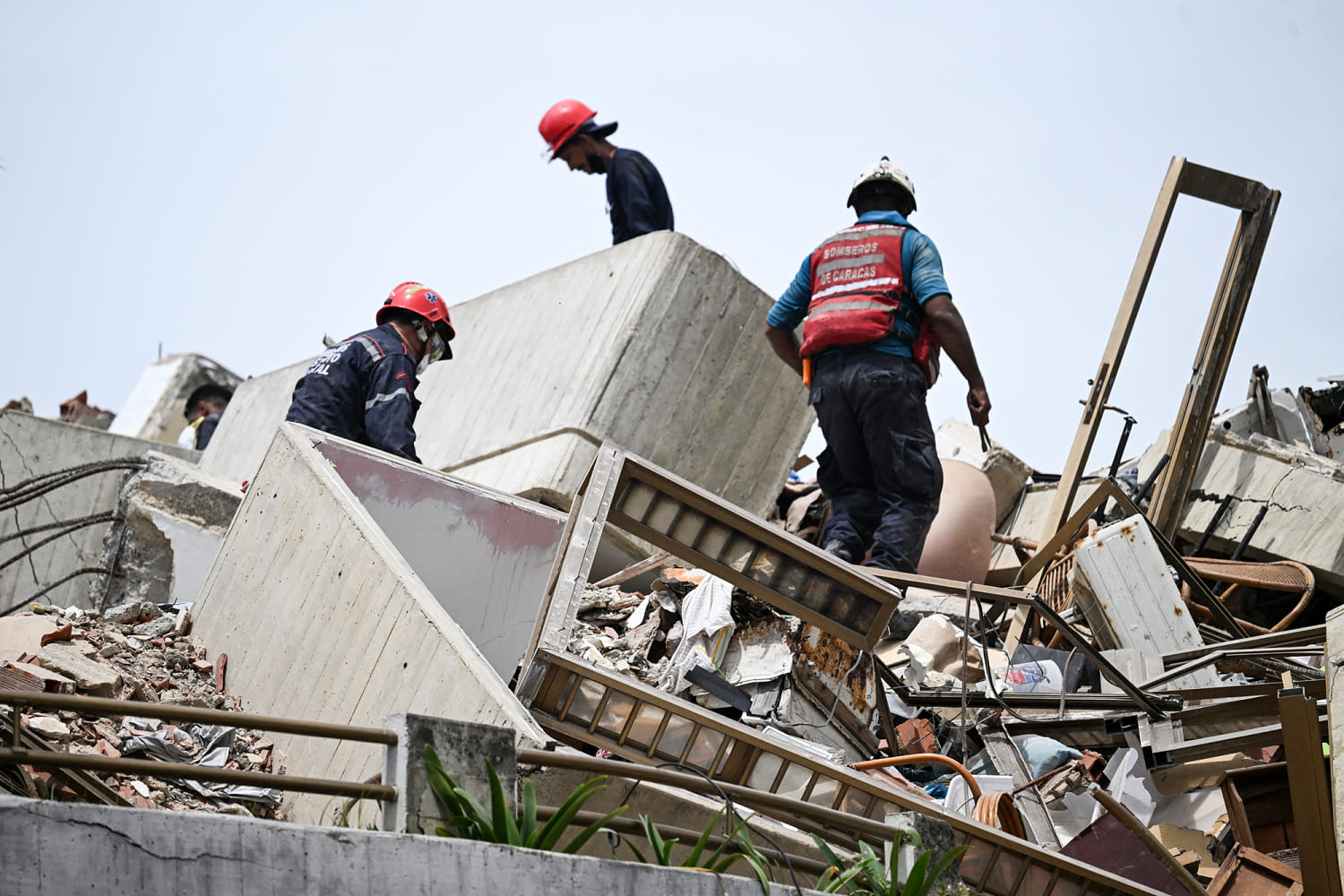
The harsh reality of this disaster is that the official rescue operation is wrapping up, but the actual recovery is nowhere near finished. International search teams from Italy, Spain, and Argentina have already packed up and gone home. The state television broadcasts talk about a grand rebuilding program called "Venezuela Reborn." Yet, if you walk through the hardest-hit neighborhoods, you won't see government cranes. You will see ordinary citizens using bare hands, rusty saws, and borrowed shovels to pull their relatives out of the concrete.
The True Scale of the Damage
There is a massive gap between what the government says happened and what satellite data shows. Official state reports count around 800 collapsed buildings. That sounds bad enough. But independent researchers from NASA and Oregon State University looked at the satellite imagery and found a completely different story. They estimate closer to 58,870 structures have been damaged or outright destroyed. For additional context on this development, comprehensive reporting is available on The Washington Post.
The United Nations Development Programme puts the direct physical damage at $6.7 billion. For a country with an already shattered economy, that is roughly 6% of its entire GDP. Risk modelers at Verisk think the actual economic loss tops $10 billion.
Most of the destruction hit the public housing complexes. These blocks were built years ago during the socialist administration of Hugo Chávez to house low-income families. Residents say these high-rises were death traps long before the earth moved. Shoddy construction, lack of maintenance, and ignored building codes meant these structures pancaked the moment the 7.5 magnitude quake hit.
Why the Crisis Has Become a DIY Operation
When the international crews left, the burden shifted entirely to the locals. Families say they are completely on their own.
Consider Noel Márquez, a 26-year-old who watched his family’s apartment building collapse and catch fire. He spent hours listening to his brother Leonel cry out for help from beneath a massive concrete slab. Noel begged for a government crane. It never came. The cries eventually stopped. Days later, Noel was still out there with a hand saw, trying to recover his brother's remains.
This isn't an isolated incident. In La Guaira, the state worst hit by the quakes, rows of bodies have been left in sweltering parking lots outside health clinics. Forensic technicians are working around the clock, but they are completely overwhelmed.
- Identification issues: Bodies recovered after days under the rubble don't look like they did in life. Families rely on tattoos, scars, or pieces of clothing to identify their dead.
- The cost of burial: Private funeral homes are charging upwards of $450 for a basic burial. In a country where the average monthly wage is a fraction of that, most people cannot pay.
- The threat of mass graves: Because the makeshift morgues at places like the La Guaira seaport are overflowing, authorities have started digging long trenches in open fields. If a body isn't identified and claimed quickly, it goes into a numbered grave marked only by a simple white cross.
How Technology is Filling the Government Vacuum
With official channels failing to provide clear answers, the Venezuelan diaspora and local activists have stepped in with their own solutions.
Activists created a makeshift missing-persons database online. Within days, the portal recorded over 50,000 missing-person reports. The platform allows hospitals, volunteer networks, and desperate relatives to cross-reference names, locations, and status updates. It has already helped track down thousands of survivors who were displaced or separated from their families in the chaos.
At the same time, the geopolitical situation complicates the flow of actual physical aid. The country is in the middle of a tense political transition under acting President Delcy Rodríguez. While the United States allocated $100 million for UN relief efforts and lifted some specific sanctions to let humanitarian aid pass, getting those supplies from the ports to the people who need them is a logistical nightmare. The roads are cracked, fuel is scarce, and the local bureaucracy is thick.
What Needs to Happen Right Now
If you want to understand how to actually help or what needs to happen to prevent the death toll from climbing even higher, the priorities on the ground are immediate and practical.
Deploy Heavy Machinery to Neighborhoods, Not Just Main Roads
The government has focused its remaining resources on clearing main transit corridors and assessing state-owned oil infrastructure, like the Catia La Mar fuel terminal. While keeping oil infrastructure safe matters for the economy, it does nothing for the families in residential zones. Local municipalities need to redirect heavy lifting equipment and fuel to residential ruins so people can stop digging with their bare hands.
Establish Standardized Forensic Hubs
Leaving bodies in open-air parking lots during a tropical summer is a massive public health hazard. The private sector has donated some refrigerated shipping containers to the La Guaira seaport, but more are desperately needed. Securing temporary cold-storage units is critical to give families the time they need to identify their loved ones without the immediate threat of forced mass burials.
Direct Aid to Grassroots Kitchens and Shelters
Over 12,000 people are crammed into roughly 80 official shelters across Caracas and La Guaira, but thousands more are sleeping on the street next to their destroyed homes because they refuse to leave their belongings. If you are looking to donate or support relief efforts through international organizations like the World Food Program or the International Medical Corps, ensure your funds are directed toward decentralized distribution networks that deliver food, clean water, solar phone chargers, and first-aid kits directly to neighborhood volunteers rather than centralized government warehouses.