The camera lens does not care about your intentions. It cares about light, shadow, and the exact micro-expression crossing a human face when a hostile question lands like a physical blow.
Most people never stand under that light. They watch from the comfortable dimness of a living room couch, judging the posture of the person behind the mahogany lectern, measuring the cadence of a voice, deciding within three seconds whether someone is strong or weak, brilliant or cornered.
Karoline Leavitt knows that lens intimately. She knows the precise geometry of pressure.
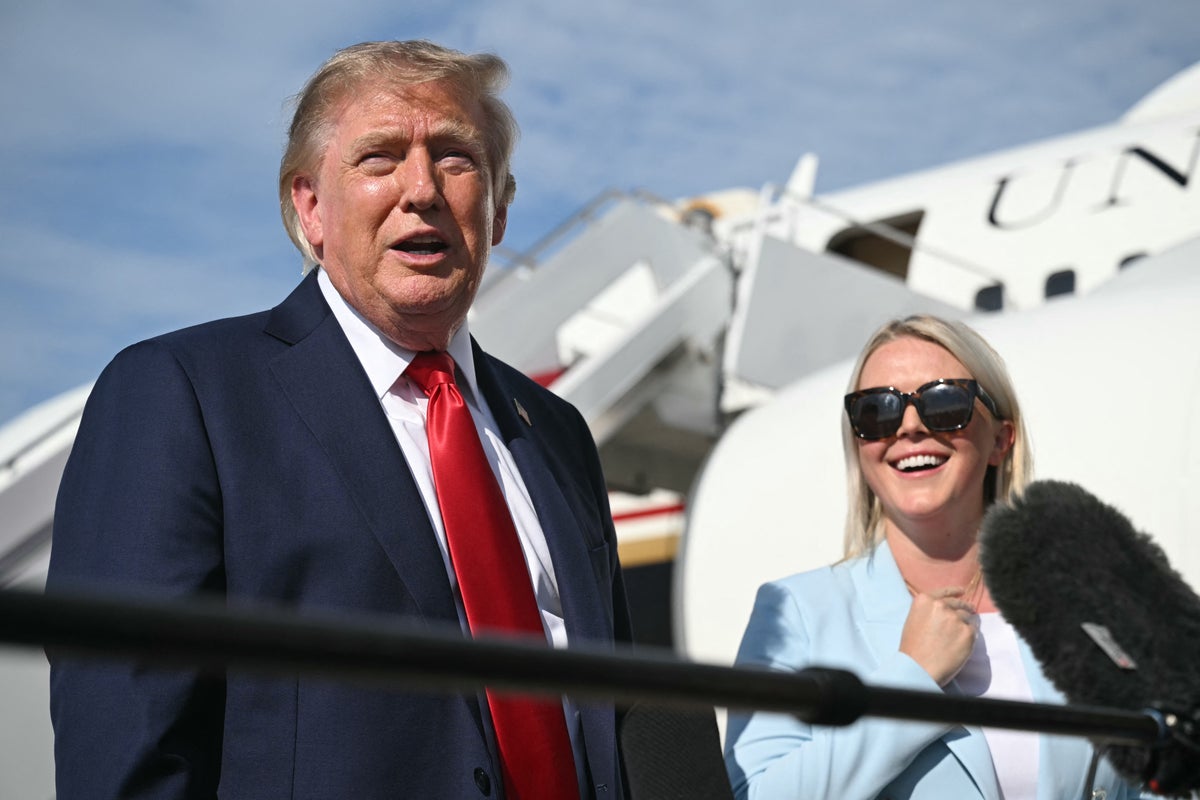
When Donald Trump stood before the microphones and announced that his inbox was overflowing, that the line of ambitious hopefuls desperate to become White House Press Secretary stretched around the imaginary block, he did not just talk about human resources. He talked about gravity. He spoke about a magnetic pull.
And then he pointed directly at Leavitt, offering a sentence that reframed an entire profession: She has made that job very glamorous.
Glamour is a strange word in modern politics. Usually, we associate it with velvet gowns, flashbulbs on red carpets, and curated Hollywood detachment. We do not associate it with a podium battered by decades of contentious shouting, binders stuffed with policy memos, and the daily trench warfare of the James S. Brady Press Briefing Room. Yet, transformation happens when competence meets absolute, unapologetic poise.
Consider what the job actually demands.
You walk into a room holding nothing more than a sheaf of paper and your own nervous system. Ranks of reporters sit before you, their notebooks open, their digital recorders blinking red, their careers riding on extracting a contradiction, a stumble, or an admission. They are not there to be friendly. They are there to test the structural integrity of your arguments. Every word is parsed. Every hesitation is weaponized. Every smile is analyzed for hidden mockery.
To survive that room requires armor. To master it requires something much rarer.
Leavitt brought a specific brand of velocity to the role. It was not merely about defending a principal or defelling an aggressive inquiry. It was about narrative command. In an era where information fractures into a million screaming fragments every single second, holding the center of the room is an act of sheer willpower.
Trump’s public observation about being inundated with applicants tells a quiet story about aspiration. Politics has always attracted the ambitious, but the podium has shifted status. It is no longer viewed solely as a punishing, thankless grind designed to chew up young staffers and spit them out. Under the right execution, it has become a stage of high-stakes performance art. People look at Leavitt standing under the hot white lights, answering rapid-fire queries with unblinking certainty, and they do not just see a spokesperson. They see power in motion.
Ambition is a quiet engine.
Picture a twenty-something staffer sitting in a cramped basement office at midnight, eyes burning from the glow of a monitor, watching old footage of press briefings. That person is not just studying policy. They are studying posture. They are watching how a shoulder drops to release tension, how a chin tilts upward to project authority without tipping into arrogance, how a sharp question is deflected with a soft, devastating smile.
That is the hidden curriculum of Washington.
When the leader of a political movement looks out at a crowd and boasts about the sheer volume of people wanting to step into the line of fire, he is acknowledging a cultural shift. The White House Press Secretary role has evolved from a clerical translation desk into the primary theater of modern political combat. The stakes are staggering. A single misspoken preposition can lead the evening news cycle. A brilliant retort can become a viral anthem shared millions of times before midnight.
Glamour, in this context, is not about vanity. It is about mastery under duress.
There is an art to standing your ground while a dozen voices shout over one another, demanding your attention, trying to break your rhythm. It is a symphony of controlled chaos. The best practitioners do not raise their voices to match the room; they lower them, forcing the room to quiet down just to catch the next syllable. Leavitt mastered that dynamic. She understood that silence can be louder than shouting, and that a calm demeanor is the most disruptive force you can introduce to a room designed to panic you.
The applicants lining up outside the door, the hundreds of resumes flooding digital inboxes, are chasing that specific brand of mastery. They want to test themselves against the hardest room in the world. They want to know if they possess the internal steel required to hold the line when the narrative threatens to fracture beneath their feet.
The lights in the briefing room never truly cool down. Even when the cameras are off, the echoes of the day's sparring remain in the air, lingering like smoke after a brief skirmish. Another briefing is always waiting on the horizon. Another storm of questions is already forming out there in the digital ether, gathering strength, waiting for tomorrow morning.
And behind the podium, the next person steps up, adjusts the microphone, and draws a deep breath.