In the dead of night, trucks rolled into Shenzhen, their cargo bays sealed against the humidity, bearing crates worth more than gold. Inside those crates rested things that do not look like machines of war. They looked like shrines. Heavy, monolithic blocks of precision engineering, heavy with sapphire glass, mirrors so smooth that if they were scaled to the size of the Earth, the highest mountain would be the thickness of a human hair.
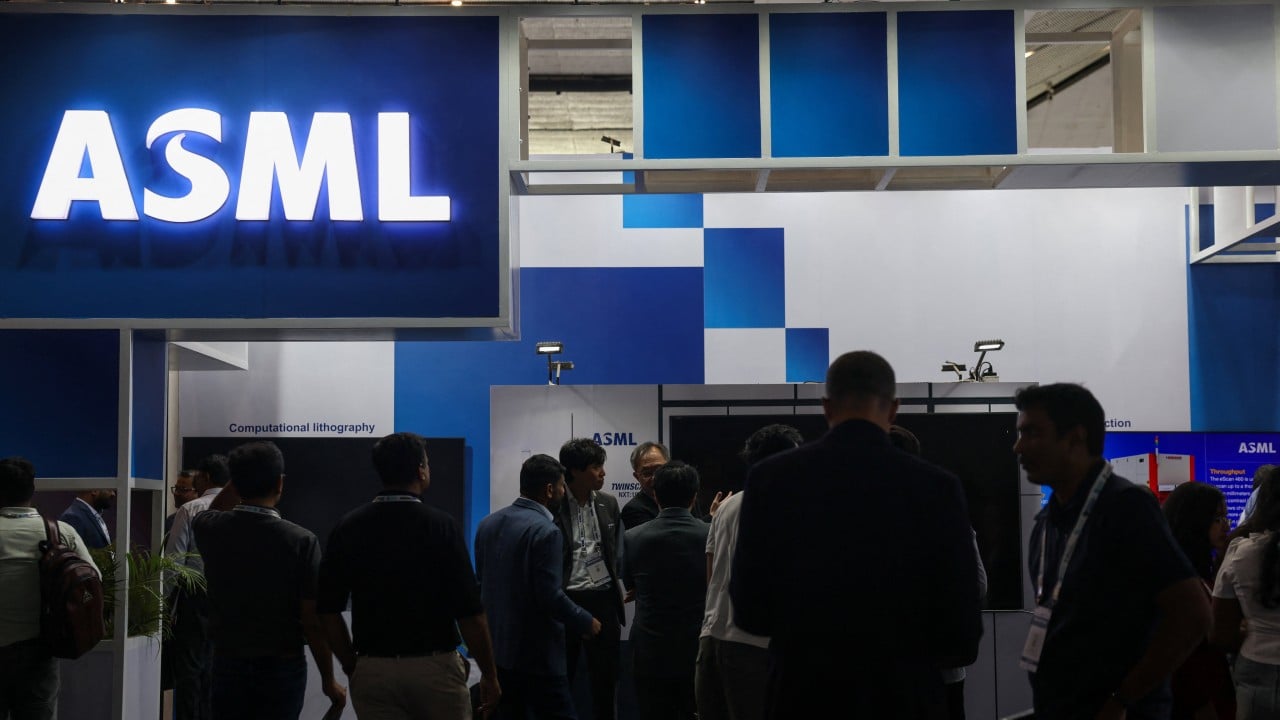
ASML lithography tools. In related developments, take a look at: When Police Departments Become Ransomware Targets The Kingston Breach No One Wants to Examine.
To the untrained eye, they are just steel and vacuum chambers. To the geopolitical chess masters in Washington and Beijing, they are the pivot upon which the twenty-first century balances.
Step inside a cleanroom for a moment. Imagine the smell of ionized air, clean and sharp like a thunderstorm over pine needles. Imagine the sound of a cleanroom suit hissing with every breath, the absolute quiet of a space where a single speck of dust is a catastrophe. Here, engineers from a major Chinese semiconductor foundry—let us call him Chen, though he is thousands of men and women working across midnight shifts—stare at a monitor. They are watching a shadow play. Gizmodo has analyzed this important subject in great detail.
They are carving pathways onto silicon wafers using light that borders on the invisible. Extreme ultraviolet light. Light so short in wavelength it is almost X-ray, generated by firing a high-powered laser at molten drops of tin fifty thousand times a second. It is a process so violently delicate that it feels less like manufacturing and more like alchemy.
And Chen knows something the rest of the world is only just beginning to panic about. The door is closing.
For months, the shipments have accelerated. Cargo manifests show a frantic, preemptive hoarding operation. Billions of dollars in deep ultraviolet and extreme ultraviolet printing systems have crossed borders before customs officials in the West could ink their final embargoes. Beijing is filling its warehouses not because it needs every machine today, but because it knows that tomorrow, the valve will be shut tight.
The rationale in Washington is simple, almost crude in its geometry. If you starve a rival of the tools that carve the brain, you freeze their mind. The United States, leaning heavily on its Dutch allies to pressure ASML, has tightened the screws. A complete export ban is no longer a dark room whisper; it is a live policy draft on desks in the capital. Total denial. No spare parts, no software updates, no new shipments.
But history teaches us a stubborn lesson about embargos. They never starve the target; they only teach them how to farm in the winter.
Consider what happens when you corner a nation of engineers with a deep, generational memory of technological isolation. They do not fold. They reverse-engineer. They spend nights staring at exploded diagrams. They substitute materials. They brute-force the physics.
When the US began restricting high-end graphics chips years ago, skeptics thought China’s artificial intelligence ambitions were dead in the water. Instead, tech giants and university labs turned inward, clustering thousands of older, less efficient domestic chips together like a mosaic. It was clumsy, it was power-hungry, but it worked. The model trained. The code compiled.
Now, look at the stockpiles.
By pulling years of future acquisitions into the present, Chinese chipmakers have bought themselves a runway. They have time. While Western diplomats celebrate closing the legal loopholes, the engineers inside those Shenzhen cleanrooms are turning on the imported machines, running diagnostics, and running them hard. They are reverse-engineering the very components that the Dutch patents protect. Every spare part in inventory is being mapped down to the atomic lattice.
There is an eerie poetry to it. A machine designed in Europe, funded by global capital, built with optical components from German glassworks and US software, now sits in an eastern warehouse, serving as the unwitting foundation for its own replacement.
The West believes it holds a monopoly on genius. It is a comforting myth, born of post-Cold War hubris. We look at the complexity of an ASML scanner—composed of over one hundred thousand unique parts sourced from thousands of specialized suppliers across the globe—and we tell ourselves no single nation can replicate that web.
We are right, of course. No single nation can. But China is not trying to replicate the global supply chain today. It is trying to build a self-contained island. And every lithography tool sitting in a warehouse right now is a brick for that island.
The economic fallout of this hoarding is already rippling outward. ASML, a company that depends heavily on the massive revenue generated by the Chinese market, finds itself caught in a geopolitical crossfire. Its executives walk a tightrope, warning that export controls will ultimately backfire by incentivizing local innovation. They are right, from a business perspective. When you cut off your best customer, you do not just hurt them; you force them to become your competitor.
Yet, the drumbeat for a complete ban grows louder. In the halls of Congress, national security hawks view semiconductor supremacy through the lens of military dominance. Hypersonic missiles, autonomous drone swarms, cyber warfare—all of it runs on the silicon carved by these very machines. To let a rival acquire the tools to make 2-nanometer and 3-nanometer nodes is, in their eyes, signing a national security death warrant.
Both sides are entirely rational from their own vantage points. And that is what makes this collision course so terrifying.
We are sleepwalking into a fractured technological universe. We are moving away from a single, interconnected internet and a shared global supply chain toward two distinct technological spheres. One Western, one Eastern. Two sets of standards. Two sets of machines. Two separate paths of human progress, racing against each other in the dark.
Back in the cleanroom, the shift changes. Chen wipes condensation from his safety goggles, steps out of the airlock, and peels off his jumpsuit. Outside, the city of Shenzhen hums with neon and exhaust. In the distance, container ships slip out toward the Pacific, carrying goods to a world that still believes borders are lines on a map rather than walls of steel.
The machines are inside the gates now. The embargoes are coming. The race is no longer about who has the best tools, but who can survive the dark long enough to build new ones.