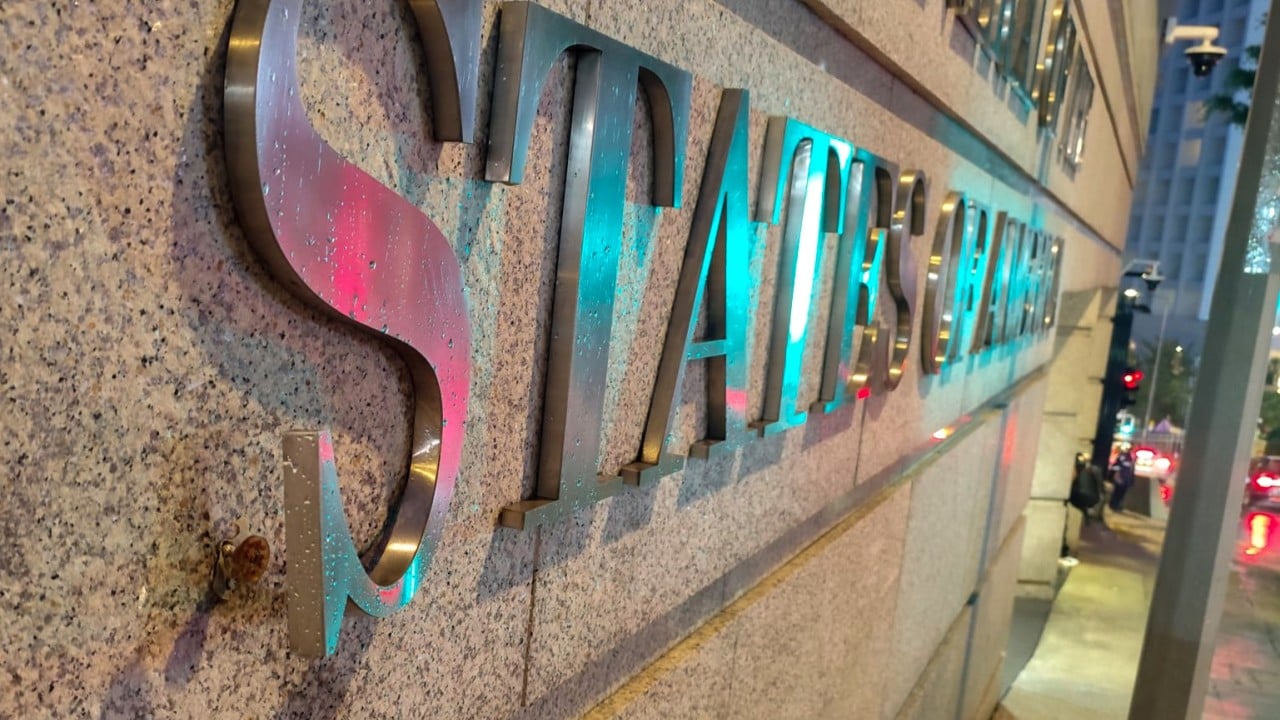
The media is obsessed with the optics of a spray-paint can. A man approaches the United States Consulate General in Hong Kong, scrawls a few characters on a sign, and suddenly every news outlet treats it like the first shot of a diplomatic war. It is not. It is a symptom of a much deeper, more boring reality that most analysts are too scared to touch.
The reportage focuses on the manhunt. They track the security footage, describe the suspect's windbreaker, and quote "official sources" about the gravity of the incident. This is the lazy consensus: that an act of property damage against a diplomatic mission is a unique, high-stakes crisis.
It is actually a distraction.
The Myth of the Strategic Vandal
Standard reporting suggests that a person defacing a consulate sign is a calculated political actor. We are led to believe this reflects a shifting tide in Hong Kong’s social stability. I have spent a decade watching how administrative hubs react to these friction points, and the truth is far less cinematic. Most of these incidents are isolated psychological outbursts or low-level performance art, yet we elevate them to the status of international incidents.
When you focus on the individual with the spray paint, you miss the structural decay. The real story isn't that a sign was damaged; it is that we still believe these symbols hold enough weight to justify a city-wide manhunt.
Consular Security is a Theatre of the Absurd
Let’s talk about the E-E-A-T of diplomatic security. If you have ever worked within the "Green Zone" of international relations, you know that the physical perimeter is designed for deterrence, not invincibility.
A sign being defaced is a failure of the "theatre," not the security. The U.S. Consulate in Hong Kong is one of the most heavily fortified civilian buildings in the region. To treat a man with a marker as a genuine threat to the mission's integrity is an insult to the intelligence of the staff inside.
The "Lazy Consensus" argues:
- Vandalism represents a breakdown in law and order.
- Consulates are sacred ground that should be untouchable.
- The perpetrator is a key to understanding local dissent.
The Reality:
- Vandalism is the most accessible form of "shouting" for the unheard.
- Consulates are lightning rods by design.
- The perpetrator is often a statistical outlier, not a movement leader.
The Cost of the Manhunt
Imagine a scenario where the resources poured into tracking a single individual for property damage were instead used to address the underlying economic stressors that drive public frustration. Hong Kong’s police force is currently operating under a microscope. By making a "priority case" out of a scrawled message on a wall, the authorities actually validate the vandal's importance.
They are giving the actor exactly what he wanted: a reaction that outweighs the action.
Every dollar spent on forensic analysis of a paint chip is a dollar not spent on actual public safety. It is a misallocation of state energy that prioritizes the feelings of a foreign mission over the practical needs of the local population. I’ve seen departments burn through quarterly budgets chasing "symbolic" criminals while white-collar fraud and cybercrime—the things that actually ruin lives—go under-investigated.
Stop Asking "Who Did It" and Start Asking "Why We Care"
The "People Also Ask" sections of the internet are filled with queries about the legality of diplomatic property and the severity of sentences for "political" vandalism. These are the wrong questions.
You should be asking: Why does a piece of plastic and metal in Central define our sense of security?
We have been conditioned to see these buildings as extensions of a superpower’s body. If the building is scratched, the nation is bleeding. This is a 20th-century mindset. In a digital-first world, the physical consulate is increasingly vestigial. The data, the influence, and the power are in the wires, not the foyer.
If we want to be "brutally honest," the damage to the sign is an accounting rounding error. The diplomatic fallout is zero. The U.S. State Department has seen much worse in much tougher neighborhoods. They aren't losing sleep. So why are you?
The Dangerous Nuance of "Damage"
The competitor article frames this as a "hunt." It uses the language of a thriller. This framing ignores the nuance of what "damage" actually means in a city that has redefined its legal boundaries over the last five years.
In the old paradigm, this was a misdemeanor. In the new landscape, it is treated as a potential national security breach. This escalation doesn't make the city safer; it makes the stakes for minor dissent so high that it creates a pressure cooker environment.
By treating every "man with a can" as a high-level operative, the media and the state create a feedback loop. They tell the public: "This sign is your leverage."
The Hard Truth for the "Law and Order" Crowd
If you are cheering for the "hunt," you are part of the problem. You are asking for a police state that prioritizes the aesthetics of an embassy over the liberty of the street.
The downsides to my contrarian approach? Sure, if you ignore all vandalism, you get a "broken windows" effect. People might feel the city is sliding into chaos. But there is a massive gulf between ignoring a smashed storefront and refusing to hyperventilate over a defaced government seal.
We need to stop treating diplomatic property as if it’s made of thin glass. It’s made of concrete. It can handle a little paint.
The Actionable Pivot
Stop reading the play-by-play of the investigation. It doesn't matter if they catch him in a week or a month.
Instead, look at the frequency of these incidents relative to the economic health of the district. Look at the shift in how the media reports on foreign missions versus local government buildings. You will see that the outrage is selective.
The "superior" take is recognizing that we are being manipulated into a state of alarm over a janitorial issue. The sign will be cleaned. the paint will be buffed out. The underlying tension that led the man to the building in the first place will remain, entirely ignored by the cameras.
If you want to understand Hong Kong, stop looking at the signs. Look at the people walking past them who don't even bother to turn their heads. That indifference is the real story.
Chase the man if you want to fill a police blotter. Ignore the noise if you want to understand power.
The hunt is a vanity project. The paint is a distraction. The sign is just a sign.
Quit acting like the world is ending because a wall got messy.