The ice melts first.
When you are ten years old, standing on a cracked concrete sidewalk in the sticky humidity of a New England July, the rate of liquid expansion is your entire world. You watch the frost disappear from the outside of a plastic pitcher. You calculate the exact lifespan of a paper cup under the assault of lukewarm tap water. You count quarters.
Every kid who has ever dragged a wooden card table to the edge of their lawn knows the quiet thrill of that micro-economy. It is the first time the world treats you like an adult. You provide a service. Neighbors stop their cars, idling in the heat, just to hand over a crumpled bill and tell you to keep the change. It is a sacred civic contract, written in powdered sugar and yellow food coloring.
Then the metal touches your forehead.
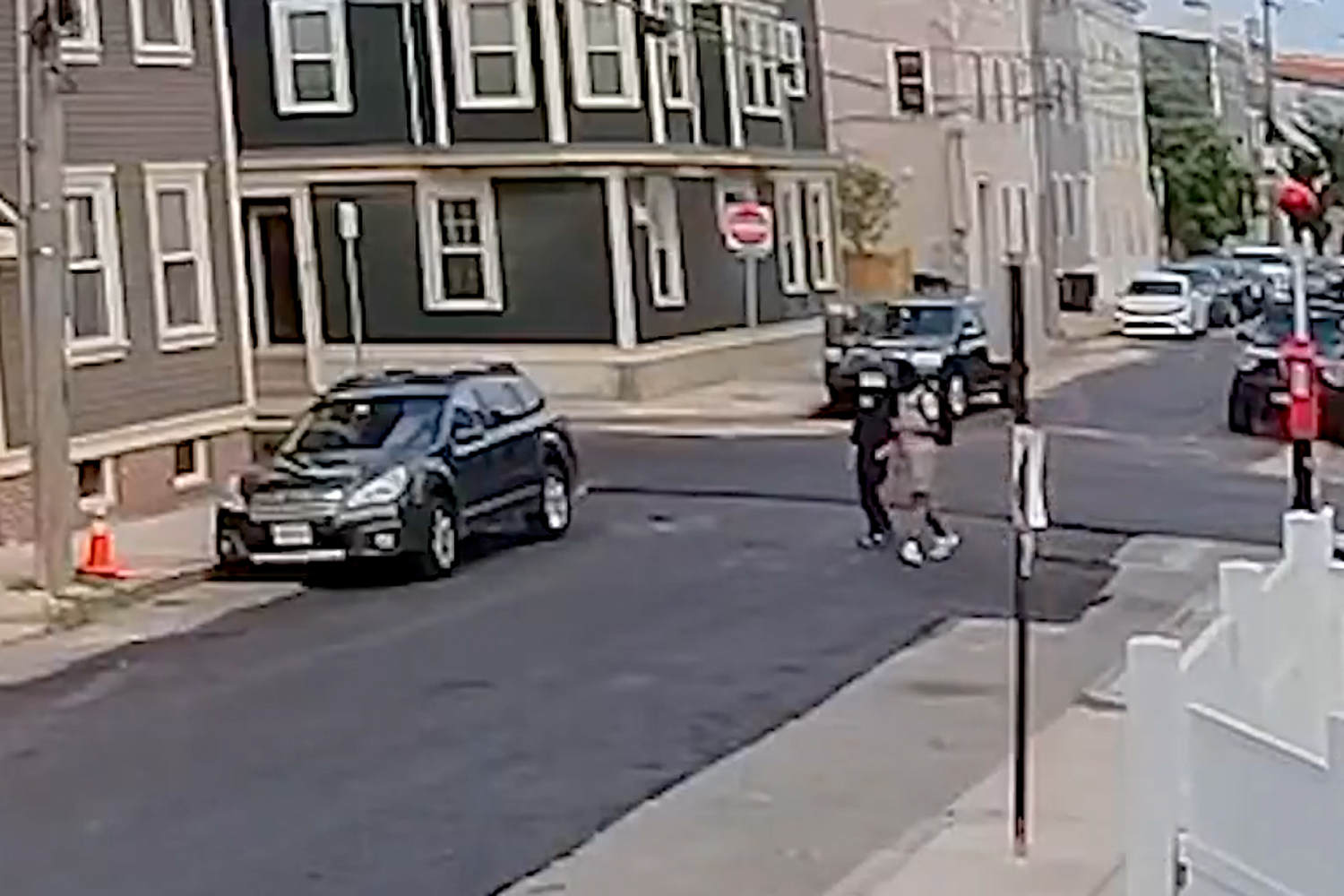
It was a Tuesday afternoon in Boston. The sky was that heavy, bruised shade of gray that promises a thunderstorm but only delivers more heat. On a quiet residential street, two young boys had set up shop. They had the standard kit: a hand-painted cardboard sign, a stack of cups, and a metal cash box containing exactly twelve dollars and fifty cents.
They were waiting for the afternoon rush of commuters. Instead, they got a shadow.
Two men approached the table. They didn’t ask about the price. They didn’t make small talk about the weather. One of them reached into the waistband of his oversized jeans and pulled out a black semi-automatic handgun. He pressed the cold barrel against the temple of a ten-year-old child.
"Give me the box," he said.
His voice wasn't shaking. That is the detail that sticks in the throat. It was flat. Routine. As if he were ordering a coffee or asking for the time.
The boys froze. The human brain is remarkably resilient, but it is not built to process the juxtaposition of a plastic lemonade pitcher and lethal force. In an instant, the neighborhood street transformed from a safe haven into a war zone. The cash box was handed over. The two men turned and ran, disappearing into the maze of brick alleyways before the first scream could even clear the younger boy's throat.
They remain at large. The police sirens came and went, leaving behind blue and red lights that flashed against the abandoned lemonade stand long after the sun went down.
The True Cost of Currency
We talk about crime in terms of statistics. We look at charts, graphs, and shifting percentages in city budgets. The evening news anchors will read a thirty-second copy block about an armed robbery in the city's north end, list the suspects as "two males in their late teens," and move smoothly along to the sports report.
But a robbery like this cannot be measured in fiat currency.
If you look at the raw data, the loss was negligible. Twelve dollars. A handful of coins. The price of a fast-food meal or a couple of subway tokens. If the perpetrators are caught, the legal system will classify this as armed robbery, a felony offense, but the property value will register as a footnote.
The real theft was invisible.
Consider what happens to a neighborhood when the perimeter of safety shrinks. For generations, the American sidewalk has existed as a transitional space. It is the buffer zone between the privacy of the home and the chaos of the wider world. It is where children learn to navigate independence. You can go as far as the corner, parents say. You can stay outside until the streetlights come on.
When you pull a trigger—or threaten to pull one—over a handful of pocket change, you aren't just stealing money. You are repossessing the neighborhood. You are telling every parent on that block that their driveway is no longer a sanctuary.
The psychological shrapnel of that afternoon expands outward in concentric circles. The two boys will eventually stop jumping at sudden noises. The nightmares will fade from vivid technicolor into a dull, recurring gray. But they will never again look at a stranger walking down their street without calculating the distance to their front door. The innocence is gone, replaced by a hyper-vigilance that no child should have to carry.
The Micro-Friction of Urban Decay
Why does a man point a gun at a child for the price of a sandwich?
To understand the Boston robbery, you have to look at the micro-friction of the modern city. Desperation is rarely logical. When a social fabric begins to fray, it doesn't snap cleanly in the center; it unravels at the edges, in the small, unprotected spaces where we least expect it.
We live in an era of massive economic disconnect. While the skyscrapers downtown boast record-breaking quarterly earnings and tech hubs discuss the optimization of digital assets, the street-level reality is often remarkably stark. A desperate person does not see a child's business enterprise; they see an unsecured asset. They see an easy target.
This is the grim reality of predatory behavior. It bypasses the guarded storefronts, the banks with bulletproof glass, and the armored cars. It seeks the path of least resistance. It finds the card table on the sidewalk.
There is an old concept in sociology known as the "broken windows theory." It suggests that visible signs of disorder and misbehavior create an environment that encourages further, more serious crime. But perhaps we need a parallel concept for the erosion of community trust. Let's call it the broken pitcher.
When a community witnesses an act of violence so deeply disproportionate to the reward, a collective cynicism sets in. People pull their blinds. They look through peepholes instead of opening doors. They buy heavier locks. The vibrant, messy, beautiful life of a neighborhood retreats indoors, leaving the streets entirely to the shadows.
The card table sat on the sidewalk for hours after the police left.
One of the legs was slightly shorter than the others, shimmed with a piece of folded cardboard to keep the lemonade from spilling. A single paper cup remained on the surface, rolling back and forth in the evening breeze, scratching against the wood.
The ice had completely melted now. The liquid inside was warm, flat, and sticky, attracting a small swarm of fruit flies.
Eventually, a man stepped out from the house. He didn't look at the street. He didn't look for the two men who were still out there, somewhere in the dark city, carrying a stolen cash box and a heavy piece of iron. He just reached down, folded the table legs with a sharp, metallic snap, and carried the whole thing inside, locking the deadbolt behind him.


