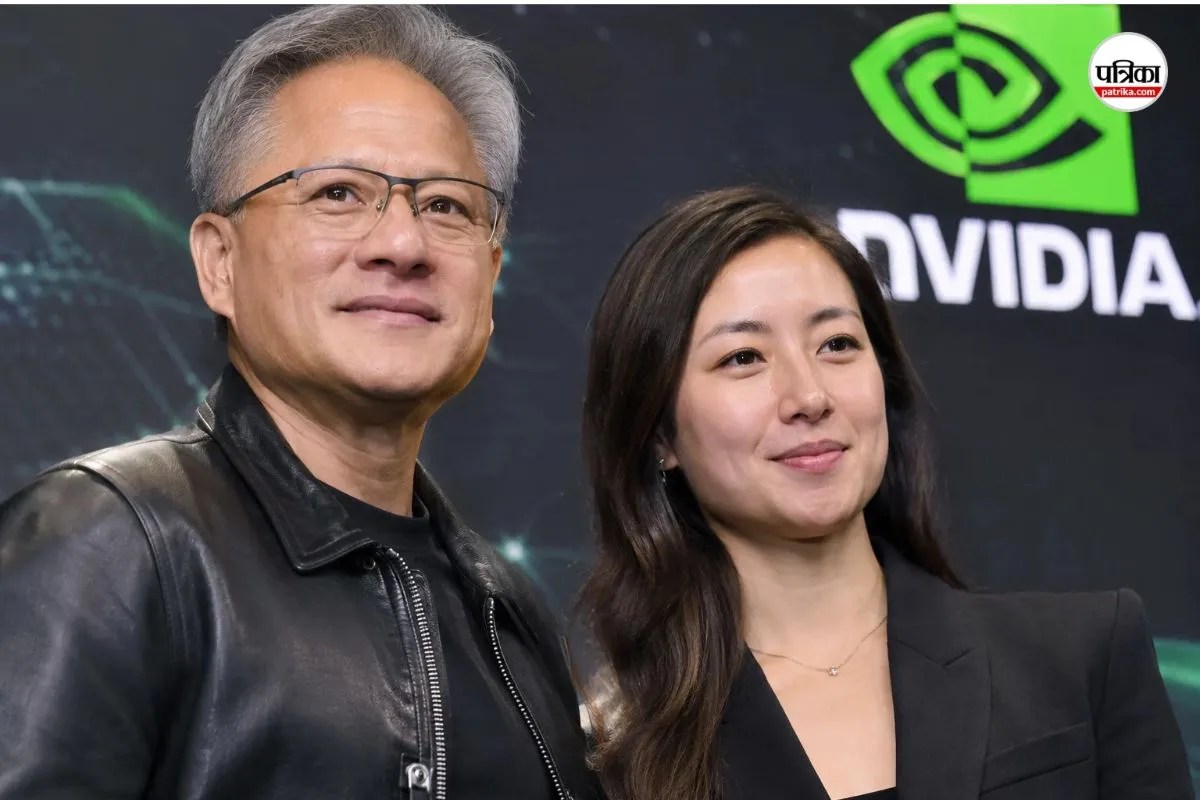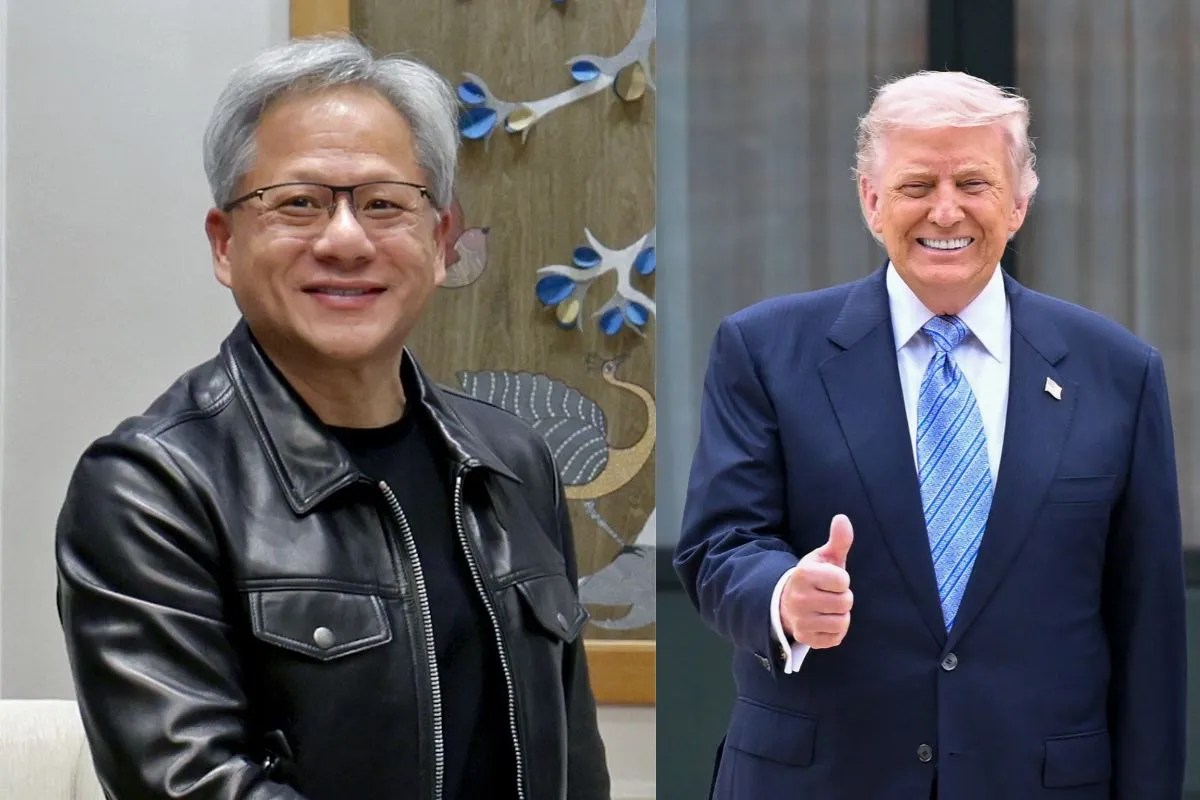
No US President ever negotiated a deal to bring Jensen Huang back as Nvidia CEO because Jensen Huang has never left the role. Since co-founding Nvidia in April 1993 alongside Chris Malachowsky and Curtis Priem, Huang has served continuously as the company’s president, chief executive officer, and a member of its board of directors—making him the longest-tenured CEO in the modern semiconductor industry. Any viral headline, social media clip, or political stump speech claiming a president "made the deal" to reinstate him is built on a false premise, an off-the-cuff rhetorical exaggeration, or an outright fabrication designed to capitalize on Nvidia’s multi-trillion-dollar dominance.
When an unverified political boast collides with one of Wall Street's most closely watched corporations, the fallout reveals far more about how modern information ecosystems distort corporate governance than it does about Silicon Valley dealmaking. If you liked this article, you should check out: this related article.
The Anatomy of a Viral Political Misconception
Political rhetoric frequently compresses complex industrial policy into personal triumph. When leaders stand before crowds or cameras and claim credit for bringing jobs, executives, or entire supply chains back to American soil, the phrasing often blurs the line between public policy incentives and private boardroom decisions.
In the case of the claim that a US President "made the deal" to bring Jensen Huang back as Nvidia CEO, the statement fails on the most basic factual level. Corporate filings with the US Securities and Exchange Commission (SEC) provide an unbroken paper trail stretching back to Nvidia's initial public offering in January 1999. Every annual proxy statement (Form DEF 14A) confirms the exact same executive reality. Huang never stepped down. He never took a sabbatical. He was never ousted by activist investors, nor did he ever relocate Nvidia's corporate headquarters outside the United States. For another angle on this event, see the latest update from Wired.
So why do claims like this gain traction?
First, there is the deliberate conflation of onshoring semiconductor manufacturing with executive leadership. Over the past several years, Washington has poured tens of billions of dollars into domestic chipmaking through federal subsidies, export controls, and tariff threats. Politicians routinely frame engagements with tech executives—whether at White House summits, state dinners, or bilateral trade meetings—as personal victories that saved or reclaimed American tech leadership. To a casual observer scrolling through short-form video feeds, a vague remark about "bringing Jensen back" or "making a deal with Nvidia" easily mutates into a literal falsehood about Huang's employment status.
Second, internet aggregators and automated content farms thrive on high-engagement keywords. Pairing "US President" with "Jensen Huang" and "Nvidia CEO" triggers algorithmic amplification across financial news feeds and social platforms. Even when the underlying URL is broken, undefined, or sourced from a misquoted transcript, the headline itself takes on a life of its own.
Three Decades Without an Exit
To understand why the idea of "bringing Jensen Huang back" strikes industry veterans as absurd, you have to look at how rare his tenure actually is.
In Silicon Valley, founder-CEOs rarely survive every technological transition. Most are pushed aside when a company scales past its initial startup phase, or they step down voluntarily once the enterprise reaches mature stability. Bill Gates handed the Microsoft CEO reins to Steve Ballmer in 2000. Larry Page and Sergey Brin stepped back from Alphabet's daily operations in 2019. Jeff Bezos transitioned to executive chair at Amazon in 2021. Even inside the semiconductor sector, turnover at the top has been relentless, with Intel, AMD, and Qualcomm cycling through multiple chief executives over the last twenty years.
Huang is the glaring exception.
He has led Nvidia through at least four distinct existential crises without relinquishing operational control:
- The 1995 NV1 Failure: Nvidia’s first graphics chip, built on quadratic texture mapping rather than the industry-standard polygons adopted by Microsoft’s DirectX, nearly bankrupted the company. Huang laid off roughly half the workforce, pivoted entirely to the RIVA 128 architecture, and salvaged the firm with months of cash remaining.
- The 2006 CUDA Gamble: Long before artificial intelligence became a Wall Street obsession, Huang bet Nvidia’s profit margins on CUDA (Compute Unified Device Architecture), a proprietary software layer allowing researchers to use graphics processors for general-purpose parallel computing. Institutional investors punished the stock for years because the capital expenditure yielded no immediate return.
- The 2008 Financial Crash and Bumpgate: Amid the global recession, Nvidia suffered a massive manufacturing defect involving chip packaging materials, forcing a $196 million charge and eroding its market capitalization by nearly 80 percent.
- The 2022 Crypto Hangover: When cryptocurrency mining collapsed and gaming demand cratered, Nvidia’s revenue stalled and its stock lost more than half its value—right before the generative AI boom detonated demand for its H100 data center GPUs.
At no point during any of these downturns did Nvidia's board of directors replace Huang. Nor did any government official intervene to keep him in his chair. His survival was dictated entirely by board loyalty, dual-class or concentrated founder influence, and an execution record that eventually transformed a niche PC gaming supplier into one of the most valuable companies on earth.
What Washington Actually Negotiates With Nvidia
While no president has ever had a say in who runs Nvidia, the White House and the US government wield enormous, direct power over where Nvidia can sell its products and where its chips are physically manufactured. If a political leader claims to have "made a deal" involving Huang, the real substance almost always involves trade compliance, supply chain security, or export licensing—not corporate governance.
The Export Control Tightrope
Since October 2022, the US Department of Commerce’s Bureau of Industry and Security (BIS) has implemented sweeping export restrictions designed to prevent advanced artificial intelligence chips from reaching China. These rules directly targeted Nvidia’s flagship data center processors, including the A100 and H100.
Huang’s response was not a retreat, nor was it a political surrender. Nvidia engineered modified versions of its chips—such as the A800 and H800, and later the H20—specifically calibrated to fall just below the US government's interconnect bandwidth and processing thresholds. When Washington tightened the rules again in October 2023 to close those loopholes, Nvidia adjusted its product roadmap once more.
In this arena, negotiations between Nvidia and federal officials are constant, tense, and strictly regulatory. Huang has publicly warned that overly broad export restrictions risk permanently ceding the Chinese market—historically responsible for 20 to 25 percent of Nvidia's data center revenue—to domestic Chinese competitors like Huawei. Washington, meanwhile, views those chips as dual-use national security assets. Neither side is bargaining over Huang's job title; they are bargaining over the boundaries of global compute power.
The Foundry Dependency Problem
The other major point of intersection between the Oval Office and Jensen Huang is silicon manufacturing. Nvidia is a fabless semiconductor company. It designs the architectures, writes the software stacks, and validates the silicon, but it does not own the multi-billion-dollar fabrication plants required to etch transistors onto wafers.
Instead, Nvidia relies overwhelmingly on TSMC (Taiwan Semiconductor Manufacturing Company) to manufacture its most advanced chips, including the Hopper and Blackwell architectures. Because TSMC’s most sophisticated facilities are concentrated in Taiwan, the entire global AI infrastructure rests on a single geopolitical fault line.
To mitigate that risk, consecutive US administrations have pressured and incentivized TSMC to build fabrication plants in Phoenix, Arizona. When a US President touts a deal bringing semiconductor production "back" to America, Nvidia is invariably part of that equation as TSMC’s most important high-margin customer. Committing to purchase American-made wafers from TSMC’s Arizona fabs is a commercial and geopolitical milestone—one that politicians routinely simplify into soundbites about bringing tech titans back home.
Why Corporate Governance Prevents Presidential Interference
Even if a sitting US President wanted to install, remove, or reinstate the chief executive of a publicly traded American corporation, the legal mechanisms simply do not exist under normal peacetime law.
Under Delaware corporate law—where Nvidia, like the majority of Fortune 500 companies, is incorporated—authority over the selection and retention of the CEO rests exclusively with the board of directors. The board is elected by the shareholders and owes a strict fiduciary duty to the corporation and its investors, not to the executive branch of the federal government.
There are only a few narrow statutory avenues through which the US government can interfere with corporate leadership or ownership:
- CFIUS Review: The Committee on Foreign Investment in the United States can block mergers, acquisitions, or foreign investments that threaten national security. It cannot fire or rehire an incumbent American CEO.
- Antitrust Enforcement: The Department of Justice or the Federal Trade Commission can sue to block anticompetitive acquisitions—as regulators effectively did when Nvidia abandoned its $40 billion bid to acquire British chip designer Arm in 2022—or seek structural remedies in monopoly cases. Again, this regulates market behavior, not executive tenure.
- Defense Production Act (DPA): During declared national emergencies, the president can compel companies to prioritize government contracts and allocate industrial materials. It does not grant authority to appoint corporate officers.
When political figures claim personal credit for executive appointments at private firms, they are relying on public unfamiliarity with basic corporate law. A president can offer tax credits, threaten tariffs, award federal grants, or grant export waivers. They cannot sign an executive order hiring a CEO.
How to Spot Disinformation in Tech and Financial News
The spread of a phantom story—complete with an undefined source URL and a sensational quote—illustrates a growing hazard for retail investors and tech readers. Financial markets move in milliseconds on headlines, and bad actors routinely exploit the gap between viral claims and primary-source verification.
Before accepting any breaking claim about executive shakeups, government bailouts, or backroom White House deals involving major public companies, check three primary indicators:
- SEC Filings (Form 8-K): Under federal securities law, any material change in a public company's leadership—including the departure, appointment, or reinstatement of a CEO—must be disclosed via a Form 8-K filing within four business days. If there is no 8-K on the SEC's EDGAR database, the executive change did not happen.
- Primary Transcripts vs. Aggregator Headlines: Politicians frequently speak extemporaneously, mangling names, timelines, or company histories. Always trace a quote back to an official White House transcript, C-SPAN recording, or accredited pool report rather than trusting a third-party headline summarizing the remark.
- Stock Market Reaction: A genuine surprise regarding Jensen Huang’s status at Nvidia would trigger immediate, violent volatility across the S&P 500 and Nasdaq-100, moving hundreds of billions of dollars in market capitalization within minutes. Silence on the ticker tape is the fastest proof that a headline is noise.
Jensen Huang remains exactly where he has been for more than thirty years—at the helm of the company he built from a Denny's booth in San Jose, answering to his shareholders and the brutal physics of Moore's Law rather than a political dealmaker in Washington.