The threshold of a six-month duration in modern asymmetric state conflict marks a distinct operational shift from acute crisis response to institutionalized attrition. When the United States and Iran trade strikes past this temporal boundary, the governing mechanics transition away from deterrence signaling and toward systemic cost imposition. Observers frequently misinterpret this phase as an escalation spiral driven purely by immediate tactical provocations. Instead, the persistent exchange reflects a calculated calibration of political endurance, supply chain vulnerabilities, and regional proxy management. Understanding the trajectory requires stripping away diplomatic rhetoric to analyze the economic, military, and strategic variables governing both actors.
The Asymmetric Cost Function
The economic and material burdens borne by Washington and Tehran operate on fundamentally different curves. For the United States, the primary constraint is not fiscal insolvency, but munitions depletion rates and political opportunity cost. Standard interceptor stocks, including standard missile variants used by naval defense systems, are consumed at a rate that outpaces domestic manufacturing replenishment cycles. Each defensive engagement against low-cost loitering munitions or ballistic systems creates an unfavorable expenditure ratio. A defensive posture forces the deployment of multi-million-dollar ordnance to neutralize assets costing a fraction of that value.
Conversely, Iran operates under severe structural sanctions yet maintains a localized industrial base capable of sustaining long-range drone and missile production through regional supply networks. The Iranian cost function relies on internal economic compression, shifting the burden directly onto the civilian population while insulating the military apparatus and the Islamic Revolutionary Guard Corps. Inflation and currency devaluation do not halt state-directed military programs; they merely reallocate resources downward.
Logistics and Supply Chain Vulnerabilities
Sustained power projection across thousands of miles requires an intricate network of forward operating bases, aerial refueling corridors, and maritime choke points. The Strait of Hormuz and the Bab el-Mandeb strait function as critical pressure valves for global energy markets. When kinetic exchanges disrupt shipping lanes, the secondary economic shock reverberates globally, inflating energy costs and straining European and Asian allies who depend on uninterrupted maritime commerce.
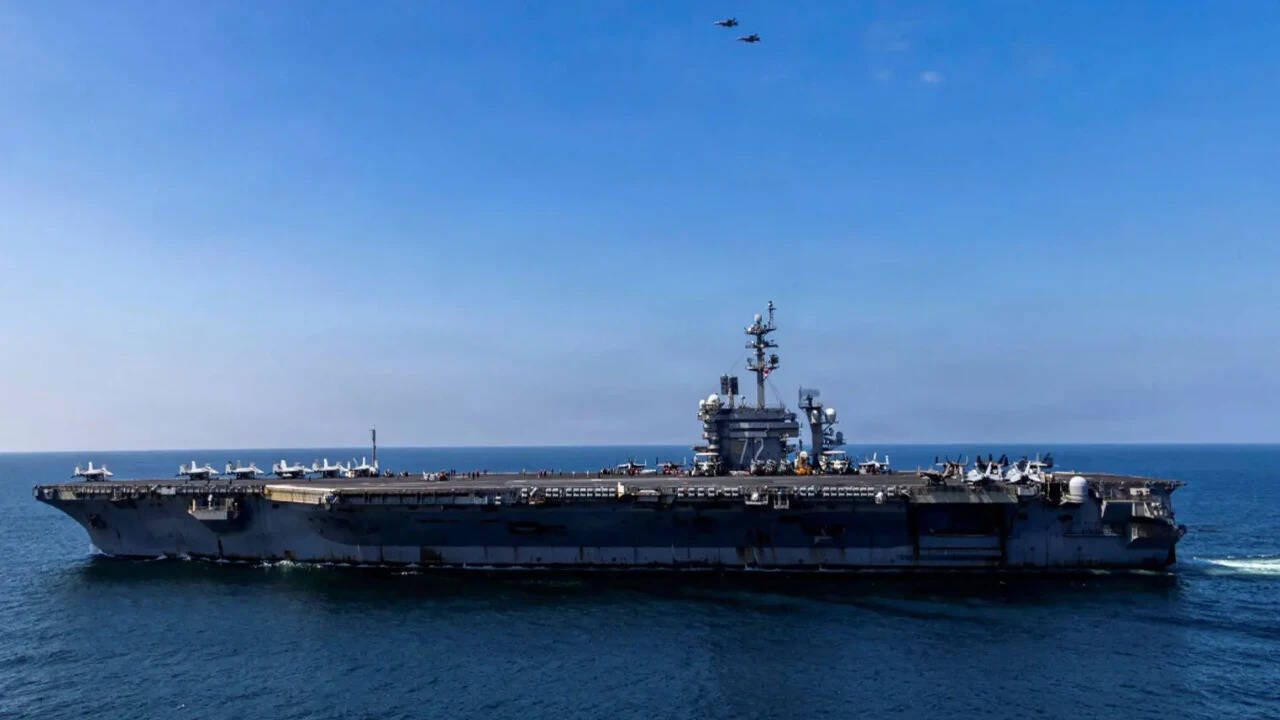
Washington must balance the forward deployment of carrier strike groups and land-based air defense batteries against maintenance backlogs and readiness cycles for other theaters, specifically the Indo-Pacific. Every month of high-tempo operations in the Middle East accelerates wear on aging hull frames, tactical aircraft, and logistical support vessels.
Iran faces a different logistical bottleneck centered on component procurement for precision guidance systems. Despite domestic engineering advancements, reliance on dual-use microelectronics sourced through third-party intermediaries creates friction points. Interdiction efforts targeting illicit maritime and overland smuggling routes periodically disrupt supply chains, forcing Tehran to adjust its inventory allocation between direct state stockpiles and regional proxies in Lebanon, Iraq, and Yemen.
Proxy Network Optimization
Military engagements between primary state adversaries are rarely direct; they are mediated through a decentralized network of allied militias and political wings. The seven-month mark highlights the stress testing of this proxy architecture. For Tehran, decentralized command structures provide plausible deniability and strategic depth, allowing them to exert pressure across multiple fronts simultaneously without triggering a total war doctrine on Iranian soil.
However, this dispersion introduces coordination failures and escalation risks outside central control. When a regional proxy miscalculates an attack vector or inflicts unacceptable casualties on coalition forces, the political pressure on Washington to retaliate directly against Iranian assets increases exponentially. This dynamic creates an involuntary escalation ladder where the primary actors react to decentralized tactical decisions rather than central strategic directives.
Strategic Horizon and Resource Allocation
Prolonged kinetic stalemates resolve neither ideological divergence nor geopolitical friction. Instead, they establish a new baseline of operational friction where low-level conflict is absorbed into standard defense budgeting and intelligence operations. Strategic planning must pivot from the objective of achieving a definitive military victory to managing long-term regional containment.
Intelligence agencies and defense ministries must optimize predictive modeling for munitions inventory thresholds rather than focusing solely on immediate tactical outcomes. Procurement pipelines must be restructured to decouple critical subsystem manufacturing from geopolitical vulnerabilities. Policymakers should prioritize diplomatic backchannels specifically designed to establish de-escalation corridors, not out of altruism, but to preserve finite high-end defensive assets for pacing threats in other strategic theaters.