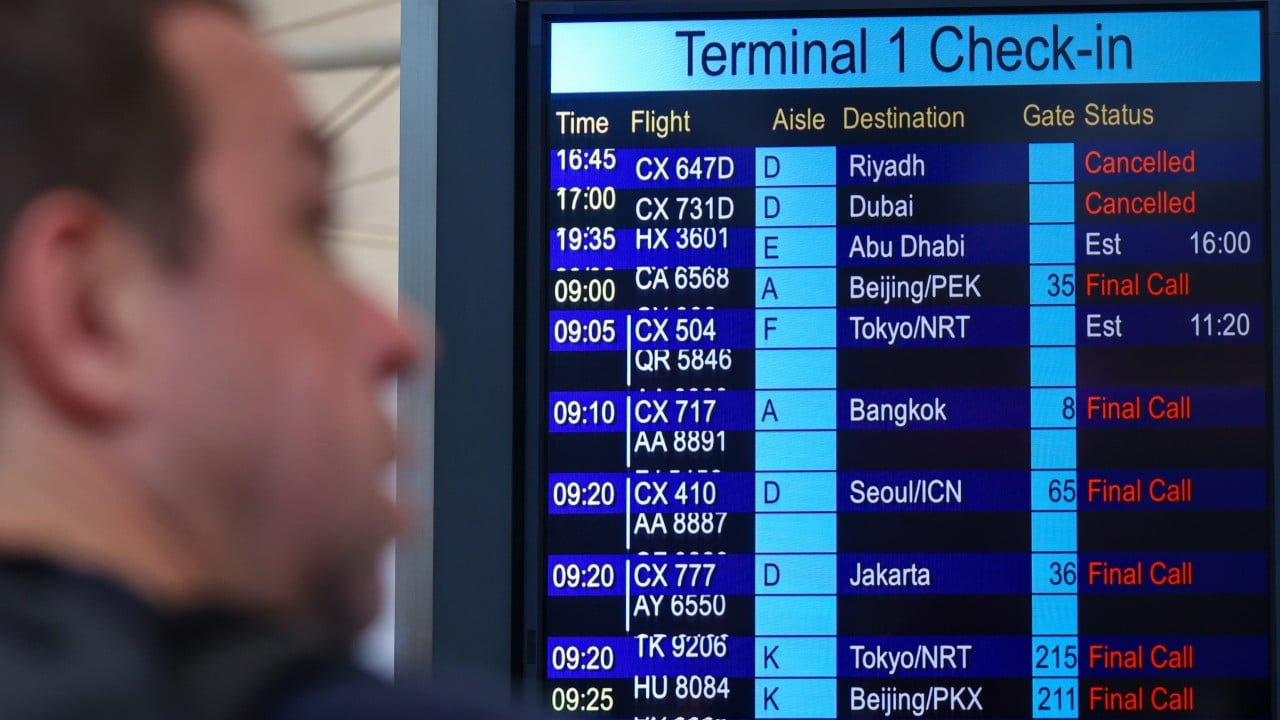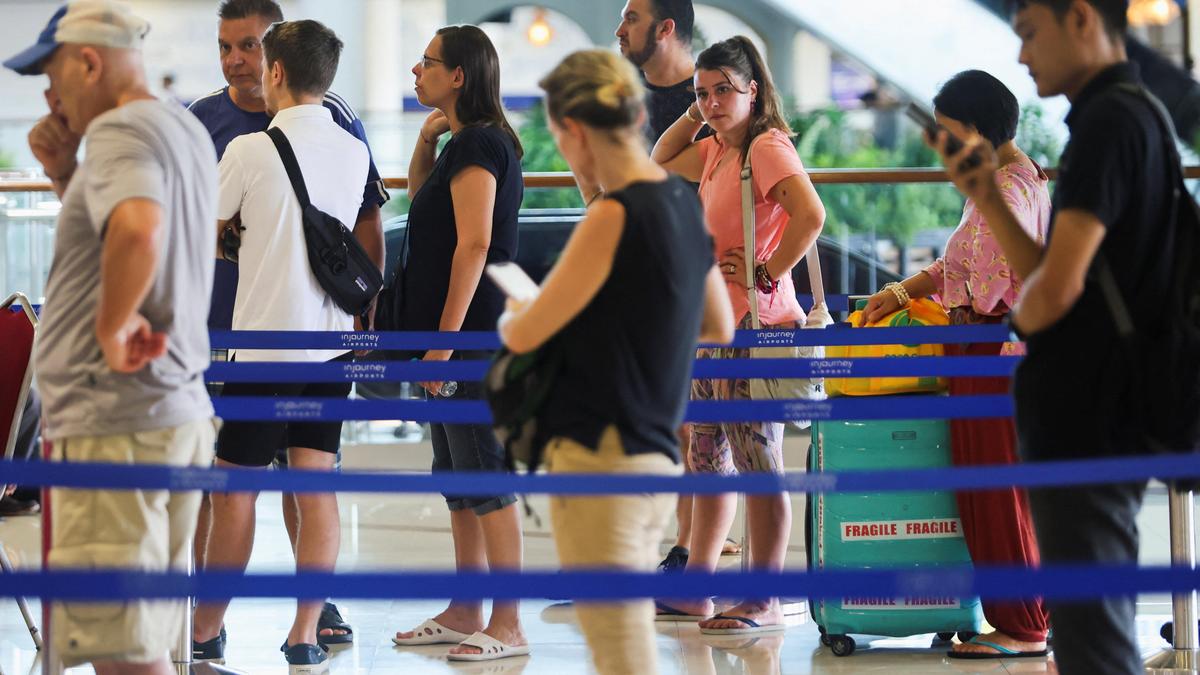
A single missile launch in the Middle East can ruin a vacation in Singapore or a business meeting in London. It sounds like hyperbole, but it's the reality of modern aviation. When tensions between the U.S. and Iran spike, the impact isn't just felt in diplomatic circles. It's felt by the guy sitting in 14B who just found out his six-hour flight is now ten hours long.
The recent surge in regional instability has forced airlines to treat Iranian and Iraqi airspace like a radioactive zone. This isn't just about safety. It’s about a massive logistical nightmare that trickles down to your ticket price and your sanity. If you've looked at a flight tracker lately, you'll see a literal hole in the map where planes used to fly.
The Logistics of Avoiding a War Zone
Airlines don't just "wing it" when they see a headline about a drone strike. Decisions are made in minutes by operations centers that monitor global security feeds 24/7. When the Federal Aviation Administration (FAA) or the European Union Aviation Safety Agency (EASA) issues a "NOTAM" (Notice to Air Missions) restricting a specific corridor, the scramble begins.
Iran sits at a critical crossroads. For years, its airspace was the primary highway for carriers moving people between Europe and Asia. It's high-altitude, generally efficient, and brings in a lot of "overflight fees" for the Iranian government. When that highway closes, every single plane has to take the long way around.
Think of it like a major bridge in your city suddenly being blocked off. Every car is now diverted onto side streets that weren't designed for that volume. In the sky, those "side streets" are the corridors over Saudi Arabia, Egypt, or even more circuitous routes over Central Asia. These routes are crowded. They're narrow. Most importantly, they're expensive.
Why Your Flight Suddenly Costs More
Fuel is the biggest expense for any airline. It’s not even close. When a flight from New York to New Delhi has to skirt around the entire Persian Gulf, it adds hundreds of miles to the trip.
A Boeing 777 burns roughly 2,500 gallons of fuel per hour. If a conflict adds two hours of flight time to avoid a "hot" zone, that’s 5,000 extra gallons. At current market prices, that is a staggering amount of money for a single trip. Airlines aren't going to eat that cost. They pass it to you in the form of "fuel surcharges" or simply higher base fares.
Then there's the crew issue. Pilots and flight attendants have strict legal limits on how many hours they can work. A flight that was safely under the 14-hour limit might suddenly push into 16 hours due to a detour. Now, the airline needs a relief crew or has to schedule a stopover. That means more hotel rooms, more landing fees, and more delays.
The Shadow of MH17 and PS752
You might wonder why airlines are so jumpy. History is a brutal teacher. The aviation industry is still haunted by Malaysia Airlines Flight 17, shot down over Ukraine in 2014, and Ukraine International Airlines Flight 752, downed by an Iranian missile near Tehran in 2020.
In both cases, civilian planes were caught in the crossfire of regional conflicts because airspace wasn't closed fast enough. No CEO wants to be the one who gambled with 300 lives to save a few thousand bucks on fuel.
Today, the "risk appetite" for flying over contested territory is zero. Even if Iran says their corridor is safe, Western carriers aren't buying it. They’d rather fly over the North Pole than take a chance on a nervous anti-aircraft battery operator making a split-second mistake. This creates a fragmented sky. You'll see Qatar Airways or Emirates still using certain routes that United or Lufthansa won't touch. It’s a geopolitical game of chicken played at 35,000 feet.
The Ripple Effect on Hub Cities
Cities like Dubai, Doha, and Istanbul have built their entire economies on being the world’s "transfer desks." They sit perfectly between the East and the West. But when the neighbors start fighting, these hubs feel the squeeze.
If the airspace to the north (Iran) and the south (Yemen) is restricted, the "bottleneck" over the remaining safe territory becomes a massive headache for air traffic control. Flights get held on the ground in London or Tokyo because there simply isn't enough room in the safe corridors to accommodate everyone at once. Your "30-minute delay" is often just a result of a traffic jam over the desert.
Practical Steps for the Smart Traveler
Don't just assume your flight will be on time because the weather is clear. If you're traveling between Europe, the Middle East, or Asia, you're in the crosshairs of this logistical mess.
Check the flight path. Apps like FlightRadar24 let you see exactly where your plane is going. If you see your route curving wildly around a specific border, expect a longer flight.
Build in longer layovers. A one-hour connection in Frankfurt or Dubai is a massive risk right now. If your incoming flight is delayed by an hour because of a mandatory detour, you're going to miss your connection. Aim for at least three hours. It’s boring, but it’s better than sleeping on a terminal bench.
Watch the news, but watch the airlines closer. If a major carrier like KLM or Qantas suddenly cancels a route, it's a sign that the intelligence they're seeing is worse than what's being reported on cable news. They have better data than you do. Trust their movements more than the "all-clear" from a local government.
Finally, check your travel insurance policy. Most standard policies have "acts of war" or "civil unrest" exclusions. If your flight is canceled because of a missile strike in a country you weren't even visiting, you might find yourself fighting for a refund. Look for "cancel for any reason" (CFAR) coverage if you’re planning a high-stakes trip through these regions. The extra $50 is a small price for peace of mind when the world feels this volatile.