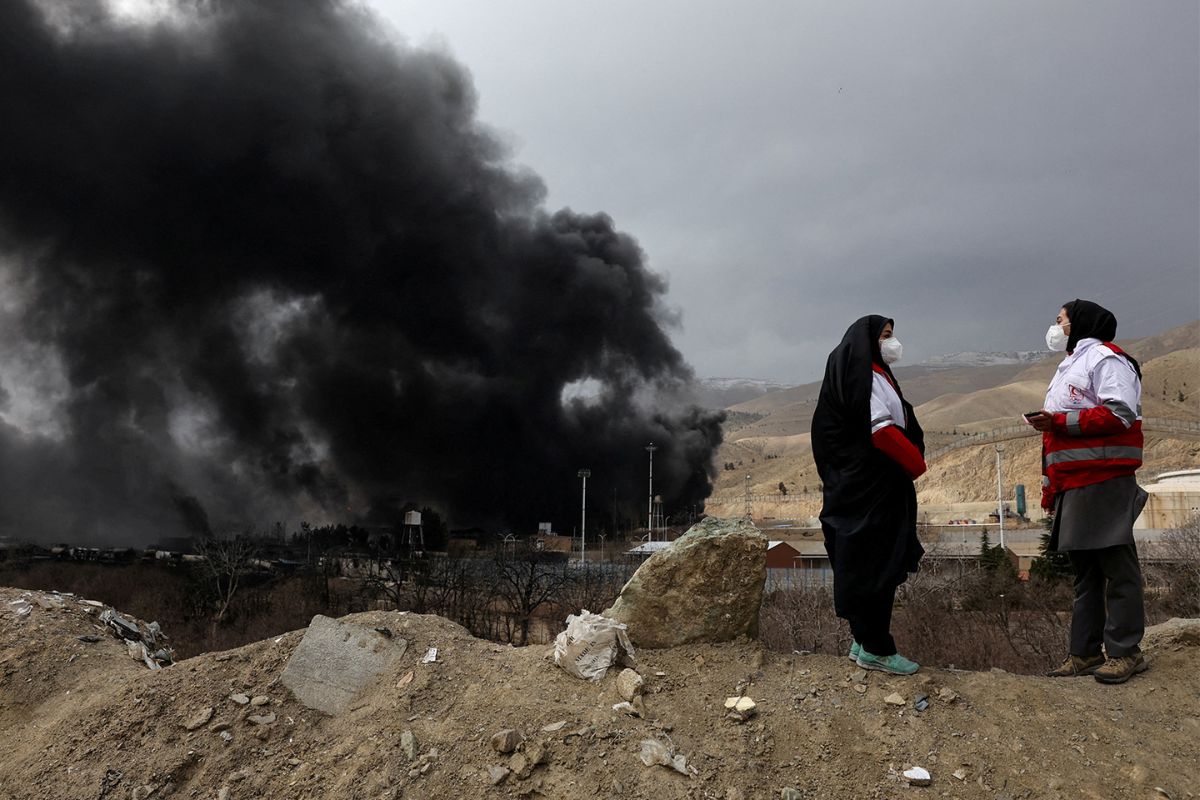
Every time tension boils over in the Middle East, a familiar script plays out. A drone strikes a US outpost. Washington vows retaliation. Days later, heavy bombers roar off runways, rain precision guided munitions on remote depots, and officials hold press conferences declaring success.
The latest round of strikes in Iraq and Syria fits this exact pattern. Reports indicate dozens of casualties, with official counts listing at least 35 dead and over 300 injured across multiple target zones. Command centers are destroyed. Weapons caches are vaporized. Yet, if you think these strikes will permanently quiet the launchers or force a strategic retreat from Tehran, you're misreading the entire conflict.
This isn't a war of military peer-to-peer victory. It's a grinding, asymmetric battle of political wills where the side willing to absorb the most pain usually dictates the tempo.
The Illusion of Retaliation
Washington loves the word deterrence. It's the central pillar of American foreign policy in the region. The logic seems simple enough on paper. If you strike US forces, the response will be so disproportionate that you won't dare do it again.
It doesn't work that way in reality.
When US aircraft hit targets associated with the Islamic Revolutionary Guard Corps (IRGC) Quds Force and their allied militias, they aren't striking a conventional army. They're hitting a highly decentralized network. Groups like Kata'ib Hezbollah, Harakat al-Nujaba, and Asa'ib Ahl al-Haq don't operate out of massive, centralized bases that can be neutralized in a single night of bombing.
They use mobile launchers. They blend into local populations. They store weaponry in ordinary warehouses and underground tunnels.
Striking 85 targets across Iraq and Syria might degrade their immediate supply lines. It certainly destroys expensive hardware. But it doesn't eliminate the knowledge, the local influence, or the political grievances that fuel these groups in the first place. Instead of deterring, these highly publicized campaigns often serve as powerful recruiting tools, proving to local factions that they are actively fighting the world's superpower.
Inside the Mechanics of Proxy Warfare
To understand why these air campaigns fall short, you have to look at how Iran manages its regional partnerships. Tehran doesn't command these militias like divisions of a regular army. It's a relationship built on shared ideological goals, financial support, and technological transfers, but with a high degree of local autonomy.
When a militia launches a one-way attack drone at a US base, they aren't always waiting for a direct green light from the Iranian leadership. Often, they act on their own initiative to assert local dominance or pressure their own national governments to expel foreign forces.
Consider what happens after a major US strike.
- The immediate pause: Militia groups pull back, hide their heavy equipment, and limit their communications to avoid tracking.
- The political theater: Local political allies of these militias denounce the US strikes as a violation of national sovereignty, putting immense pressure on host governments like Baghdad to demand a US withdrawal.
- The reloading phase: Iran quietly replenishes the lost hardware through established smuggling routes running across the Iraq-Syria border.
- The resumption: Once the political heat dies down, low-level harassment attacks begin again.
This cycle is incredibly cheap for Iran and their local allies. A single attack drone can cost as little as $20,000. The US interceptor missiles used to shoot them down can cost millions. Even the fuel spent by B-1B bombers flying round-trip missions from the United States dwarfs the entire budget of the militia units they are targeting. The math simply doesn't favor the status quo.
Why Air Power Alone Cannot Solve a Geopolitical Crisis
Military history is filled with examples of air power failing to achieve political objectives on its own. You can't bomb an ideology out of existence, and you certainly can't bomb a state into abandoning what it perceives as its vital security interests.
For Iran, the network of allied militias—often referred to as the Axis of Resistance—is not a luxury. It's an existential defense strategy. Having fought a brutal war with Iraq in the 1980s, Tehran’s military doctrine is designed to keep any future conflict far from its own borders. By building proxy forces in Lebanon, Syria, Iraq, and Yemen, Iran ensures that any fight with the US or its allies is fought on foreign soil.
No amount of strikes in the deserts of eastern Syria or the valleys of western Iraq will convince Iran to dismantle this forward defense network.
If anything, these strikes reinforce Tehran's belief that they need these groups. From their perspective, without these deterrence partners, they would be completely vulnerable to direct Western intervention. It's a classic security dilemma. The more the US strikes to establish deterrence, the more Iran and its allies feel compelled to build up their capabilities to resist that pressure.
The True Cost on the Ground
Beyond the strategic calculations in Washington and Tehran, there is a brutal human cost that rarely gets the attention it deserves.
While the Pentagon routinely asserts that strikes are planned with extreme care to avoid civilian casualties, the reality on the ground is rarely so clean. When bombs hit facilities in populated areas like Al-Qa'im or Deir ez-Zor, the collateral damage is real.
Buildings collapse. Shrapnel tears through nearby homes. Power grids fail.
The reported 300-plus injuries from these operations include combatants, but they also include civilians who simply had the misfortune of living near a warehouse designated as a militia logistics hub. Every civilian casualty erodes whatever local goodwill remains for the US presence in the region. It makes cooperation with local security forces harder. It turns the local population against the very forces that claim to be protecting them from extremist threats.
Moreover, these strikes place host governments in an impossible position. Iraq’s government, which relies on US security cooperation to prevent a resurgence of ISIS, also depends on pro-Iran political factions to maintain its governing coalition. Every US bomb that drops on Iraqi soil chips away at the political viability of that partnership, pushing Baghdad closer to demanding a full exit of American troops.
Breaking the Infinite Loop
Doing the same thing over and over and expecting different results is the definition of insanity. Yet, when it comes to Middle East policy, Washington seems locked in this perpetual cycle of kinetic response.
If the goal is to protect US service members and bring stability to the region, a military-first approach will continue to yield the same disappointing results. True deterrence requires a diplomatic framework that addresses the underlying drivers of the conflict.
This means engaging in direct, realistic talks about regional security architectures. It means addressing the long-term future of the US military footprint in Iraq and Syria, which currently serves more as a target for militia groups than as a strategic asset. Most importantly, it requires recognizing that military force is a tool to support diplomatic strategy, not a substitute for one.
Until that shift occurs, expect to see the same headlines next month, next year, and for years to come. The bombers will fly, the targets will burn, the casualty counts will rise, and the fundamental dynamics of the region won't shift an inch.