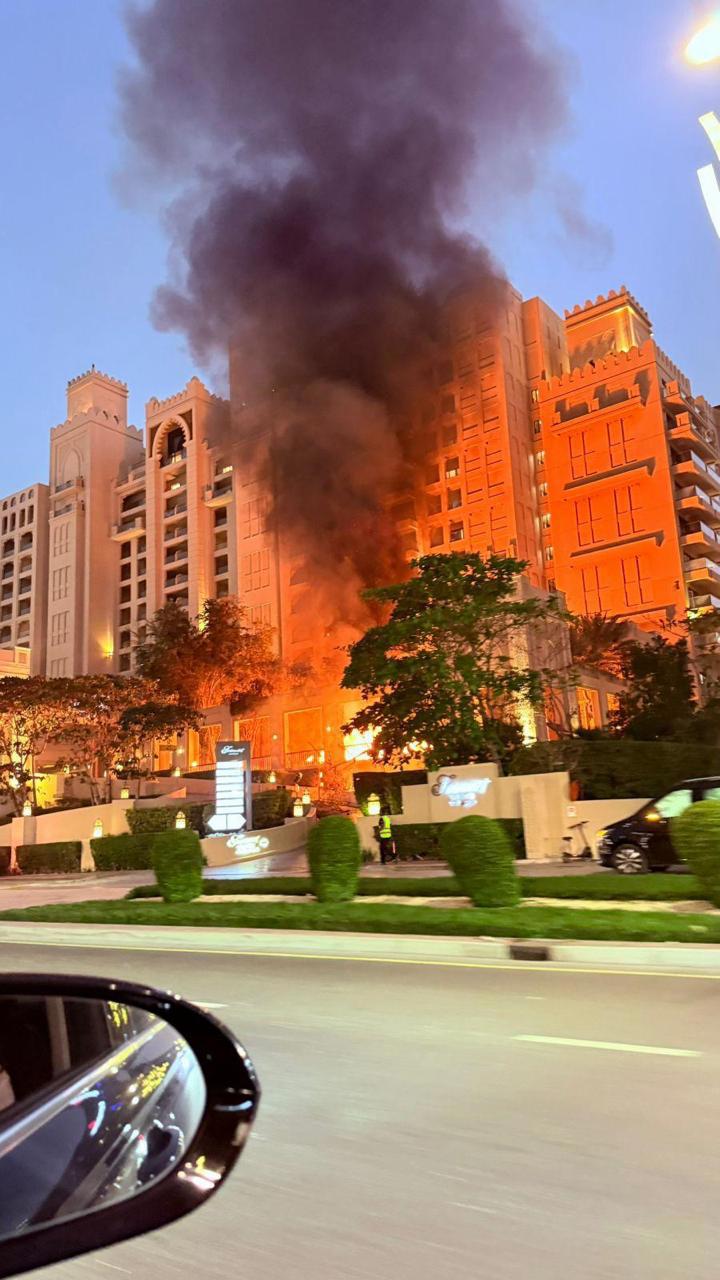
The recent kinetic event at a Dubai hospitality asset serves as a critical case study in the intersection of high-pressure utility systems and the physical security of high-density urban corridors. While surface-level reporting focuses on the visual aftermath—scattered debris and localized panic—a rigorous analysis must dissect the mechanical failure chain, the physics of projectile dispersion in vertical environments, and the economic ripple effects on district-level insurance premiums. This event was not a localized anomaly; it was an expression of the inherent risks found in complex MEP (Mechanical, Electrical, and Plumbing) infrastructures that sustain modern luxury hospitality.
The Triad of Incident Causality
An explosion within a reinforced concrete structure is rarely the result of a single point of failure. Instead, it represents a convergence of three distinct structural and operational variables:
- Pressure Vessel Integrity and Maintenance Cycles: High-rise hotels rely on sophisticated boiler systems and centralized gas distribution networks. A breach in these systems suggests a deviation from the expected fatigue life of the containment vessels or a failure in the automated pressure relief valves (PRVs).
- Ignition Source Convergence: The presence of volatile gases is a passive risk; the transformation into a kinetic event requires an ignition trigger. In a commercial kitchen or utility room environment, this often stems from electrical arcing or a failure in the automated shut-off sensors designed to detect gas concentrations before they reach the Lower Explosive Limit (LEL).
- Containment Architecture: The extent of the external debris field is a direct function of the building's facade engineering. Non-load-bearing glass curtains and decorative cladding are designed for wind resistance but offer minimal resistance to internal blast overpressure. The "raining debris" described by witnesses is the result of the building's envelope behaving exactly as physics dictates when internal pressure exceeds the tensile strength of the glazing seals.
The Physics of Vertical Debris Dispersion
The danger of an urban explosion scales non-linearly with the height of the incident. In a horizontal environment, energy dissipates across a two-dimensional plane. In Dubai’s vertical landscape, the potential energy of falling debris introduces a secondary hazard zone that far exceeds the initial blast radius.
The Fragment Trajectory Function
When a window or facade panel is ejected from a mid-to-high-rise floor, it enters a state of gravitational acceleration modified by wind shear and aerodynamic lift. Unlike a controlled demolition, where debris is directed inward, an accidental overpressure event creates uncontrolled projectiles. The mass of a standard tempered glass panel, combined with the acceleration of gravity ($g \approx 9.81 m/s^2$), results in terminal velocities capable of penetrating vehicle roofs and temporary pedestrian shelters.
This creates a "Shadow Risk" for adjacent properties. Even if a neighboring building sustains no direct blast damage, the impact of falling materials can trigger secondary glass failures or structural damage to podium-level amenities like pools and outdoor dining areas.
Operational Continuity and the Cost of Downtime
For a luxury hotel in a competitive market like Dubai, the physical damage is often eclipsed by the long-term erosion of the "Certainty Premium." Hospitality assets are valued on their RevPAR (Revenue Per Available Room) and their ability to host high-stakes events.
- Immediate Brand Devaluation: The "never heard before" nature of the noise creates a lasting psychological anchor for guests. Rebranding or extensive PR campaigns are required to decouple the property from the image of the incident.
- The Insurance Adjustment Cycle: Following an event of this magnitude, the regional risk profile for similar assets undergoes a recalibration. Insurers transition from standard actuarial models to "Event-Driven Assessments," often resulting in 15% to 30% increases in premiums for properties utilizing identical gas delivery systems.
- Supply Chain and Utility Liability: If the explosion is traced back to a utility provider’s regulator or a third-party maintenance contractor, the legal landscape shifts into complex multi-party litigation. The objective is to determine if the failure was "latent" (inherent in the equipment) or "active" (caused by human error during a recent inspection).
Structural Integrity vs. Aesthetic Engineering
Modern Dubai architecture prioritizes aesthetic transparency, utilizing massive glass surface areas. This creates a vulnerability in "Blast Mitigation" logic. While the primary reinforced concrete frame of the hotel remains intact—as concrete is exceptionally resilient against the brief duration of a gas-fueled overpressure—the secondary systems (cladding, HVAC ducts, and interior partitions) are highly susceptible.
The "debris rain" confirms that the facade failed before the internal blast walls could contain the energy. This suggests a need for a shift toward "Venting Geometry" in utility room design. By engineering specific "weak points" in the building's interior that lead to reinforced shafts, the energy of an explosion can be directed upward or into controlled areas rather than outward onto public thoroughfares.
Risk Mitigation Framework for High-Density Hospitality
To prevent a recurrence and stabilize the district's safety rating, asset managers must implement a more aggressive monitoring protocol that moves beyond simple compliance.
- Acoustic Leak Detection: Implementing ultrasonic sensors in gas rooms can identify high-frequency sounds produced by pinhole leaks long before traditional chemical sensors detect a gas buildup.
- Blast-Resistant Film Retrofitting: For existing structures where replacing glass is cost-prohibitive, the application of high-tensile polymer films can hold shattered glass fragments together, preventing the "rain" of sharp debris and keeping the material attached to the frame.
- Real-Time Overpressure Venting: Integration of automated louvers that trigger upon gas detection can equalize pressure before an ignition occurs, potentially reducing the force of an explosion by providing an immediate escape path for expanding gases.
The incident in Dubai serves as a reminder that in the race toward vertical density, the mechanical "nervous system" of a building must be managed with the same rigor as its architectural silhouette. The failure of a single valve or a delayed sensor calibration is not just a maintenance oversight; it is a systemic threat to the urban ecosystem.
The immediate strategic priority for developers in the region is a "Systemic Stress Audit." This involves a ground-up re-evaluation of all pressurized delivery systems across the portfolio, prioritizing assets with high-occupancy podium levels. Failure to move toward a predictive maintenance model—utilizing IoT-enabled vibration and pressure sensors—leaves the asset owner exposed to catastrophic liability and an irreversible loss of market position. The goal is to move from reactive "debris management" to a proactive "containment-by-design" philosophy.