Ink dries slowly on court orders, but the weight of them falls immediately.
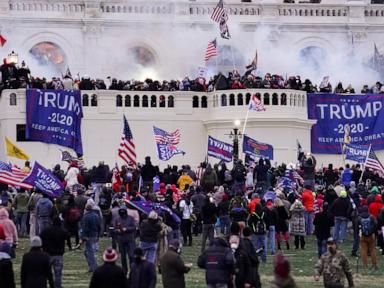
In a quiet courtroom, a gavel drops. It is a sound that usually signals finality, a definitive punctuation mark at the end of a long, exhausting legal sentence. Yet, on this particular day, the sound felt hollow. A federal judge stood firm against the architects of the United States Department of Justice, tossing aside a high-stakes seditious conspiracy case stemming from the events of January 6.
To read the docket is to see dry citations and procedural arguments. To live through the reality of that decision is something else entirely.
Consider a hypothetical citizen sitting in a quiet kitchen across the country, watching the news ticker scroll by. The numbers mean little. The legal jargon means less. What remains is a quiet, nagging ache in the chest. How can an event broadcast to billions, an assault on the seat of American democracy that left shattered glass and bruised bodies in its wake, dissolve so easily under the microscopic lens of a single judge's critique?
The courtroom drama was not born in a vacuum. It was the product of a massive, sprawling prosecutorial effort. Thousands of hours of footage, terabytes of encrypted chat logs, and a staggering number of indictments built a towering edifice of charges. Sedition. The very word carries the heavy, historical scent of treason and rebellion. It is a charge saved for those who seek to tear down the machinery of the state from within.
Yet, the prosecution stumbled.
A judge pointed out the cracks in the foundation. Criticism rained down not just on the specific handling of this single case, but on the sprawling ambition of the government's strategy. Prosecutors stretched definitions to their breaking point. They tried to capture a chaotic, multifaceted riot within the neat, rigid boxes of a historic conspiracy statute.
Law is supposed to be a precision instrument. Instead, it felt like a blunt tool swung in the dark.
Think of an architect drawing blueprints on a desk covered in coffee cups and crumpled paper. The lines look clean from above. The structural integrity seems sound. But when the concrete is poured and the walls go up, the building begins to lean. That is what happened here. The government wanted a monument to accountability, but the legal framework could not bear the weight of the narrative they tried to hang upon it.
Criticism from the bench cuts deep. It exposes the tension between public outrage and constitutional boundaries.
We want swift justice when the wounds are fresh. We want the courts to act as a moral compass, pointing directly toward guilt and punishment. But the courts are not built for moral catharsis. They are built for due process. Sometimes, that process protects the very people we wish most fervently to condemn. That realization is bitter. It tastes like ash.
Doubt creeps in. If the highest levels of federal prosecution can miscalculate the reach of a conspiracy charge, what else are we getting wrong?
History teaches us that overreach always invites a correction. When the state grasps too tightly, its fingers slip. We saw it during the civil rights struggles, and we see it now in the digital age. The machinery of justice is slow, clumsy, and occasionally frustrating. It trips over its own rules.
Drop your gaze back to the courtroom. The attorneys pack their leather briefcases. The reporters scramble for the exits to file their urgent dispatches. The defendants walk away, their futures altered, yet legally untethered from the most severe accusation leveled against them.
The public is left with a fractured picture. Justice was not denied, exactly. Rather, it was defined by its limits.
We are left standing in the quiet aftermath of a legal defeat, staring at an empty space where a historic conviction was supposed to stand, realizing that the hardest part of a democracy is living with the rules when they do not give us what we want.