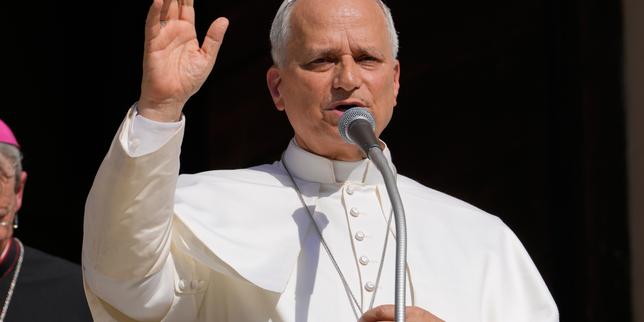
Pope Leo XIV will celebrate a massive public mass on the Place de la Concorde and the Champs-Élysées on September 26, anchoring a high-stakes papal visit to Paris that breaks decades of Vatican security protocols. Moving the liturgy out of traditional sacred spaces like Notre-Dame and onto an open-air urban boulevard creates an unprecedented logistical nightmare for French authorities. The decision reflects a deliberate, aggressive strategy by the Holy See to reassert its presence in a deeply secularized Europe, even if it means transforming the heart of Paris into a heavily fortified, high-risk sanctuary for a single day.
A Mass Moving Beyond Cathedral Walls
The choice of the Champs-Élysées is not merely about accommodating a massive crowd. It represents a calculated theological and political statement. Typically, papal visits to European capitals center on historic cathedrals or controlled stadium environments where access can be tightly regulated. By choosing the axis running from the Arc de Triomphe to the Place de la Concorde, the Vatican is intentionally occupying the primary symbolic space of the French Republic. In related news, we also covered: The Red Phone in the Strait of Hormuz.
French secularism, or laïcité, has long maintained a strict boundary between public state space and religious expression. A massive Catholic mass on the very asphalt used for the Bastille Day military parade forces a confrontation between state neutrality and public faith. This move has already sparked quiet friction within the French Ministry of the Interior, where officials are left balancing constitutional protections for religious freedom against severe public order concerns.
The scale of the event will eclipse any recent religious gathering in Western Europe. Millions of faithful from France, Belgium, Germany, and beyond are expected to converge on the capital. The sheer geometry of the Champs-Élysées presents a unique vulnerability. It is a long, linear corridor flanked by historic buildings, side streets, and underground metro networks. Securing this type of terrain requires a completely different approach than a self-contained stadium or a enclosed square like St. Peter’s. Reuters has provided coverage on this important issue in great detail.
The Operational Nightmare of an Open Boulevard
French security forces are already stretched thin by a continuous cycle of high-profile international events and elevated terror alerts. The September 26 mass adds a complex layer of risk that intelligence agencies are scrambling to mitigate. Unlike a political rally or a sports victory parade where crowds move dynamically, a religious mass demands hours of stillness, prayer, and specific liturgical movements, such as the distribution of Holy Communion to hundreds of thousands of people scattered across a two-kilometer zone.
[Security Perimeter Mockup: Champs-Élysées and Place de la Concorde]
+-------------------------------------------------------+
| [Arc de Triomphe]                                     |
|        |                                              |
|        v  (Linear Crowd Corridor - High Vulnerability) |
| [Avenue des Champs-Élysées]                           |
|        |                                              |
|        v  (Distribution Bottlenecks)                  |
| [Place de la Concorde] -> [Papal Altar Location]      |
+-------------------------------------------------------+
To manage this, the Paris Police Prefecture plans to implement an absolute lockdown of the 8th arrondissement starting 48 hours prior to the event. This involves steps that will paralyze the economic heart of the city:
- Systematic rooftop deployments: Elite marksmen from the GIGN and RAID units will occupy every single roof terrace along the avenue to counter long-range threats.
- Subterranean sealing: Every metro station feeding into the avenue will be closed, and underground sewage networks will be welded shut and inspected by canine units trained in explosives detection.
- Triple-layer checkpoints: Attendees will have to pass through pre-registered ticketing gates, metal detectors, and physical pat-downs kilometers away from the actual altar site.
The logistical friction will be immense. Local luxury retailers, corporate headquarters, and hotels along the avenue have already expressed quiet fury over the forced closures, which will result in millions of euros in lost revenue. The state, however, is prioritizing survival over commerce. The threat profile for Pope Leo XIV is multifaceted, ranging from organized extremist cells to lone-wolf actors using drones or vehicles.
The Vatican Strategy of High-Visibility Disruptions
Inside the Roman Curia, the push for this open-air French mass is seen as a victory for the Vatican's communication wing. The current pontificate has grown weary of addressing emptying churches in Western Europe. By taking the liturgy to the streets, the Church aims to create a visual spectacle that cannot be ignored by the global media. It is a visual counter-offensive against the narrative of a dying institutional faith.
However, the cost of this symbolism is being borne heavily by the French taxpayer. While the Catholic Church in France is contributing to the liturgical setup—the altar construction, sound systems, and video screens—the massive bill for police overtime, military mobilization, and public transport disruptions falls squarely on the state. This funding asymmetry is bound to provoke legal challenges from secular advocacy groups who argue that public funds are being used to facilitate a purely religious rite.
The ideological friction is just as potent as the logistical strain. The Place de la Concorde holds a deep, bloody significance in French history as the site of the guillotine during the French Revolution, where King Louis XVI and the old order were systematically dismantled. Erecting a papal altar on this specific ground is a historical irony that has not escaped cultural commentators in Paris. It serves as a silent, powerful reclamation of space by an institution that the radical elements of the Revolution sought to destroy.
Managing the Chaos on the Ground
For the individual pilgrim, attending the September 26 mass will feel less like a spiritual retreat and more like navigating a high-security airport. Organizers are urging the elderly and the infirm to stay home and watch the broadcast, recognizing that the physical demands of standing for eight to ten hours in a restricted zone will be grueling. The event will test the limits of municipal crowd control, particularly at the conclusion of the mass when hundreds of thousands of people attempt to leave the secured zone simultaneously through a limited number of exit corridors.
The success of the day hinges on a flawless execution by the joint Vatican-French security task force. A single breakdown in communication or a breach of the perimeter could result in catastrophic crowd crushes or worse. Pope Leo XIV has made his choice. He is betting that the spiritual and media dividends of a historic mass in the heart of Paris will outweigh the profound physical dangers of stepping outside the safety of the Vatican walls. The world will be watching to see if that gamble pays off.


