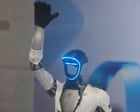
When a stock spikes over six hundred percent on day one, Wall Street usually smells a bubble. But what happened on the Shanghai STAR Market wasn't just typical retail hype. Unitree officially went public, raising roughly nine hundred million dollars and instantly proving that investors are desperately hungry for pure-play robotics stocks.
If you missed the memo, Unitree is the Hangzhou-based hardware company famous for making mechanical dogs do backflips and humanoid androids box on television. Their initial public offering priced shares at 150.80 yuan. Within hours, trading volume pushed prices as high as 1,100 yuan before closing out with massive gains. Founder Wang Xingxing saw his paper wealth shoot past twelve billion dollars.
Retail investors practically mobbed the subscription books, oversubscribing the retail tranche by thousands of times. Why? Because people are tired of buying boring index funds. They want a direct bet on physical artificial intelligence.
The Reality Behind the Valuation Madness
Let's look at the actual numbers here. Shifting 5,500 humanoid units last year sounds impressive for a robotics startup, but it still represents a tiny fraction of global manufacturing output. Even so, the market valuation briefly soared past fifty billion dollars, leaving Unitree trading at a trailing price-to-earnings ratio near 1,200.
That valuation demands perfection. It assumes that every warehouse, laboratory, and eventually living room will soon house a bipedal assistant built by Unitree.
I've watched hardware companies try to cross the valley of death between cool YouTube prototypes and reliable commercial deployments for years. Most fail. They run out of cash, or their actuators burn out under continuous industrial stress. Unitree avoids some of those traps because they spent years refining components for quadruped units before scaling humanoids. They already know how to drive manufacturing costs down.
Navigating the Geopolitical Crosswinds
You cannot talk about this IPO without addressing the elephant in the room: international trade friction. Just weeks prior to the listing, regulators in Washington enacted strict bans targeting foreign-made humanoid and quadruped imports, while the Pentagon added Unitree to a military-link list.
Unitree pulls in over forty percent of its revenue from overseas markets, with the United States making up a solid chunk of that slice. Losing access to Western buyers hurts. Yet, domestic demand inside China is so heavy right now that local state-backed funds and tech giants like Tencent and AI darling DeepSeek gladly stepped up as strategic investors, soaking up shares with multi-year lockups.
Beijing views domestic robotics as a core pillar of national security and technological independence. When the state pours capital into a sector, market rules change entirely.
Where the Money Goes Next
Unitree isn't sitting on its cash pile. According to their official prospectus, roughly two-thirds of the IPO proceeds are heading straight into research, manufacturing expansion, and heavy upgrades to their embodied artificial intelligence models.
Just a day before ringing the opening bell, the firm rolled out a new model nicknamed "Superman", boasting sprint speeds and jump heights that challenge biological limits. Whether that specific machine makes economic sense for factory floors remains an open question, but it keeps the hype train moving at full throttle.
If you are tracking how automation scales, stop looking exclusively at western labs like Boston Dynamics or Tesla. Public markets in Asia have just established a massive valuation anchor. Expect a flood of copycat IPOs from rival Chinese robotics firms before the year closes out. Watch the upstream supply chain for precision gearboxes and actuators, because that is where the sustainable margins will actually land.