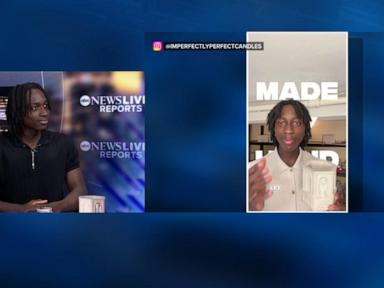
Consumer packaged goods operate on a linear extraction-to-landfill model because reverse logistics rarely survive basic margin compression. When a New York City teenager launches a candle brand built around refillable cement vessels, the market treats it as a human-interest story. A rigorous operational audit reveals something far more complex: a micro-scale experiment in circular unit economics, material science, and localized retention mechanics. Standard media coverage focuses on founder demographics and aesthetic appeal, entirely missing the structural vulnerabilities and margin traps inherent to heavy, low-cost, reusable packaging.
To understand whether a refillable cement candle business can scale beyond a hyper-local novelty, one must strip away the narrative framing and analyze the underlying operational architecture. This model relies on three interconnected variables: the durability and cost profile of cement versus traditional glass, the reverse-logistics friction of container recovery, and the customer lifetime value (LTV) required to amortize high upfront vessel fabrication costs. Meanwhile, you can explore similar stories here: What Nobody Tells You About Vestas Layoffs And The Wind Industry Squeeze.
The Material Economics of Cement Versus Borosilicate Glass
Traditional candle manufacturing relies on soda-lime or borosilicate glass vessels purchased at wholesale volume. Glass offers predictable thermal expansion, uniform wall thickness, and zero porosity. Cement introduces immediate manufacturing variance and distinct chemical requirements that alter the cost of goods sold (COGS).
Raw Portland cement is inexpensive per pound, often costing a fraction of molded glass at small-batch quantities. However, raw material cost is a misleading metric in artisanal manufacturing. The true cost function of a cement vessel is dictated by labor hours, curing time, and sealing chemistry. To see the complete picture, we recommend the excellent article by The Wall Street Journal.
- Curing Bottlenecks and Working Capital: Unlike glass, which arrives ready for wick placement and wax pouring, cast cement requires a multi-day hydration and curing cycle to achieve structural integrity and prevent thermal cracking when exposed to a 1,400-degree Fahrenheit flame. A 7-to-28-day curing window ties up physical square footage—a severe constraint in New York City real estate—and delays inventory turnover.
- Porosity and Hydrocarbon Absorption: Unsealed cement is capillary-active. Liquid fragrance oils and melted soy, coconut, or paraffin wax will wick into the vessel walls, creating dark staining, structural weakening, and potential fire hazards as the vessel itself becomes fuel-saturated. Manufacturers must apply food-grade or high-heat silicone or acrylic sealers to the interior cavity. This adds a secondary labor step, specialized chemical inputs, and curing downtime before a single ounce of wax is poured.
- Weight-to-Value Ratio: Cement has a density roughly comparable to glass (approximately 2.4 g/cm³ versus 2.5 g/cm³), but hand-cast cement requires thicker walls to prevent brittle fracture during demolding and transit. A thicker wall increases gross shipping weight. In direct-to-consumer (DTC) e-commerce, shipping carriers price parcels by dimensional weight and actual weight brackets. Pushing a 12-ounce candle from the 1-pound USPS Ground Advantage tier into the 2-pound tier erodes gross margin by $1.50 to $3.00 per unit.
The Circularity Paradox and Reverse Logistics Friction
The defining value proposition of a refillable candle is waste reduction paired with recurring lower-cost wax inserts. In practice, circular packaging models face a severe operational hurdle known as the Reverse Logistics Friction Coefficient—the combined financial, temporal, and cognitive cost required for a consumer to return an empty vessel or order a precisely fitted refill.
Two primary fulfillment architectures exist for refillable home goods, each carrying distinct margin trade-offs:
- The Drop-In Wax Insert Model: The brand sells a heavy cement vessel once, then ships pre-molded wax refills in lightweight, compostable paperboard or silicone molds. The consumer cleans the residual wax and soot from the cement base and drops in the new insert. This eliminates two-way shipping of heavy cement. The operational risk shifts to tolerance engineering: if the hand-cast cement vessel shrinks unevenly during curing, or if the consumer fails to scrape out the previous metal wick tab, the standardized drop-in refill will not sit flush. An unlevel wax pool causes tunneling, drowning the wick and triggering customer churn.
- The Closed-Loop Vessel Swap Model: The consumer returns the empty cement vessel to a local retail partner, pop-up market, or via prepaid mailers in exchange for a discounted filled vessel. In a dense urban environment like New York City, hyper-local drop-off points bypass parcel carrier fees. However, the brand absorbs the labor cost of sanitizing returned vessels. Removing hardened wax residue, soot carbonization, and adhesive wick stickers requires high-heat industrial dishwashing or manual scraping. If cleaning labor exceeds the wholesale cost of casting a new vessel, the circular loop becomes financially parasitic.
Customer Acquisition Cost and the Amortization Horizon
Standard DTC candle brands operate on high initial gross margins (often 65% to 75%) to offset soaring digital Customer Acquisition Costs (CAC) on platforms like Meta and TikTok. A refillable model fundamentally alters this cash-flow timeline.
Because a hand-cast, sealed cement vessel carries a higher COGS than a wholesale glass jar, the brand must either price the initial starter kit at a luxury premium ($45 to $65) or compress its first-order gross margin to acquire the customer. Compressing first-order margin is viable only if the repeat purchase rate for refills exceeds 40% within a 90-day window.
Media narratives surrounding teen founders often overlook the Earned Media Subsidy. Press coverage, local television segments, and viral organic social content temporarily drive CAC toward zero. This creates an illusion of high profitability during the initial launch phase. Once earned media attention decays, the business must transition to paid acquisition or wholesale retail distribution.
In wholesale channels, retail buyers typically demand a 50% margin (keystone pricing). A candle retailing at $40 must be sold to the boutique at $20. If the cement vessel, sealer, fragrance oil, wax, wick, and labor cost $11 to produce, the founder nets $9 per unit before overhead, insurance, and packaging. Refill inserts—which retail at lower price points, typically $18 to $24—offer even thinner wholesale dollar margins, making retail partners reluctant to dedicate shelf space to bulky refill inventory alongside primary vessels.
Formulation Chemistry and Thermal Dynamics
Cement is an alkaline material. Over time, residual alkalinity in improperly cured concrete can react with certain fragrance oil compounds, causing scent degradation or discoloration of natural waxes like soy and beeswax.
Furthermore, thermal conductivity differs significantly between cement and glass. Glass radiates heat outward rapidly, keeping the melt pool temperature relatively stable. Thick-walled cement acts as a thermal mass; it absorbs heat slowly at the start of a burn cycle, delaying full melt-pool formation, and retains heat long after the flame is extinguished.
A founder formulating for cement cannot use standard wick sizing charts designed for glass diameters. They must conduct iterative burn testing—measuring melt pool depth (ideally 0.25 to 0.5 inches), container exterior temperature (to meet ASTM F2417 fire safety standards), and soot emission—specifically calibrated to the thermal retention curve of their concrete mix design. Skipping rigorous ASTM compliance testing exposes a small operation to catastrophic product liability, particularly because porous or under-cured cement can spall (explosively flake) if trapped moisture turns to steam under sustained heat.
Strategic Execution for Micro-Scale Circular Brands
For an emerging artisanal brand attempting to scale a refillable cement model without institutional venture capital, survival depends on rejecting standard national DTC growth playbooks in favor of localized density and strict SKU discipline.
- Abandon Two-Way Parcel Shipping: Never subsidize return shipping for empty cement vessels. Lock the business model strictly to the drop-in wax refill architecture for e-commerce, reserving full-vessel exchanges exclusively for physical farmers' markets, local retail stockists, and neighborhood drop-boxes within a single metropolitan transit zone.
- Standardize on a Single Vessel Geometry: Eliminate multi-size product lines. Casting a single internal diameter allows the production team to use rigid silicone molds, standardize wick sizing, and mass-produce one universal drop-in refill SKU. Variance in vessel size multiplies tooling costs and guarantees inventory mismatches between vessel owners and refill stock.
- Monetize the Vessel as a Durable Good: Price the initial cement vessel at a standalone margin that covers its full fabrication and sealing labor on day one, rather than treating it as a loss-leader subsidized by hypothetical future refills. Position the refill subscription purely as a high-margin retention mechanism that requires zero secondary vessel labor.
- Automate Sealer Application and Curing: Transition from hand-brushed interior sealers to dip-coating or spray-applied penetrating sealers to cut per-unit labor minutes by 70%, and utilize calcium aluminate or fast-setting polymer-modified cement blends to compress curing bottlenecks from weeks to 48 hours.