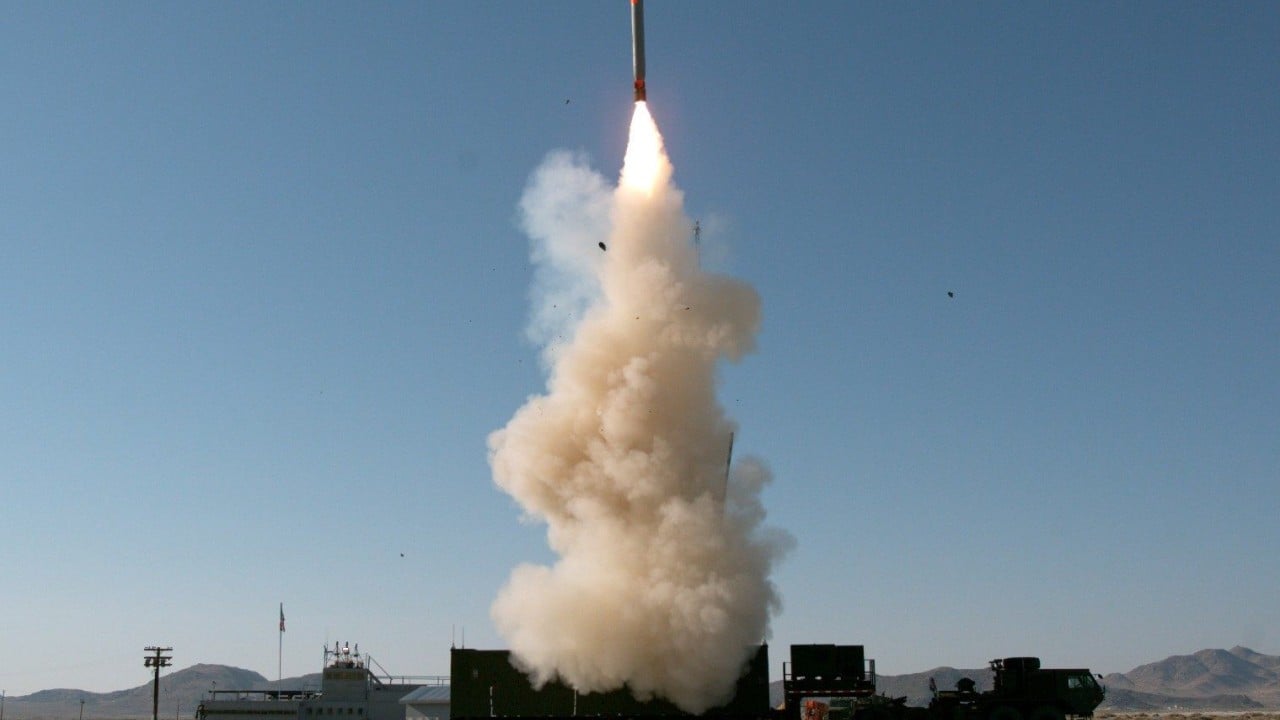
The arrival of the Typhon Mid-Range Capability (MRC) land-based missile system in the Indo-Pacific represents the most significant shift in regional firepower since the end of the Cold War. By stationing launchers capable of firing Tomahawk land-attack missiles and SM-6 interceptors on foreign soil, the United States has effectively dismantled the geographic insulation China once enjoyed. This is not merely a "provocation" as critics suggest, but a calculated technical response to the massive missile inventory China built while Washington was constrained by the now-defunct Intermediate-Range Nuclear Forces (INF) Treaty.
For decades, the U.S. fought with one hand tied behind its back. The INF Treaty prohibited the military from possessing any ground-launched ballistic or cruise missiles with ranges between 500 and 5,500 kilometers. China, never a signatory to that treaty, spent those years building the "DF" series of missiles, creating an "Anti-Access/Area Denial" (A2/AD) bubble that pushed U.S. carrier groups further away from the mainland. The Typhon system is the physical manifestation of the U.S. officially exiting that restrictive era.
The Mechanics of the Typhon System
The Typhon is not a single vehicle but a modular battery. It consists of four launchers, a command post, and various support vehicles. What makes it a nightmare for regional adversaries is its mobility and its versatility. It uses the Mark 41 Vertical Launch System—the same hardware found on Navy destroyers—but mounted on trailers.
By putting these launchers on wheels, the U.S. Army can move them via C-17 transport planes, hide them in jungles, or tuck them into mountain ranges across the "First Island Chain." This creates a shell game for Chinese intelligence. If a missile is on a ship, you track the ship. If a missile is in a hidden, mobile truck on an island, you have to track every square mile of that island.
The system fires two primary weapons:
- The Tomahawk Land Attack Missile (TLAM): A veteran of every modern conflict, capable of hitting targets 1,600 kilometers away with pinpoint accuracy.
- The SM-6 (RIM-174): Originally an anti-air missile, the Army is using it as a high-speed, short-range ballistic missile capable of hitting moving targets on land or at sea.
Breaking the Second Island Chain Logic
The strategic value of Typhon is often misunderstood as purely offensive. Its real purpose is to provide a "persistent" presence. Ships have to return to port for fuel and rearming. Submarines are limited by their vertical launch tube capacity. A land-based battery can stay in place indefinitely, dug into a friendly nation’s infrastructure, forcing an adversary to dedicate an enormous amount of resources just to monitor it.
The deployment in the Philippines during exercise Salaknib 24 was a proof of concept. From those positions, the Typhon system can cover the entire Luzon Strait and reach targets on the Chinese coast. This creates a "no-go zone" for the People's Liberation Army Navy (PLAN). If China attempts to move a fleet through these bottlenecks, they are no longer just looking at a few distant American ships; they are staring down hidden batteries on the shore that can strike from 360 degrees.
Why Beijing is Rattled
Beijing’s reaction has been visceral. They have labeled the deployment as "bringing the shadow of nuclear war" to the region, despite the Typhon currently being a conventional-only system. The intensity of this rhetoric stems from the realization that their home-field advantage is evaporating. For twenty years, China’s strategy relied on the fact that U.S. ground forces were irrelevant in a Pacific fight. The Army was for land wars in the Middle East; the Navy and Air Force would handle the Pacific.
Typhon changes that. It allows the U.S. Army to participate in the "maritime strike" mission. This complicates China's defense planning exponentially. Instead of worrying about two branches of the U.S. military, they must now account for a third that specializes in holding ground and staying hidden.
The Logistics of Local Partnerships
Technology is only half the battle. The other half is diplomacy. Deploying a missile system that can hit another country’s capital requires an immense amount of trust from the host nation. The Philippines, under the Marcos administration, has moved closer to Washington, but the presence of Typhon is a heavy weight to carry.
Host nations face a "target dilemma." While the system provides a deterrent against aggression, it also makes the host a primary target in the first hour of a conflict. If war breaks out, China’s first move would likely be a massive missile strike to "blind and blunt" these mobile batteries. For leaders in Manila or Tokyo, the question is whether the protection of the U.S. umbrella outweighs the risk of being on the front line of a missile exchange.
The Problem of Escalation Dominance
There is a legitimate risk that this deployment triggers a classic security dilemma. In international relations, a security dilemma occurs when one state increases its security (by deploying Typhon), causing another state (China) to feel less secure, leading them to increase their own armaments. This results in a cycle where both sides are more heavily armed but neither is actually safer.
However, the U.S. argument is that the balance was already tilted. China already possesses thousands of ground-launched missiles aimed at U.S. bases in Guam, Okinawa, and Darwin. Typhon is not an escalation so much as an attempt to restore "escalation dominance"—the ability to match an opponent at every level of conflict.
The Technical Challenges of Land-Based Strikes
Despite the hype, the Typhon system is not a magic bullet. It faces significant hurdles:
- Reloading: Unlike a ship, which can carry dozens of missiles, a Typhon battery is limited. Once the four launchers fire their missiles, they are vulnerable while waiting for specialized trucks to bring more.
- Terrain: Not all islands in the Pacific are suitable for heavy trailers. The system needs roads or flat ground to move effectively, which limits where it can hide.
- Command and Control: Operating a missile system 5,000 miles from Hawaii requires a resilient data link. If China can jam the communications between the command post and the launchers, the system becomes a collection of expensive lawn ornaments.
The U.S. is betting that the SM-6’s ability to act as a "multi-domain" weapon will solve some of these issues. Because the SM-6 can hit planes, ships, and ground targets, one battery can handle multiple types of threats, reducing the need for different types of units to be crowded onto one small island.
The End of the Post-Cold War Peace
The deployment of the Typhon system marks the end of an era. We are no longer in a period of "engagement" or "strategic ambiguity." We have entered a phase of "integrated deterrence," where the goal is to make the cost of conflict so high that it never begins.
This is a high-stakes gamble. By placing these missiles in the backyard of a superpower, the U.S. is drawing a line in the sand. It is a move that acknowledges that the Pacific is no longer a vast, empty ocean that separates East and West, but a crowded theater where the margin for error is measured in seconds and centimeters.
The presence of the Tomahawk on Philippine soil has effectively moved the "front line" of any potential conflict from the middle of the ocean to the very edge of the Asian continent. This shift forces China to rethink its entire strategy of regional dominance, as the geographic barriers they spent decades building are now bypassed by mobile, land-based tech. Washington has decided that the only way to prevent a war is to show they are prepared to fight one from the very beaches of their allies.
The era of the "missile gap" is closing, and in its place is a new, much more dangerous reality of constant, high-tech standoff.
:max_bytes(150000):strip_icc():focal(819x186:821x188)/Murdaugh-Family-e90854a716884d608fb6fd925e18d840.jpg)
