The queue did not move for forty minutes.
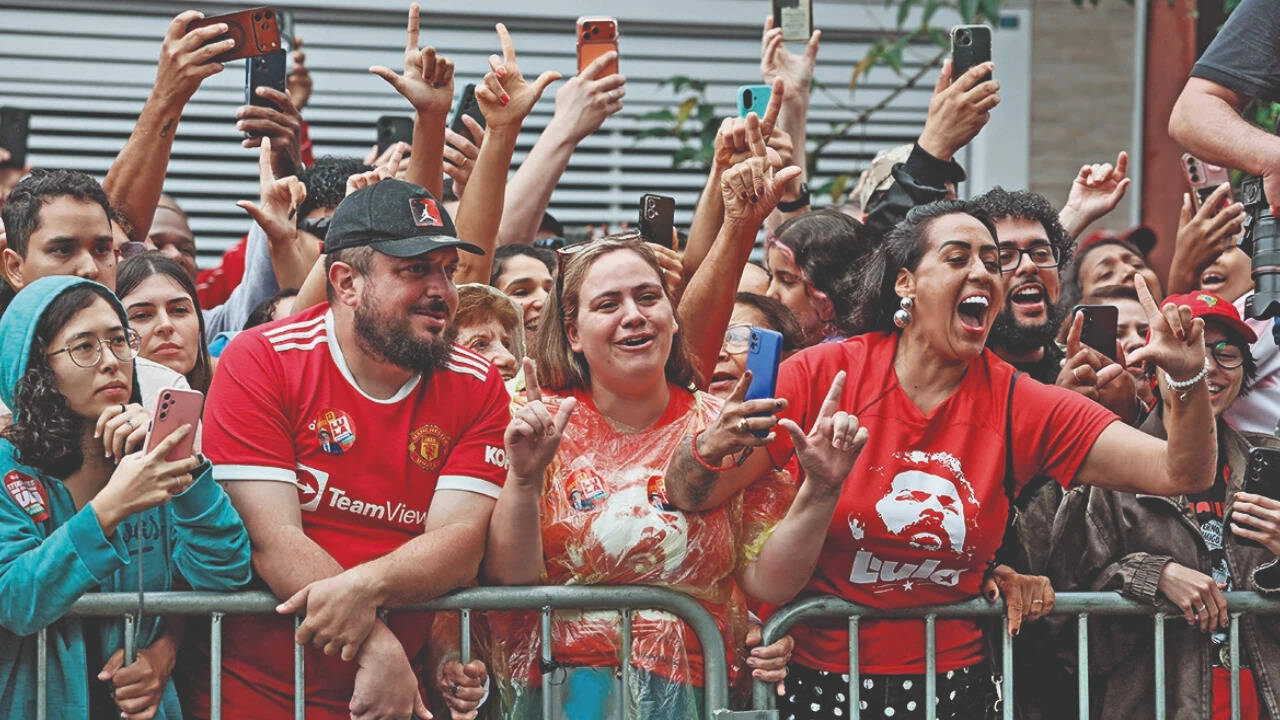
Outside a public school in a working-class neighborhood on the outskirts of São Paulo, rain fell in a steady, lukewarm drizzle that soaked through cheap polyester jackets and turned red clay sidewalks into slick, ochre mud. Under a shared umbrella held by a retired seamstress, a young warehouse worker checked his phone, watched the battery drop from fourteen percent to eleven, and refused to step out of line. According to official records from Brazil’s Superior Electoral Court (TSE), more than 156 million citizens were eligible to cast their ballots in the nation's runoff election—a civic exercise so vast, so logistically audacious, that a mere two-hour extension in voting hours can feel like an eternity suspended between two different futures.
To a news ticker in New York or London, the headline is bloodless: Ballot count resumes after two-hour voting extension. It reads like a minor scheduling delay at an airport. A technicality. A footnote before the percentages begin to climb across the bottom of a television screen.
If you have ever stood on the wet concrete of a Brazilian voting precinct at 5:02 PM, watching the heavy iron gates stay propped open past the traditional closing hour, you know there is nothing minor about it.
The Anatomy of Two Extra Hours
In Brazil, voting is not a casual Sunday errand; it is a mandatory civic ritual backed by law and carried out on one of the fastest, most scrutinized electronic voting networks on earth. Since 1996, the country has relied on direct-recording electronic voting machines—thick, durable gray terminals with a numeric keypad that looks remarkably like an old landline telephone. When a voter presses the green Confirma button, the machine emits a distinct, two-tone electronic chirp that echoes off cinderblock classroom walls.
Normally, polls open at 8:00 AM and close strictly at 5:00 PM Brasília time. Anyone already standing in line at the stroke of five receives a paper slip—a senha—guaranteeing their right to vote no matter how late the evening stretches.
So why did the clock stretch by two full hours?
Picture a massive highway narrowed suddenly into a single tollbooth. In major runoff elections—such as the fiercely contested 2022 presidential runoff between Luiz Inácio Lula da Silva and Jair Bolsonaro, or municipal runoffs in sprawling metropolises like São Paulo and Belo Horizonte—voter turnout routinely exceeds 79 percent of the electorate. When biometric verification readers hesitate over calloused fingertips, or when sudden tropical downpours force thousands of commuters to arrive at their precincts during the final ninety minutes of the day, lines spill out of schoolyards and wrap around entire city blocks.
Electoral authorities, including local judges and TSE officials, have the legal authority to extend voting hours—or keep specific polling stations open past 5:00 PM—whenever documented bottlenecks threaten to disenfranchise citizens who arrived on time. Meanwhile, in high-stakes contests where local disputes, transport disruptions, or regional time-zone alignments complicate the close of polls, the centralized tallying system holds its breath.
Think of the TSE’s central counting server in Brasília like a dam holding back an ocean of data. Every single electronic ballot box across more than 5,500 municipalities operates completely offline—disconnected from the internet to prevent remote tampering. At the close of voting, each machine prints a physical paper summary called the Boletim de Urna, which poll workers tape directly to the classroom door for any citizen, party observer, or journalist to photograph and verify. Only then is the encrypted memory card carried physically to a transmission point.
When an extension keeps gates open for two additional hours, that dam stays shut. The country enters a strange, humming twilight.
Inside the Waiting Room of a Nation
Let us step into a hypothetical household in Recife during those two suspended hours—a composite drawn from countless real Sunday evenings across Brazil’s Northeast.
Call her Dona Marta, a sixty-four-year-old retired school cook, and her nephew Tiago, a twenty-six-year-old ride-share driver. Neither is a political strategist. Neither reads polling cross-tabs for fun. Yet by 5:30 PM, both are sitting around a small formica kitchen table with the television muted and a radio murmuring on the counter.
Tiago spent the afternoon driving passengers to polling stations, watching elderly voters lean on wooden canes as they climbed steep school stairs. He knows what those two extra hours cost in human terms: tired poll workers who arrived at 6:30 AM and have eaten nothing since noon except cold bread and sweet coffee; mothers balancing toddlers on their hips while waiting for their turn behind the cardboard privacy screen; bus drivers rerouting lines around streets choked with honking cars and fluttering flags.
Dona Marta remembers a different Brazil. She grew up during the military dictatorship that ruled the country from 1964 to 1985, an era when direct presidential elections were suspended and paper ballots were vulnerable to stuffing, miscounting, and vanished ballot boxes. For her generation, the slow, meticulous enforcement of voting hours is not bureaucratic red tape. It is proof that the state cannot simply lock the doors when the lines get inconveniently long.
"If they close the gate early," she tells Tiago, tapping a porcelain cup against its saucer, "whose voice gets left outside in the street?"
That question sits at the dead center of every election extension in Brazil. Critics and opposing campaigns frequently clash over what delays mean. According to statements from rival political camps during recent Brazilian runoff cycles, one side inevitably warns that late extensions create confusion, exhaust election monitors, and fuel suspicion among anxious supporters watching from home. The opposing side counters just as forcefully that cutting off voters who traveled miles by bus or boat—especially in low-income districts or remote Amazonian river communities—would strike at the heart of democratic legitimacy.
Both arguments carry emotional weight because the stakes are deeply personal. In Brazil, public policy is not an abstract debate conducted in think tanks; it is whether the federal cash-transfer program Bolsa Família arrives on the twentieth of the month, whether subsidized pharmacies carry insulin, whether small business taxes rise or fall, and whether public security patrols the neighborhood after dark.
The Psychology of the Pause
There is a particular kind of anxiety that descends on a country when the voting stops, or nearly stops, and the numbers have not yet begun to move.
I have sat in newsrooms and living rooms during those agonizing pauses, watching journalists refresh official TSE dashboards every four seconds while the progress bar remains stubbornly frozen near zero percent. In the absence of hard data, rumor rushes in to fill the vacuum. WhatsApp groups—the true nervous system of Brazilian public life—begin lighting up with forwarded voice notes, blurry photos of empty school hallways, and breathless claims that one candidate is surging in the South while another is collapsing in the interior.
It is easy to feel overwhelmed by the noise. Even seasoned observers admit that the gap between the closing of polls and the first significant wave of counted ballot boxes tests everyone’s nerves. Because Brazil’s electronic machines tabulate votes instantly once closed, the count itself—once resumed—moves at a velocity that astonishes foreign observers accustomed to days of manual paper counting. Within three to four hours of the polls finally closing, tens of millions of votes are processed, verified, and published precinct by precinct.
But those two extra hours before the dam opens? They feel like standing in a dark theater waiting for the curtain to rise, listening to the murmur of two hundred million neighbors on the other side of the velvet.
Consider what happens inside a single polling room during that extension. The presiding poll worker—often a public school teacher or civil servant drafted by the electoral court—checks the identity document of each remaining voter. No cell phones are allowed inside the voting booth, a rule strictly enforced by the TSE to prevent coercion or vote-buying photos. The voter steps behind the cardboard shield, types two digits for their chosen candidate, checks the black-and-white photograph that appears on the small monochrome screen, and presses green.
Pi-li-lim.
One chirp. One citizen. Multiplied by hundreds of thousands of late-afternoon voters across rain-slicked suburbs, coastal avenues, and dusty inland towns.
When the Numbers Finally Move
When the two-hour extension expires and the last voter steps out of the booth, the rhythm of the night transforms overnight—or rather, within minutes.
Inside thousands of classrooms simultaneously, poll presidents type a closing code into the electronic terminals. The machines whirr, spitting out long strips of thermal paper—five copies of the Boletim de Urna for each machine. Party representatives step forward with smartphones, scanning the QR codes printed directly onto the paper tapes so independent parallel counts can begin immediately.
Out in the hallways, soldiers, municipal guards, and electoral couriers collect the sealed flash drives, loading them into cars that weave through evening traffic toward regional transmission centers.
Back in our hypothetical kitchen in Recife, Tiago unmutes the television just as the first official TSE batch hits the screen. Two percent counted. Then seven. Then nineteen. The numbers jump in dizzying leaps—millions of votes cascading across the graphic every few minutes, accompanied by the low, tense murmur of anchors explaining regional variations. Early returns from smaller, well-connected precincts often lean one way before dense urban centers and distant rural municipalities report in, creating a dramatic pendulum swing that has defined modern Brazilian runoffs.
In the 2022 presidential runoff, for example, Jair Bolsonaro held a noticeable lead during the first half of the tally before Luiz Inácio Lula da Silva overtook him as late-reporting districts in the Northeast and major capitals uploaded their results—a nail-biting finish separated by fewer than 2.1 million votes out of more than 118 million valid ballots cast. Every single precinct that stayed open late mattered. Every single person who stood in the rain holding a paper senha belonged to that margin.
Beyond the Ticker
It is tempting, from a distance, to treat democracy like a sports broadcast—to obsess over momentum, percentages, and victory speeches while forgetting the friction required to make the scoreboard work at all.
Yet the real story of a Brazilian runoff is never found solely in the final tally. It lives in the messy, imperfect, stubbornly human logistics of those two extra hours: the elderly man who refused to leave without casting his ballot, the poll worker rubbing her aching temples under fluorescent classroom lights, the local judge signing an emergency order so a delayed bus route would not silence an entire neighborhood.
By 9:00 PM, the rain in São Paulo has finally slowed to a mist. Outside the public school where the line stretched around the block three hours earlier, the iron gates are locked for the night. A damp paper Boletim de Urna hangs taped to the glass pane beside the entrance, illuminated by a single buzzing streetlight. A passerby stops, pulls a phone from his pocket, and photographs the column of numbers before walking home into the quiet dark.