The kettle in Hull was probably the exact same shape.
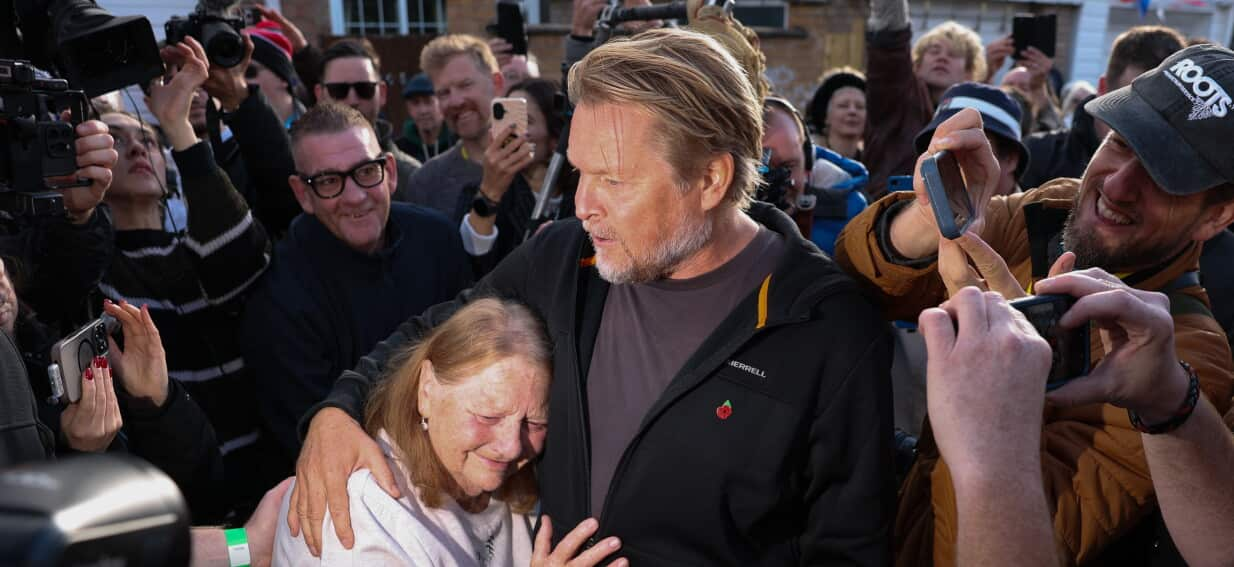
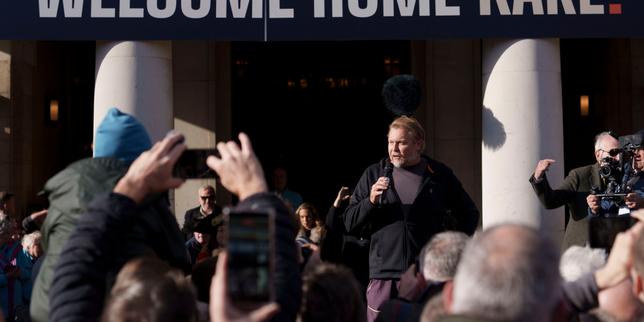
When Karl Bushby stepped off the southern tip of South America in November 1998, the world was still dialing into the internet over copper telephone wires, Bill Clinton was in the White House, and a loaf of bread in northern England cost fifty pence. Twenty-eight years later, after wearing through dozens of pairs of boots, crossing the frozen throat of the Bering Strait on foot, swimming across the Caspian Sea, and walking roughly thirty-one thousand miles without ever once stepping onto a plane, a train, a bus, or a boat, he arrived back at his mother's front door in Kingston upon Hull.
Stop. Think about what twenty-eight years actually feels like in your bones.
It is not a vacation. It is not a sabbatical, a gap year, or a wellness retreat. Twenty-eight years is long enough for a newborn infant to grow up, graduate from university, get married, buy a house, and start complaining about lower back pain. While the rest of us were arguing over mortgage rates, upgrading our phones every twenty-four months, and watching empires rise and fracture on high-definition screens, one former British paratrooper kept putting his left heel in front of his right toe. Step after step. Year after agonizing year.
To understand why a human being would voluntarily exile himself from modern convenience for nearly three decades, you have to understand what modern life quietly does to our sense of scale. We live inside compression algorithms. We order dinner with a thumb tap and grow irritated if the courier takes forty minutes instead of thirty. We fly across the Atlantic in seven hours, complain about the legroom, and land without ever feeling the curve of the earth beneath our soles.
Bushby refused the shortcut. He invented the Goliath Expedition with two rules so brutally simple they sound almost absurd in an era of fine print and loopholes. Rule one: walk an unbroken path around the entire globe, from Punta Arenas in Chile all the way back to his doorstep in England. Rule two: never use motorized transport to advance a single inch forward. If a border closed, if a war broke out, if an ocean blocked his path, he could fly home to wait out the paperwork, provided he returned to the exact GPS coordinate where he had stopped before taking another step.
The Arithmetic of Stubbornness
Let us look at the cold numbers first, because the math alone makes the knees ache.
Thirty-one thousand miles is roughly one and a quarter times the circumference of the Earth at the equator. If you walk at a steady, purposeful pace of three miles an hour, covering that distance takes more than ten thousand hours of pure, uninterrupted forward motion. That does not include the hours spent pitching a damp tent in a gale, boiling snow over a camp stove, negotiating with suspicious border guards in languages you barely speak, or nursing blisters that have split open down to raw meat.
Consider a hypothetical commuter—let us call her Sarah—living in a mid-sized city. Sarah walks about four thousand steps a day between her kitchen, her car, her office desk, and the grocery aisle. At that standard modern pace, it would take Sarah nearly forty-five years just to match the raw mileage Karl Bushby ground out across deserts, jungles, mountain passes, and frozen seas. And Sarah gets to sleep on memory foam every night.
I remember the first time I attempted a fraction of that kind of endurance—just a three-week trek across rough coastal terrain with forty pounds strapped to my shoulders. By day four, the romantic idea of "finding yourself in nature" evaporates completely. Your world shrinks to a twelve-inch circle of dirt directly beneath your boots. You stop thinking about philosophy or legacy. You think exclusively about dry socks, calories, and whether that dark cloud bank on the horizon means hypothermic rain before nightfall.
Bushby lived inside that twelve-inch circle for twenty-eight years.
When he started at twenty-nine years old, armed with military discipline from the 3rd Battalion, Parachute Regiment, he thought the whole affair might take eight to twelve years. That miscalculation is the most human part of the entire story. Every grand endeavor begins with a slight delusion about how cooperative the world will be. We map out the straight lines on paper, forgetting that geography has teeth and geopolitics has barbed wire.
Frozen Water and Invisible Walls
If you ask people what the hardest part of walking around the world must be, most will guess the physical toll. They picture heatstroke in the Darien Gap, the thick, lawless stretch of jungle straddling Panama and Colombia where cartels, venomous snakes, and swamp fever swallow careless travelers whole. Or they picture the frostbite of Siberia, where temperatures plunge past minus forty and your eyelashes freeze shut every time you blink.
They are only half right.
The real antagonist of the Goliath Expedition was never nature. It was paperwork.
In 2006, Bushby and French adventurer Dimitri Kieffer achieved something almost nobody thought survivable. They walked across the Bering Strait—fifty-eight miles of shifting, grinding sea ice separating Alaska from Russia. Imagine crossing a frozen highway where the asphalt constantly cracks apart into open black ocean, where polar bears hunt in the whiteout, and where currents can sweep a slab of ice miles off course while you sleep in your tent. They made it across, only to be arrested by Russian border guards because they had not entered through an official port of entry.
Think about the comedy and the cruelty of that moment. Two men survive one of the most lethal crossings on Earth, only to be defeated by a rubber stamp.
That arrest triggered years of bureaucratic purgatory. Russia banned him, lifted the ban, banned him again. Then came the 2008 global financial crisis, which dried up his sponsorships and stranded him in limbo. Later, when the route south through Iran and Russia became impossible due to sanctions, wars, and closed frontiers, Bushby faced an ocean-sized detour. Rather than cheat his own rule by taking a ferry, he teamed up with swimmers Angela Maxwell and Chris Lucas in 2024 to swim across the Caspian Sea—nearly two hundred miles of open water from Kazakhstan to Azerbaijan, supported by boats where they slept at night before dropping back into the waves at the exact coordinates they left.
That is what stubbornness looks like when it stops being a personality trait and becomes a form of architecture. Most of us abandon a side project if the Wi-Fi drops for ten minutes. Bushby swam across an inland sea because a visa officer said no.
What Happens to the Person Left Behind
Every epic journey casts a long shadow over the people waiting at the kitchen table.
While Karl was dodging bandits in South America, wading through mud in Central America, and navigating the geopolitical minefields of Eurasia, his mother, Angela, stayed in Hull. Every time a headline broke about a kidnapped backpacker or a border skirmish in a region where her son was currently walking, she had to sit with the silence until a satellite phone call or an email finally came through.
We rarely talk about the endurance required to wait. Waiting has no finish line you can sprint toward. You cannot train for it with heavy packs or ice baths. You simply wake up, make tea, check the news, and hope the map on your wall keeps moving westward.
And think about the man who finally walked up that familiar street in Hull. The twenty-nine-year-old paratrooper who left Punta Arenas in 1998 no longer exists. In his place stands a man in his late fifties whose knees carry the memory of four continents, whose skin has been cured by every climate the planet can manufacture, and whose entire adult identity has been defined by a single, relentless vector: keep going.
There is a quiet psychological cliff waiting at the end of any monumental obsession. Sociologists and sports psychologists have documented it for decades—the sudden hollowness that hits Olympic gold medalists the morning after the closing ceremony, or the disorientation astronauts feel when they return from orbit and have to pay a utility bill. For nearly ten thousand days, Bushby woke up with an indisputable answer to the question of why he was alive today. Walk north. Walk west. Cross the river. Reach the border.
When you finally touch the front door of your mother's house, the compass stops spinning. There is nowhere left to walk that does not take you away from the finish line.
Why We Cannot Look Away
Why does a story like this cut through the noise of our feeds? Why do millions of people, most of whom get winded climbing three flights of stairs, pause to read about a man who spent nearly three decades walking home?
Because deep down, we suspect we have traded something vital for our convenience.
Modern civilization is engineered to remove friction. We smooth out the roads, climate-control the air, automate the labor, and curate our social circles so we never have to encounter an unscripted afternoon. Yet human beings are creatures forged by friction. We need resistance to know how strong we are. Without an obstacle to push against, we drift into a low-grade numbness, endlessly scrolling through other people's lives while our own days blur together like telephone poles outside a train window.
Bushby's walk is a quiet, devastating rebuke to the cult of efficiency. Nobody needs to walk thirty-one thousand miles. You can buy a round-the-world plane ticket for a few thousand dollars and see the Pyramids, the Great Wall, and the Andes before your next dentist appointment. By every metric of modern productivity, spending twenty-eight years to cover a distance a commercial jet flies in sixty hours is madness.
Yet nobody remembers the guy who flew around the world in business class.
We remember the man who walked because his journey restores the true size of the Earth. He proved that the world is still vast, wild, perilous, and stubbornly physical—and that a single human body, fueled by sheer bloody-minded resolve, is capable of measuring every mile of it by hand and foot.
Picture that final moment in Hull. No stadium crowd. No fireworks. Just a middle-aged man with weathered skin, worn-down boots, and nearly three decades of dust in his clothes, standing on a quiet British pavement. He reaches out, turns the handle, and steps across the threshold into the warmth of his mother's hallway, where the kettle is waiting to boil.