Twenty dollars.
Face value, that buys half a tank of gas or a casual lunch that vanishes before the afternoon is over. In 1971, it bought a decent pair of boots or a whole weekend of groceries if you watched the sales. Yet in 2026, a single battered twenty-dollar bill—pulled from a sandy river bank in 1980 and tied to the most famous unsolved hijacking in American history—brought $134,200 at auction.
Money is strange like that. Sometimes it is just cotton, linen, and ink. Sometimes it is a mirror held up to an obsession that refuses to die.
When I first stood beside a muddy river bend in the Pacific Northwest years ago—not the exact spot where Brian Ingram dug up those rotting stacks, though close enough to smell the damp cedar and cold silt—I remember feeling a quiet, almost foolish shock. There was no treasure chest here. No secret hatch. Just wet sand, alder roots, and gray water moving toward the sea. People spend decades staring at maps of Washington and Oregon, tracing flight paths in ink, wondering how a man in a cheap dark suit and a clip-on tie stepped off the back stairs of a Boeing 727 into a freezing November rainstorm and simply ceased to be found.
And then a piece of paper surfaces. And suddenly, the ghost has a pulse again.
A Boy With a Shovel and a Packet of Rot
To understand why a single twenty-dollar bill can command more than a hundred and thirty thousand dollars more than half a century later, you have to start with the cold November night of November 24, 1971.
A man calling himself Dan Cooper—misheard or misreported by the press as D. B. Cooper—boarded Northwest Orient Flight 305 bound from Portland to Seattle. He ordered a bourbon and soda, handed a flight attendant a note claiming he had a bomb, showed a glimpse of wires and red cylinders inside a briefcase, and asked for $200,000 in negotiable American currency along with four parachutes. After landing in Seattle, letting the passengers go, and having the aircraft refueled, he ordered the crew to fly toward Mexico City at low altitude and low speed. Somewhere over southwestern Washington, around eight at night, he lowered the aft airstair and jumped into the dark.
Nobody ever found him. Nobody ever found a parachute.
For nearly nine years, the $200,000—ten thousand twenty-dollar bills whose serial numbers had been microfilmed by the FBI before the handover—remained completely missing. Not a single bill turned up in a gas station register, a bank deposit, or a poker game.
Then came February 1980. Eight-year-old Brian Ingram was vacationing with his family along the Columbia River near Vancouver, Washington, at a place known as Tena Bar. Digging in the sand to build a fire pit, he uncovered packets of disintegrating twenty-dollar bills. Some were stacked neatly, rubber bands long rotted away, edges turned to ash and mud.
Think about what a child sees when he finds money in the dirt. At eight years old, a stack of twenties looks like monopoly money that got left out in the rain. You do not think about chain of custody, forensic silt analysis, or historical value. You think about how weird it is that paper can survive under the earth.
FBI tests later confirmed the serial numbers matched the ransom money given to Cooper. Yet those bills raised more questions than they answered. How did money dropped miles away—if Cooper jumped near Lake Merwin or Ariel, as early estimates suggested—end up buried in sand along the Columbia River? Did it wash down creeks and rivers over years of spring runoff? Did someone bury it there deliberately? Or did the river itself play a cruel trick on everyone trying to solve the puzzle?
Consider what happens next: a discovery meant to close a chapter instead pries it wider open. If Cooper survived and hid the cash, why would part of it end up rotting on a sandy bank? If Cooper died on impact or drowned in the cold water, why didn't the rest of the $200,000 wash ashore in neat little bundles?
Even the auction price in 2026 carries that tension. A bill from the Tena Bar find isn't just currency; it is physical proof that the hijacking wasn't a barroom tall tale or a cold-case myth. It is the closest thing collectors and sleuths have to touching the night sky over the Cowlitz and Columbia valleys.
Why We Chase Ghosts in River Mud
If you have never spent hours squinting at old topographical maps or reading declassified case files from 1971, the enduring obsession with D. B. Cooper can look baffling from the outside. It was a crime, after all. Nobody was killed on Flight 305, though the crew and passengers lived through hours of terror in the dark. Why romanticize a hijacker?
Let's be honest with ourselves. Most of us don't romanticize the crime. We romanticize the exit.
Imagine a hypothetical middle-aged man—let's call him Arthur, a tired accountant who has spent thirty years filling out forms in fluorescent light—staring at a news report about the 2026 auction. (This scenario is purely hypothetical to illustrate why ordinary people feel pulled into the story.) Arthur doesn't want to hijack an airplane. He isn't looking for a felony. What grabs him by the collar is the sheer impossibility of walking away from your own life and leaving zero trace behind. Most of us leave digital breadcrumbs everywhere we go—card swipes, GPS pings, browser histories, receipts. The idea that one man stepped into a storm with a duffel bag of cash and vanished into pine trees and mist feels almost mythical in an age where nothing stays hidden for long.
I have felt that pull myself. Whenever I read about a cold mystery—an vanished ship, a locked room, a bundle of ransom bills turning up in river sand—my mind tries to snap the loose pieces into a neat picture, like forcing two puzzle pieces that almost fit until the cardboard bends.
That is the trap of a story like Cooper's. It invites you to play detective with incomplete evidence.
When a Tena Bar bill sells for $134,200, the buyer isn't just paying for scarcity. They are paying for proximity to an unanswered question. A single twenty-dollar bill becomes a physical anchor for every theory ever argued over coffee or on late-night forums:
- That the jumper was an experienced paratrooper who knew the terrain better than the search parties.
- That he was an ordinary guy who miscalculated the wind, the weight of the bag, or the freezing temperatures.
- That someone else found the rest of the stash years ago and kept quiet because spending marked bills is a fast way to put yourself in handcuffs.
Metaphorically speaking, a ransom bill found in the sand is like a single frame torn from a burning film reel. You can see the lighting, the grain, the hint of motion—yet the rest of the scene is gone.
And here is a truth that often gets lost in the excitement of big auction numbers: finding one piece of evidence can make you feel less certain, not more. Before 1980, investigators could imagine Cooper making a clean getaway into the timber. After Tena Bar, the river entered the story, bringing cold currents, shifting sandbars, and nagging doubts about whether the man who jumped ever made it to dry land.
The Price of Obsession Nobody Talks About
Competitor articles love to treat an auction headline like a victory lap. Big number. Famous name. Done.
What gets skipped over is the quieter, heavier side of chasing a legend.
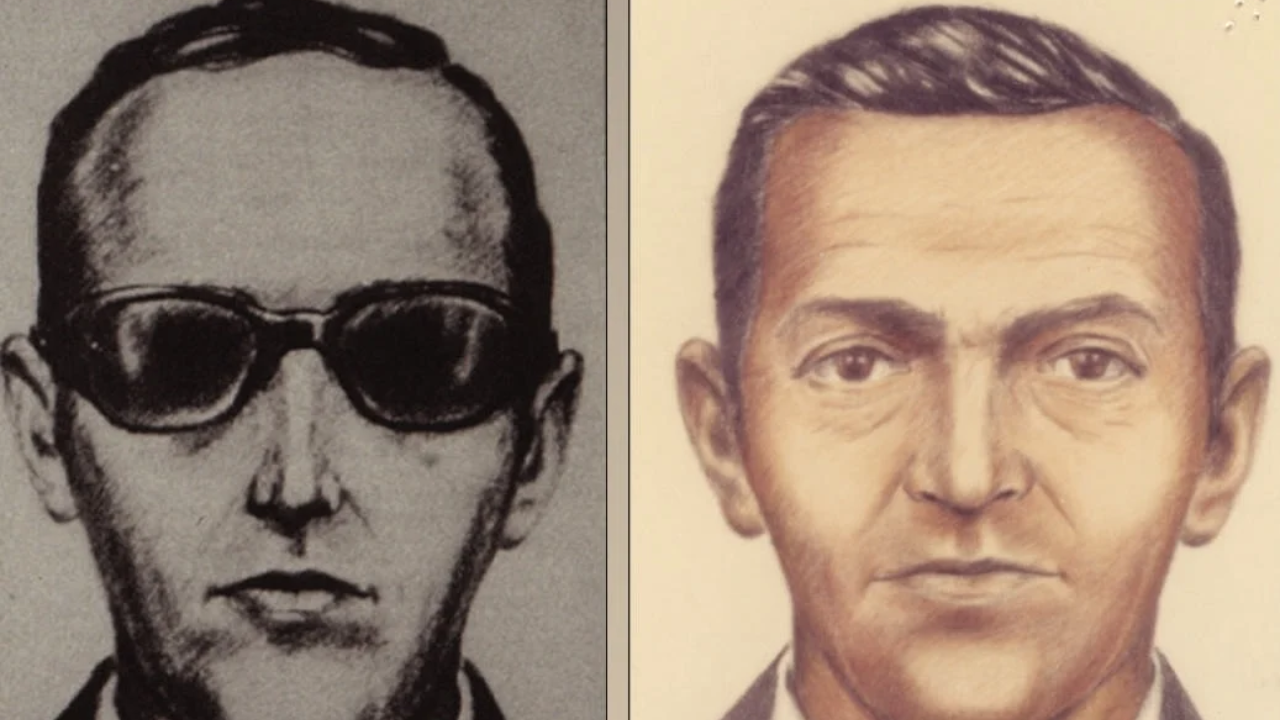
For decades, amateur sleuths, retired pilots, divers, and local residents poured time, money, and sometimes relationships into tracking down D. B. Cooper. Some combed riverbanks after floods. Some chased suspects who looked vaguely like the composite sketch—a sketch that itself was drawn days later from memory in dim cabin light. Many walked away empty-handed, nursing nothing more than wet boots and a stubborn refusal to admit the trail had gone cold.
Even the FBI eventually suspended its active investigation in 2016 after forty-five years of chasing leads, shifting resources toward modern threats while keeping the case files open. When the agency that spent nearly half a century hunting for Cooper steps back, it tells you something sobering: sometimes a mystery doesn't yield because you haven't worked hard enough. Sometimes the evidence simply washed away.
Then a bill like the one sold in 2026 crosses the block, and the cycle starts over. A new generation sees the headline. Someone pulls out an old map. Another person wonders whether a single bill could still be sitting beneath a root or a sandbar somewhere along the river.
There is nothing wrong with curiosity. Curiosity keeps us awake; it makes us ask sharper questions about how things work and what lasts over time. Still, there is a fine line between healthy wonder and letting a phantom eat your weekends. A twenty-dollar bill pulled from the mud in 1980 is worth $134,200 because it is rare, historically tied to a famous event, and authenticated. Most of the things we chase in life aren't authenticated relics. They are just hopes dressed up as clues.
What a Piece of Paper Really Proves
When you strip away the Hollywood swagger that grew around the Cooper case over the decades, what is left?
A rainy night in November. A terrified flight crew doing their jobs under pressure. A bag of cash whose serial numbers had been recorded. And eight years later, a little boy digging in river sand and finding money that had been chewed up by time and water.
It is easy to look at a $134,200 price tag in 2026 and think it proves the mystery is alive. In a way, it does—at least as a cultural story. People still care. They still argue about flight paths, wind shear, and river hydraulics. They still want to know whether the jumper lived or died.
Yet a piece of currency is also a reminder of limits. Paper rots. Rubber bands snap. Rivers move sand from one bank to another without caring who is watching or what secrets are buried underneath.
Out along the Columbia River, the water still runs cold and fast between dark green trees and wet gravel. A twenty-dollar bill can fetch a fortune at auction, framed behind glass in a climate-controlled room, admired by people who love history and the thrill of the unknown. Out in the open air, though, the river keeps moving, carrying its silt downstream, keeping whatever else it holds quiet beneath the current.