Salt water has a way of stripping away everything you think you know about time.
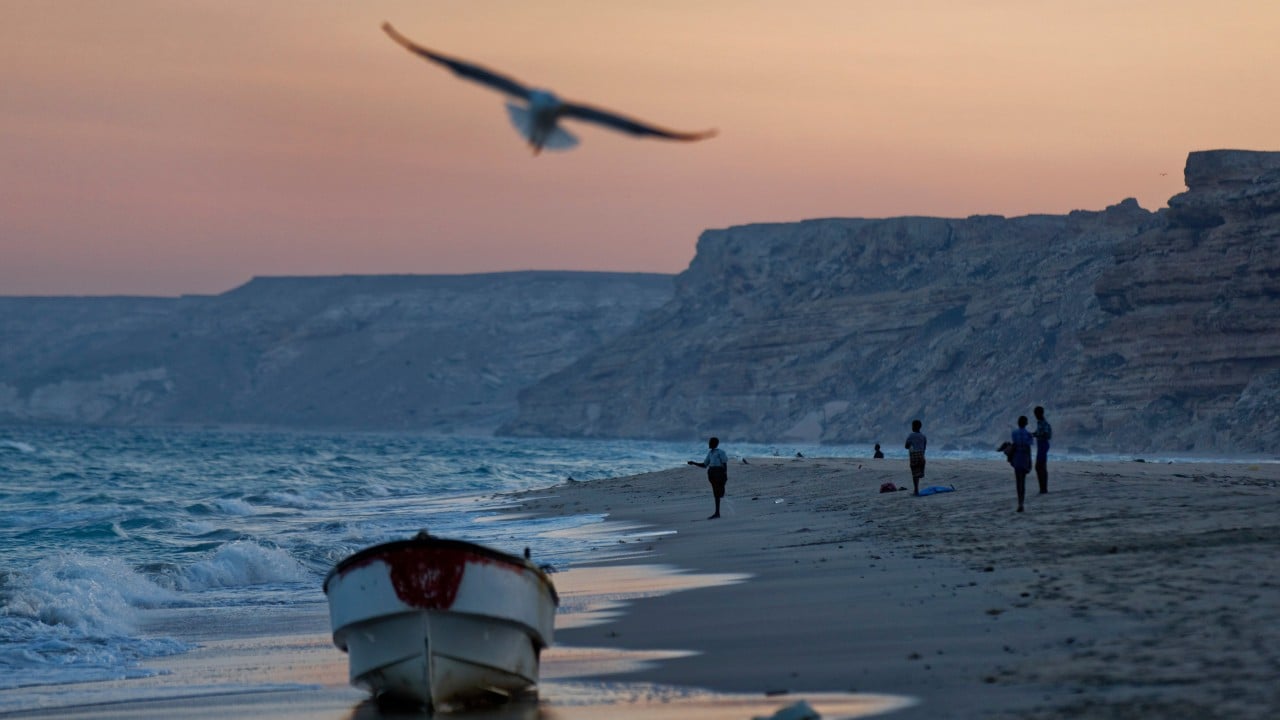
Ask anyone who has spent more than a week out on the open Arabian Sea, out where the coastline of Somalia drops below the horizon and the ocean turns a bruised, indifferent indigo. Out there, minutes do not tick. They swell and break like waves against a wooden hull. You measure your life by the rhythmic thrum of an aging diesel engine, the smell of wet hemp, and the faint, metallic taste of brine on your cracked lips.
Now, picture what happens when that engine dies.
To understand the night an Indian naval warship intercepted a hijacked Iranian fishing vessel off the Somali coast, we first have to step onto the deck of a traditional dhow—let’s call the man standing near the bow Reza, a hypothetical composite representing the twenty-three Pakistani and Iranian fishermen who lived through this nightmare in late March 2024. Reza is not a geopolitician. He does not care about Red Sea shipping lanes, maritime insurance premiums, or the strategic posturing of regional superpowers. Reza cares about yellowfin tuna, the price of ice back in Chabahar, and the school fees waiting for him in a dusty coastal town three hundred miles north.
Then, at dusk, the skiffs appear.
Nine armed pirates. AK-47s slung over sun-bleached shirts. Grinning with the desperate, jittery energy of men who have nothing left to lose and an ocean full of targets to choose from. Within minutes, the Al-Kambar 786—the real Iranian fishing vessel caught in this vise—is no longer a fishing boat. It is a floating prison, and Reza and his crewmates are no longer fishermen. They are human shields, bait, and currency all at once.
Wait.
Before we go any further into the dark of that hold, we have to ask a question that most dry wire reports skip right over: Why was this happening again?
For nearly a decade, the world had quietly filed Somali piracy away in the drawer of solved problems. Between 2008 and 2012, pirates off the Horn of Africa were the undisputed nightmares of global trade, hijacking supertankers and demanding multi-million-dollar ransoms until an unprecedented coalition of international navies—and private armed guards on merchant ships—choked off their business model. By 2018, attacks had dropped to near zero. The headlines moved on. We assumed the ocean had been tamed.
We were wrong.
Think of maritime security like a pressurized garden hose. When global attention and naval firepower clamped down on the Red Sea and the Gulf of Aden in late 2023 and early 2024—driven by Houthi drone and missile attacks on commercial shipping—the international warships clustered tightly around the Bab el-Mandeb Strait. They plugged one leak, and the pressure instantly blew out another. Hundreds of miles to the south and east, in the vast, under-patrolled expanse of the Arabian Sea, Somali pirate syndicates noticed the empty horizon. The watchdogs were looking north. The back door was wide open.
And pirates do not start by attacking a 1,000-foot container ship guarded by razor wire and ex-military contractors. They start smaller. They steal a fishing dhow like the Al-Kambar.
Why a fishing boat? Because a dhow is a Trojan horse. To a satellite or a distant radar screen, an Iranian fishing vessel looks completely benign. It has the fuel range to travel a thousand miles offshore, the deck space to carry smaller attack skiffs, and twenty-three terrified hostages to deter anyone from shooting at it. In maritime parlance, it becomes a "mothership"—a floating base of operations from which pirates can launch raids on billion-dollar commercial vessels far beyond the reach of coastal patrols.
I still remember the first time I stood on the bridge of a naval patrol vessel during a night watch in those waters. Until you experience it, you cannot grasp the sheer, suffocating scale of the emptiness. Radar screens glow green in the dark, painting tiny phosphor blips that might be a storm cell, a drifting shipping container, or forty men with rocket-propelled grenades. Every decision is made in the blind, balancing the cold math of military doctrine against the terrifyingly fragile reality of human lives trapped below decks. You feel the weight of the water pressing against the steel hull, and you realize how ridiculously small even a four-thousand-ton warship really is.
That was the exact void the INS Sumedha steamed into on the night of March 28, 2024.
When the distress call crackled across the naval frequency, the Sumedha—an Indian Navy offshore patrol vessel already deployed in the region for anti-piracy operations—altered course immediately. Later, she would be joined by the guided-missile frigate INS Trishul. Together, they tracked the Al-Kambar roughly ninety nautical miles southwest of Socotra, that strange, wind-scoured island jutting out of the Arabian Sea like a prehistoric tooth.
Imagine the sound inside the Al-Kambar as those gray hulls closed the distance in the pitch black.
Above deck, the nine pirates knew they were cornered. Cornered men with automatic weapons are the most dangerous creatures on earth. Below deck, huddled near the stinking bilge where the vibration of the engines rattles your teeth, twenty-three fishermen listened to footsteps sprinting overhead, shouted orders in a language they didn’t speak, and the sudden, terrifying roar of a naval helicopter chopping the night air above the mast.
If a single stray bullet punctures a fuel line, the wooden dhow becomes a floating funeral pyre. If a pirate panics and turns his rifle toward the crew quarters, twenty-three families lose their fathers before the sun comes up.
This is the invisible stake that never makes it into official press releases. When a government announces a "successful maritime interdiction," the words sound clean, surgical, almost bloodless. Like a chess move. In reality, it is a twelve-hour psychological siege conducted on a pitching, rolling deck in the middle of nowhere.
The Indian Navy did not rush in with guns blazing. They understood the geometry of desperation.
For over twelve hours, through the dead of night and into the blinding glare of the morning sun, the Sumedha and the Trishul boxed the Al-Kambar in. They used calibrated tactical maneuvers—closing in to cut off every possible escape vector, deploying boarding teams in rigid-hull inflatable boats, keeping aerial surveillance locked onto every shadow moving across the dhow’s deck. It was a slow, suffocating squeeze designed to exhaust the pirates' adrenaline until surrender became the only rational choice left on the table.
Picture Reza in that twelfth hour. The heat inside the unventilated hold has climbed past a hundred degrees. Nobody has had clean water since the previous afternoon. Every time the boat rolls, a man beside him groans, clutching bruised ribs from a rifle butt the night before. They have no idea who is outside. Is it an American destroyer? A European frigate? Will whoever is out there care enough about twenty-three poor fishermen from Pakistan and Iran to hold their fire?
That doubt—the quiet, gnawing terror that you are expendable—is the hardest part of any crisis at sea. In the cold calculus of global geopolitics, Iran and India have complicated relationships, and Pakistan and India have a history written in border skirmishes and deep mutual suspicion. Out on the water, none of that mattered. A mariner in distress is simply a human being drowning in trouble.
Finally, outgunned, outmaneuvered, and staring down the barrels of Indian marine commandos, the nine Somali pirates laid down their weapons and surrendered.
Silence fell over the Al-Kambar—not the heavy, suffocating silence of captivity, but the sudden, dizzying quiet of survival.
When the Indian Navy specialist teams boarded the vessel, they didn't just secure the prisoners. They moved systematically through the compartments, checking every bulkhead for booby traps, verifying the seaworthiness of the hull, and bringing medical kits down into the dark to tend to twenty-three exhausted, dehydrated men. All twenty-three crew members—every single Pakistani and Iranian fisherman—walked out onto the sunlight of the main deck alive.
It would be easy to treat this rescue as an isolated heroic footnote, a brief flash of good news in a turbulent year. Doing so would miss the tectonic shift happening right beneath our feet.
Look closely at what took place off Socotra. For decades, the security of the Indian Ocean was largely underwritten by Western naval coalitions. Today, as the United States and European navies find themselves stretched thin across multiple global flashpoints, India has quietly stepped into the role of the region's primary first responder. Between December 2023 and the spring of 2024 alone, Indian warships responded to more than a dozen major maritime incidents—escorting merchant vessels, extinguishing fires on missile-struck tankers, and rescuing crews from Bulgaria, Sri Lanka, Bangladesh, Iran, and Pakistan alike.
Yet even the strongest navy cannot patrol every square mile of a two-million-square-mile ocean forever. Piracy is not a disease you cure once; it is a symptom of poverty, state collapse, and economic desperation on land. As long as young men along the Somali coast see no future on shore, and as long as global conflicts distract the world’s navies from the open sea, the skiffs will keep launching at dusk.
Still, for twenty-three families scattered across the coastal villages of Iran and Pakistan, geopolitics ended the moment the hatch swung open and a hand reached down into the dark to pull them up.
Later that afternoon, after the sanitizing checks were complete and the Al-Kambar was cleared to resume its journey, the fishermen stood along the wooden gunwale watching the gray silhouette of the Indian warship turn back toward the horizon. No speeches were given. No treaties were signed. Just twenty-three men breathing in the clean, salt air, feeling the steady, familiar thrum of their own engine vibrating beneath their bare feet once again.