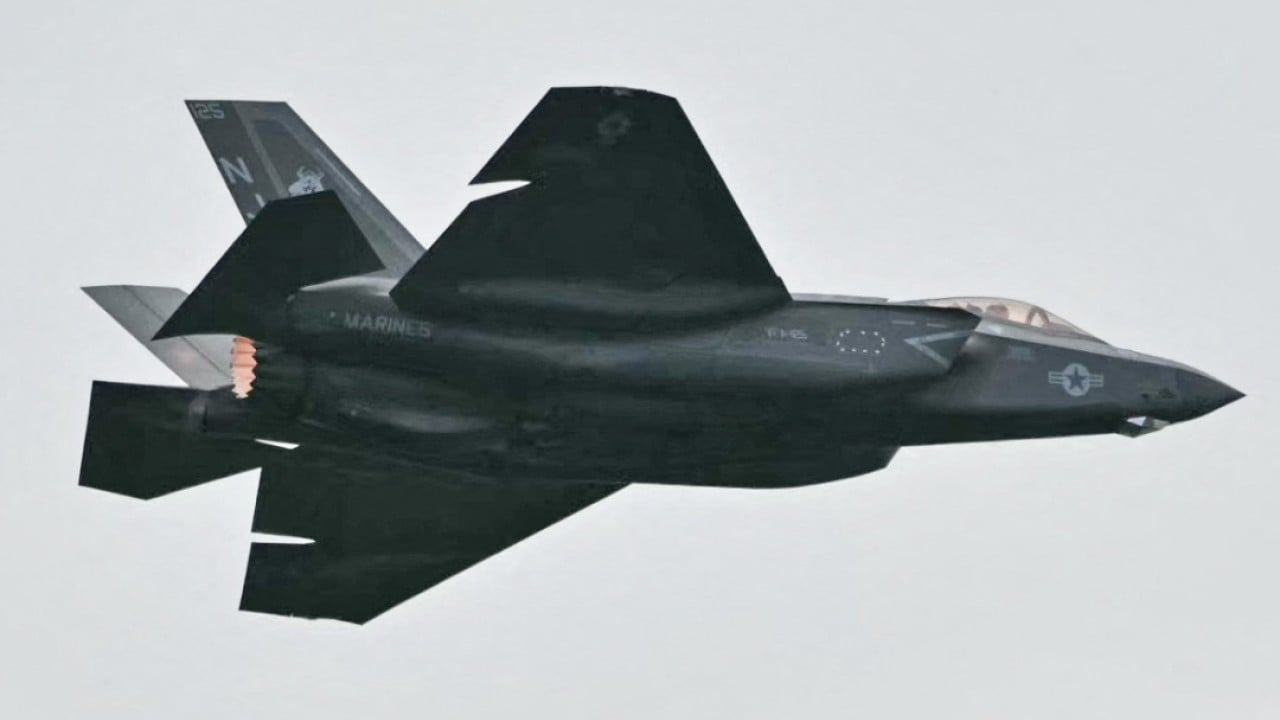
Donald Trump just threw a massive wrench into the Middle East's military balance. Speaking alongside Turkish President Recep Tayyip Erdogan at the NATO summit in Ankara, Trump made it clear he is ready to lift CAATSA sanctions and welcome Turkey back into the F-35 Joint Strike Fighter program.
The reaction from Jerusalem was swift, fierce, and entirely predictable.
Israeli Prime Minister Benjamin Netanyahu didn't mince words. He publicly warned that putting F-35 stealth jets into Turkish hands would destroy the regional power balance. Behind the scenes, the pushback is even more intense. Israeli Finance Minister Bezalel Smotrich confirmed that Israel is working overtly and covertly to kill the transaction, labeling Erdogan a dangerous threat.
But why is a NATO ally getting American jets causing a meltdown in Israel? The answer has very little to do with traditional alliances and everything to do with the shifting vacuum of power in the Middle East.
The Sunset of Iran and the Rise of Ankara
For years, Israel’s primary strategic focus has been countering Iran’s proxy network. Now, with Iran's regional hegemony severely degraded and its proxies on their heels, Israeli intelligence sees a new challenger stepping into the void. Turkey wants to fill that vacuum.
Former Israeli national security adviser Giora Eiland put it bluntly. He noted that while Iran spent decades trying to surround Israel with a Shiite "ring of fire," Turkey is now building the foundations for a Sunni alternative.
Israel’s concerns aren't hypothetical. Look at how Ankara projects power.
- The Libya Template: In 2019, Turkish military intervention completely reversed the momentum of the Libyan civil conflict, establishing permanent bases and long-term military partnerships.
- Drone Warfare: Turkey didn't just buy technology; it built an indigenous defense powerhouse. The Bayraktar TB2 drones redefined modern proxy conflicts from North Africa to Nagorno-Karabakh.
- The Blue Homeland: Turkey’s aggressive maritime claims in the Eastern Mediterranean directly challenge Greece and Cyprus, two key Israeli energy partners.
Giving Erdogan a fleet of fifth-generation stealth fighters gives Turkey the ultimate tool for long-range power projection.
The S-400 Mess and the Third-Country Loophole
Turkey was kicked out of the F-35 program in 2019 after buying the Russian S-400 air defense system. Washington feared the Russian radar could scrape sensitive data off the F-35, compromising the stealth capabilities of the entire global fleet.
To get back in, Turkey has to get rid of the S-400. That’s easier said than done.
The current workaround being floated involves Turkey transferring its S-400 batteries to a third country, or perhaps placing them under joint custody with the U.S. Air Force. Some Western diplomats have even pushed for Turkey to send the systems to Ukraine.
Moscow isn't having it. The Russian government quickly reminded Ankara that advanced weapons sales come with strict end-user certificates. Selling or transferring them without Russian permission violates the contract.
Even if Trump bypasses the S-400 issue, Congress is gearing up for a fight. Eighteen democratic lawmakers have already signed a letter to block any attempt to reinstate Turkey, pointing out that Ankara hasn't actually disposed of the Russian hardware yet. Greece is also leveraging U.S. law to block the deal, worried about its own airspace sovereignty.
Why Washington Is Bending the Rules
If Turkey is causing this much friction, why is the White House pushing for its return?
Geography and logistics. Despite Erdogan’s fiery rhetoric against Israel and the West, Turkey remains indispensable to U.S. military logistics in the region. Following the destruction of major allied radar networks in early 2026, U.S. and Israeli forces became heavily dependent on early warning missile data from the Kurecik Radar Station in Turkey.
Furthermore, Turkey controls the transit of oil from Azerbaijan, a vital energy lifeline for Israel itself.
The Pentagon also wants Turkey's manufacturing base back. Turkish defense firms originally manufactured hundreds of components for the F-35 using low-cost labor. Removing Turkey slowed down production lines and raised costs.
Israel's Plan to Sanitize the Deal
Israeli officials know that stopping Donald Trump once his mind is made up is a monumental task. If they can't block the sale outright, the strategy shifts to containment.
According to reports from Israeli security cabinets, Israel is urging Washington to impose strict conditions if the sale goes through. This includes demanding a downgraded version of the software or ensuring that Israel maintains its qualitative military edge (QME) through advanced upgrades to its own F-35 fleet, the Adir.
An Israeli security official noted that while Turkish F-35s won't stop the Israeli air force from operating, they will aggressively challenge its freedom of action. "Who knows who will come after Erdogan?" the official warned. "In the Middle East, there is no vacuum."
If you are tracking Middle Eastern defense policy, don't look at this as a simple arms deal. Watch how Turkey handles the S-400 transfer negotiation with Moscow over the coming weeks. If Ankara successfully unloads the Russian systems to a third party without triggering a total rupture with Vladimir Putin, the path for Trump to deliver the F-35s becomes vastly smoother—no matter how loud Israel or Greece protest.