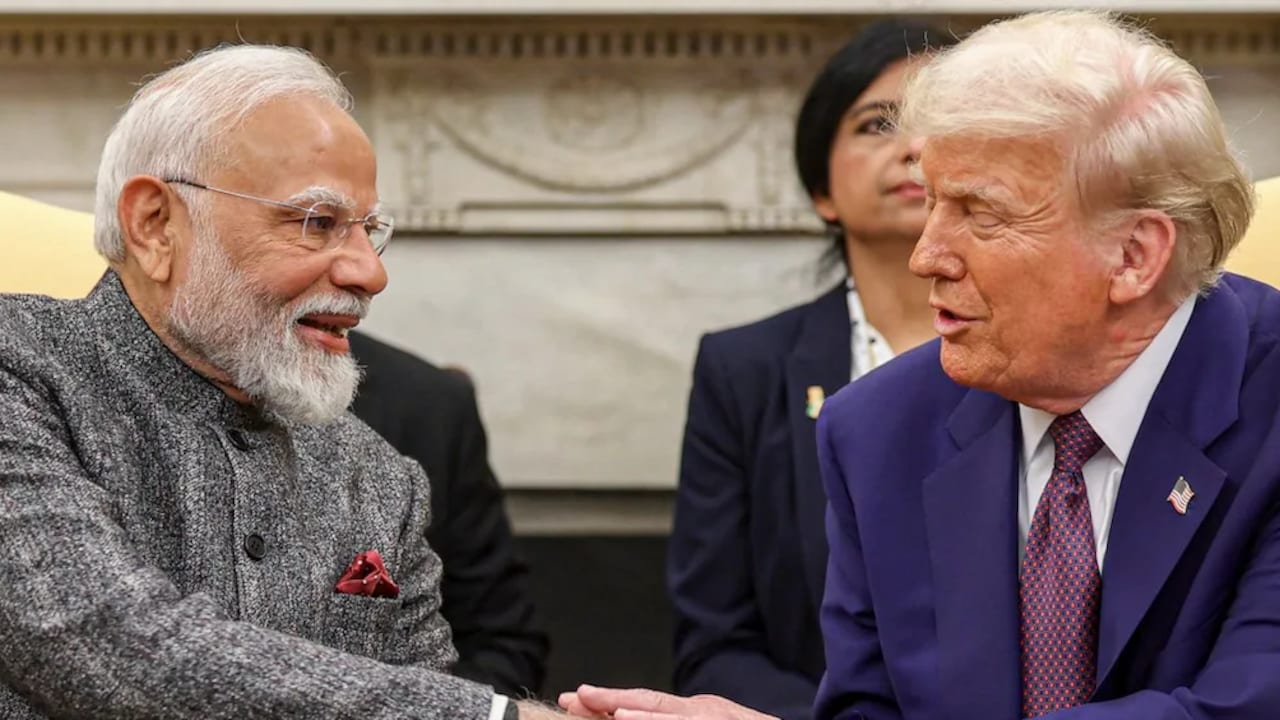
Washington is signaling a major escalation in global trade policy, and New Delhi finds itself directly in the crosshairs. President Donald Trump has thrown his support behind a bipartisan bill in Congress that would give the White House unprecedented power to slap tariffs of up to 500 percent on nations buying Russian energy.
India buys a lot of Russian oil. Read more on a related topic: this related article.
If this bill becomes law, the fallout won't just hit energy markets. It could spill over into pharmaceuticals, textiles, and technology services. The bill targets countries like India, China, and Brazil that keep purchasing crude, petroleum products, or uranium from Moscow. The goal is straightforward: starve Russia of oil revenues to force an end to the war in Ukraine. But the collateral damage could rewrite trade relationships across the globe.
What the Sanctioning Russia Act Actually Does
The legislation, originally drafted by the late Republican Senator Lindsey Graham and Democratic Senator Richard Blumenthal, gives the president broad secondary tariff authority. Unlike traditional tariffs aimed at protecting domestic industries from cheap imports, secondary tariffs act as punishment against third-party nations doing business with a banned regime. Additional reporting by Reuters explores comparable views on this issue.
Under the proposed law, the White House could impose duties starting at baseline rates and escalating all the way to 500 percent on goods imported into the United States from target countries.
That is a staggering tax. A 500 percent penalty on Indian exports would effectively freeze those goods out of the American market overnight.
While Washington has used financial sanctions for decades to squeeze rogue states, using sweeping blanket tariffs against strategic partners like India marks a radical shift in foreign policy. The idea relies on an aggressive assumption: if buying cheap Russian crude exposes your entire export economy to destruction in the US market, you'll stop buying Russian crude.
Why India Is Caught in the Crosshairs
When Western nations imposed price caps and import bans on Russian crude following the invasion of Ukraine, Indian refiners stepped in to fill the void. They bought heavily discounted barrels of Russian Urals crude, processed them at home, and fed domestic energy needs while exporting finished petroleum products abroad.
At its peak in late 2025, India was importing roughly 1.84 million barrels per day of Russian crude oil.
Indian officials have consistently defended these purchases. They argue that buying cheap energy is a matter of national economic interest, keeping inflation low for over a billion citizens while stabilizing global oil supply. Had India stopped buying, global crude prices could have spiked past $100 a barrel, triggering inflation panics worldwide.
Washington sees it differently.
American lawmakers view those purchases as a financial lifeline to Moscow. Senator Graham made that clear before his passing, repeatedly pointing out that China and India together purchase roughly 70 percent of Russia's exported oil and gas. In the eyes of Capitol Hill hawks, cutting off those sales is the fastest way to drain Putin's war treasury.
The June Waiver Expiration and India's Legal Grey Area
Indian refiners haven't been completely blind to the pressure from Washington. Early in 2026, during quiet bilateral negotiations, Indian refiners trimmed back their purchases. Import numbers dropped from 1.84 million barrels a day down to around 1.04 million barrels a day by February 2026. Big players like Reliance Industries publicly noted shifts in cargo arrivals at key refineries like Jamnagar.
Then came mid-June.
On June 17, 2026, a temporary US Treasury waiver expired. That waiver had provided legal cover for Indian refiners to purchase Russian crude without triggering immediate penalties under existing executive orders.
With that waiver gone, India's energy trade with Russia sits in a messy legal grey area. Indian buyers are operating without a official US safety net. Indian stocks took a beating when the threat resurfaced, with benchmark indices like the Nifty 50 and Sensex dropping significantly and oil and gas shares taking the worst hit.
If the 500 percent tariff authority is activated, economists estimate it could knock up to 0.5 percent off India's overall gross domestic product. For an economy aiming for strong growth, that is a huge hit.
The damage wouldn't just be felt in energy. Indian exports to the US worth tens of billions of dollars—including generic medicine, apparel, and IT services—would suddenly face crushing duties or outright bans.
Senate Politics and Internal Republican Pushback
Despite White House backing, getting the Sanctioning Russia Act through Congress isn't a simple rubber-stamp process.
The bill holds emotional weight in the Senate right now. Lawmakers across both parties view passing the bill as a tribute to Lindsey Graham, who spent over a year crafting the package before his death. But Democrats, led by figures like Senate Minority Whip Dick Durbin, are demanding that Trump make a public, formal declaration of support rather than relying on statements passed along by White House aides.
There's opposition within the Republican party too.
Kentucky Senator Rand Paul has openly criticized the strategy. Punishing key allies like India or major economic powerhouses like China with 500 percent tariffs, he warns, will rupture global supply chains and trigger retaliation against American agriculture and manufacturing.
Trump himself left the door open during recent Oval Office remarks. When asked about slapping secondary penalties directly on India and China, he noted that the administration still has to evaluate options, while admitting there's a strong chance the Russia sanctions bill gets done.
What Businesses and Buyers Should Do Right Now
The threat of 500 percent tariffs isn't just news for diplomats—it directly impacts supply chain strategy, energy trading, and corporate planning over the coming months.
- Audit US Export Dependence: Indian companies exporting heavily to the United States in non-energy sectors must review their contract terms and tariff exposure immediately. Look into building buffer inventory in US warehouses before potential legislation passes.
- Diversify Crude Sourcing: Indian energy refiners need to accelerate supply agreements with Middle Eastern and West African crude suppliers to substitute Russian volume if Congress officially approves the secondary tariff trigger.
- Monitor Executive Actions: Keep a close watch on US Treasury Department announcements regarding replacement waivers. Watch for potential bilateral trade talks between New Delhi and Washington that could grant India specific exemptions in exchange for capped oil purchase volumes.
- Prepare for Currency Volatility: Rising geopolitical friction typically weakens emerging market currencies. Importers and exporters dealing with Rupee-Dollar transactions should hedge their foreign exchange exposure against sudden market drops.