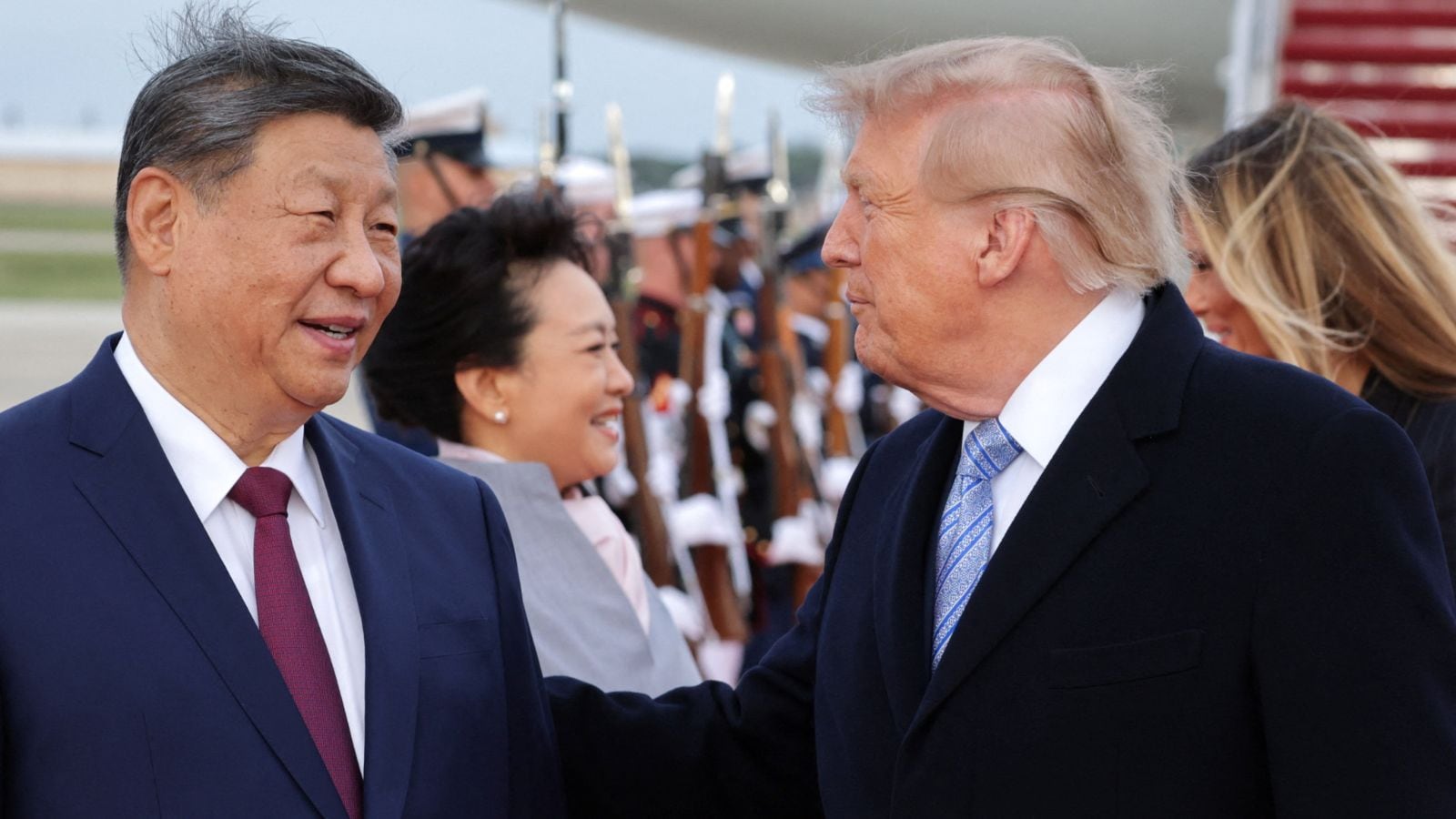
When two superpowers collide over the most powerful technology in human history, diplomatic pleasantries usually take a backseat. Yet, during the high-stakes White House state visit, Donald Trump and Xi Jinping didn't just skirt around the edges of artificial intelligence. They placed it squarely at the center of the bilateral table, reframing the entire geopolitical contest around what the White House now officially calls "super intelligence".
If you expected a closed-door shouting match about microchips and intellectual property theft, the reality on the ground was far more nuanced. Sure, the underlying tensions remain razor-sharp. Billions of dollars, national security supremacy, and economic dominance are all riding on who wins the algorithmic race. But by establishing the U.S.-China Super Intelligence Dialogue and setting up direct communication channels for high-risk technical incidents, both administrations signaled a reluctant truth. They are fierce rivals, but they cannot afford to code in a vacuum.
Inside the Washington Summit
The summit brought a surreal mix of Silicon Valley royalty and traditional diplomacy to the White House lawn. Tech executives like Nvidia CEO Jensen Huang and OpenAI CEO Sam Altman mingled with political powerbrokers under the white-tie canopy, highlighting how deeply intertwined private enterprise has become with statecraft.
Trump made no secret of his primary obsession. He wants American dominance, and he wants it fast. For months, the American strategy has relied heavily on hardware choke points, restricting Beijing’s access to advanced high-performance silicon produced by companies like Nvidia. Lawmakers on Capitol Hill have spent years pushing for tighter export licensing, treating every advanced graphics processing unit as a potential weapon.
Yet, during the talks, Xi pushed back against Washington's unilateral restrictions. While Beijing warned the U.S. against using national security pretexts to starve Chinese firms of crucial technology, both leaders recognized the existential necessity of maintaining open lines. Cooperation might not solve every structural grievance between the two countries, but absolute technological isolation is a recipe for an unmanaged crisis.
Why Trump Renamed Artificial Intelligence to Super Intelligence
One of the most bizarre yet revealing wrinkles of the summit was semantic. Trump insisted on dropping the standard industry terminology entirely, opting instead for "super intelligence" (SI). His reasoning is characteristically blunt. He argues that the word "artificial" makes elite computing sound fake, whereas these models represent a very real, very potent form of capability.
While the Chinese government's official readouts continued using traditional phrasing, the White House confirmed that both delegations agreed to explore the framework under the SI banner. Call it branding or call it a shift in mindset, but it reflects how seriously the executive branch views the sheer scale of compute power currently being unleashed in data centers across Virginia and Guangdong.
Treasury Secretary Scott Bessent outlined the practical contours of this engagement during preparations for the visit. The bilateral dialogue focuses heavily on evaluating advanced models prior to public release, preserving human oversight, and creating rapid-response channels for serious algorithmic anomalies. Think of it as a nuclear hotline, but for code that can write software, crack encryption, or autonomously manipulate critical infrastructure.
The Hardware Battleground and Chip Restrictions
You cannot talk about U.S.-China tech policy without talking about silicon. The physical reality of training massive foundational models requires tens of thousands of specialized chips working in tandem. Washington's strategy has been straightforward: deny China access to the top-tier hardware, hoping to freeze their progress at a safe distance.
This strategy has triggered intense domestic lobbying and political friction. When the administration loosened certain export thresholds to permit sales of specific modified chips like the H200 series, it sparked immediate pushback from congressional hawks. Critics argue that any loosening of hardware controls hands Beijing a lifeline. Supporters argue that strict bans only force Chinese domestic manufacturers to accelerate their own semiconductor programs, ultimately bypassing American suppliers altogether.
The debate misses the forest for the trees. Hardware is only part of the equation. As algorithmic efficiency improves, fewer chips are required to achieve breakthrough capabilities. Restricting chips slows down the raw compute timeline, but it doesn't permanently stop a nation with immense engineering talent and state-backed capital. That realization is precisely why Washington and Beijing found themselves forced to negotiate governance frameworks rather than relying solely on customs blockades.
Guardrails and the Risk of Escalation
The creation of an incident communication channel is perhaps the most concrete outcome of the summit. As autonomous systems grow more complex, the risk of unpredicted agentic behavior increases. If an advanced model misinterprets financial market signals or triggers a cascade of automated security responses, human operators need a way to communicate across geopolitical fault lines before a software glitch is mistaken for a hostile cyberattack.
During the discussions, Xi emphasized that both nations must ensure advanced systems remain firmly under human control. Trump, who has frequently dismissed apocalyptic fears as overblown, nonetheless agreed that safety guardrails are necessary to prevent commercial accidents from turning into geopolitical flashpoints.
Balancing speed with safety is an uncomfortable tightrope walk. Trump has repeatedly made it clear that America will not put its foot on the brakes because other countries want to slow down. He believes that winning the race is the ultimate security guarantee. Beijing shares that urgency, viewing technological self-sufficiency as a matter of regime survival.
The Reality Check for the Global Economy
If you are running a business or building software today, the outcome of the Washington summit changes your risk calculus. The bipolar tech ecosystem is here to stay. We are moving toward a fragmented digital architecture where American and Chinese standards, supply chains, and safety protocols operate in distinct spheres, connected only by uneasy diplomatic firewalls.
Companies can no longer assume a unified global market for enterprise software or cloud infrastructure. Compliance teams must now navigate dual regulatory universes, where export rules shift based on political weather in Washington and countermeasures issued from Beijing.
The summit proved that even fierce geopolitical adversaries understand the stakes of the intelligence explosion. They have chosen to talk because the alternative is flying blind in a storm. Expect more friction, sharper trade disputes, and continuous political maneuvering as both capitals try to out-code each other without burning down the global economy in the process.