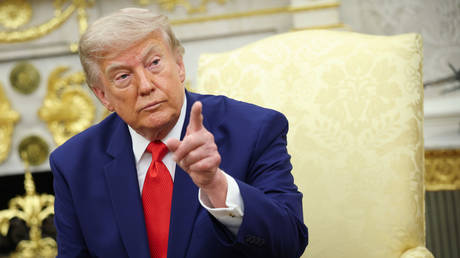
The transatlantic trade battle just entered dangerous territory. President Donald Trump announced that the United States will launch an immediate Section 301 investigation into European trade practices. Why? Because Brussels keeps slapping massive regulatory fines on Silicon Valley giants, and Washington isn't having it anymore.
If you've been keeping up with global economics, you know trade tensions between the US and the European Union aren't new. But tying import tariffs directly to regulatory fines against tech companies? That's a dramatic pivot. It turns regulatory enforcement into a full-scale trade war.
Here is what's actually happening behind the headlines, what it means for consumers on both sides of the Atlantic, and why this strategy could reshape international business regulations for years to come.
The Trigger Behind the New Tariff Threat
The immediate trigger for Trump's announcement was a fresh €890 million ($1 billion) fine handed down by European regulators against Google's parent company, Alphabet. The European Commission argued under its Digital Markets Act (DMA) that Google illegally favored its own services—like travel booking and local search results—over smaller rivals, while restricting developers on its Google Play store.
Trump responded on Truth Social with characteristic directness, writing: "The United States of America is not a 'PIGGYBANK' for Europe, nor will we allow it to be!" He cited cumulative penalties levied over the years against Apple, Meta, Amazon, and Google, claiming total fines exceeded $38.5 billion.
In his post, he promised that those penalties would be reversed and warned that "substantial" tariffs will follow.
This isn't just rhetoric. By invoking Section 301 of the Trade Act of 1974, the administration is deploying the exact statutory tool used to levy heavy tariffs during previous trade disputes. Section 301 gives the executive branch broad authority to retaliate against foreign acts, policies, or practices deemed "unjustifiable" or "discriminatory" against American commerce.
Antitrust Enforcement vs. Protectionism
To understand who is right here, you have to look at how Europe and the US view tech giants.
From the perspective of Brussels, rules like the Digital Markets Act (DMA) and Digital Services Act (DSA) exist to keep digital markets competitive. European regulators argue that dominant platforms act as "gatekeepers" that stifle innovation and crush smaller competitors. They point out that European companies get fined under these rules too when they break competition laws.
From Washington's viewpoint, the math looks suspicious. The vast majority of the world's dominant tech companies happen to be American. When European regulators repeatedly issue multibillion-dollar penalties against Big Tech, US officials see an asymmetric tax disguised as antitrust enforcement. They view it as a way for the EU to collect revenue from foreign firms that European tech companies can't naturally beat in the open market.
It's a clash of fundamental philosophies:
- European regulatory philosophy prioritizes consumer choice, market fairness, and strict data privacy, even if it limits platform growth.
- American business philosophy prioritizes innovation, platform integration, and scale, arguing that consumer benefit comes from cheap, integrated, high-performing software.
When those two mindsets collide, corporate legal teams usually end up settling or paying. But by bringing broad tariffs into the equation, the US government is signaling that private legal compliance issues are now national economic interest issues.
How Section 301 Investigations Work in Practice
Launching a Section 301 investigation doesn't mean tariffs show up overnight. Legally, the US Trade Representative (USTR) must publish a formal notice, open public comment periods, and conduct detailed hearings.
Normally, that process takes several months. However, Washington has options to expedite things:
- Reopening Previous Probes: The administration could dust off previous probes into European Digital Services Taxes (DSTs) that were put on pause during prior negotiations.
- Executive Emergency Declarations: Fast-tracking administrative steps by citing emergency trade powers, though that route invites swift federal court challenges.
- Layering on Existing Tariffs: The US recently implemented baseline 10% duties under separate authorities, giving officials existing framework leverage to add target-specific duties on European exports.
If the USTR formally finds that the EU's Digital Markets Act unfairly targets American firms, the president gains legal clearance to place targeted duties on key European exports. Think German automobiles, French wines, Italian luxury goods, and industrial machinery.
What This Escalation Means for Businesses and Consumers
If this trade dispute escalates into retaliatory duties, nobody escapes unscathed.
For European exporters, higher tariffs mean their products become significantly more expensive in the American market. That hurts sales at a time when European economic growth is already sluggish.
For American consumers, it means higher prices on imported consumer goods, everyday groceries, and luxury products. Tariffs are import taxes paid by domestic importing companies, not the foreign countries themselves—a reality that hits store shelves quickly.
For Big Tech, the situation is double-edged. While executive support against European regulators provides political cover, companies like Apple, Google, and Meta operate globally. They rely heavily on European revenue. Getting caught in the middle of a bilateral trade war makes navigating European regulatory compliance even harder. If Europe decides to double down in response to tariff threats, tech platforms could face even stiffer operational hurdles or outright operational restrictions inside the EU block.
How to Prepare for Incoming Trade Volatility
If you manage a business with international supply chains or rely on global software infrastructure, you can't afford to sit back and watch. Here are concrete steps to take right now:
- Audit European Supply Chain Exposure: Identify every product or raw material you import from EU member states. Calculate how a 10% to 25% duty increase affects your profit margins.
- Review Platform Dependencies: If your marketing or operations rely heavily on Big Tech tools affected by the DMA—like localized Google Ads or Apple App Store distribution in Europe—prepare for functional changes as platforms alter their features to comply with EU demands.
- Diversify Sourcing Early: Start building relationships with alternative suppliers outside the EU or domestic vendors to shield your operations from sudden tariff implementation schedules.