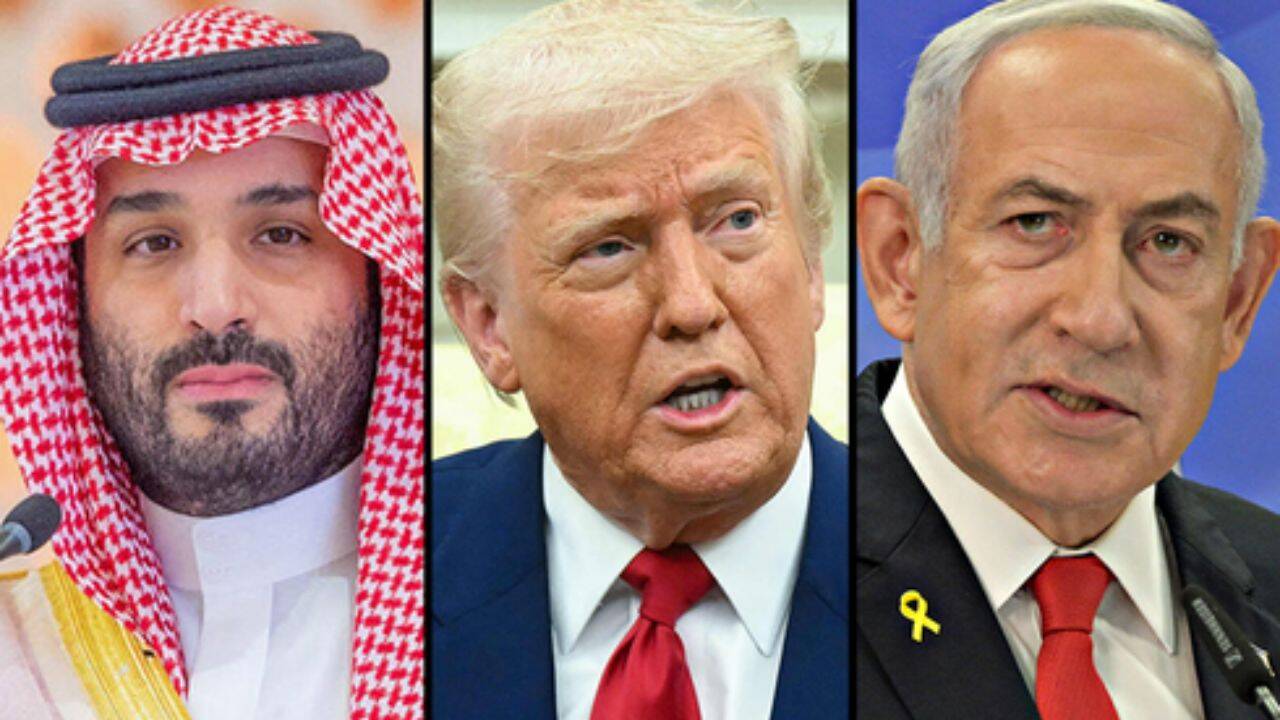
When Energy Secretary Chris Wright and Saudi Energy Minister Prince Abdulaziz bin Salman signed a bilateral civil nuclear framework, it looked like a major win for both Washington and Riyadh. The agreement set the stage for American energy companies to build civilian reactors inside Saudi Arabia, cementing long-term energy cooperation.
Then came the plot twist.
Less than 24 hours later, Donald Trump posted on Truth Social, declaring that the nuclear deal is "totally subject to Saudi Arabia joining the very respected and successful Abraham Accords". He added that the agreement pertains strictly to non-military, non-enriched civilian nuclear facilities, matching what the UAE and others already operate.
White House Press Secretary Karoline Leavitt reinforced the message almost immediately: if the Saudis don't join the accords and normalize relations with Israel, the entire deal is off.
That single statement threw months of quiet, delicate diplomatic maneuvering into chaos. Linking high-tech nuclear cooperation to formal Saudi-Israeli diplomatic recognition creates a high-stakes standoff that neither Riyadh nor Capitol Hill can easily navigate.
The Moving Target of U.S. Diplomacy
The initial framework signed by Energy Secretary Chris Wright aimed to capture a massive market for U.S. nuclear vendors like Westinghouse. State Department officials, including Secretary of State Marco Rubio, argued that if the U.S. didn't build Saudi Arabia's civilian energy infrastructure, competitors in Beijing, Seoul, or Moscow gladly would.
Yet, the signed 123 Agreement framework didn't originally include a public requirement for Saudi Arabia to recognize Israel.
By publicly tying the nuclear pact to the Abraham Accords after the fact, Trump tried to address three major pressure points at once:
- Loud pushback from pro-Israel advocates and lawmakers in Washington who feared a regional arms race.
- Concerns from Capitol Hill regarding strict proliferation oversight and IAEA monitoring.
- A desire to secure a historic foreign policy breakthrough by expanding the 2020 normalization agreements.
It's a classic art-of-the-deal move. Maximize your leverage right before submitting a treaty or agreement to Congress. But in international statecraft, moving the goalposts after a deal is inked carries serious fallout risks.
Crown Prince MBS Facing a Major Domestic Trap
For Saudi Crown Prince Mohammed bin Salman (MBS), joining the Abraham Accords isn't just a quick pen stroke on an executive order.
Before October 2023, Riyadh and Washington were engaged in detailed three-way talks to tie Saudi-Israeli normalization to a mutual defense treaty and civilian nuclear assistance. But the landscape has shifted drastically since then.
Public sentiment across the Arab world, including within Saudi Arabia, has hardened significantly during the prolonged regional conflict in Gaza. Riyadh has repeatedly stated that formal diplomatic ties with Israel require an irreversible pathway toward a Palestinian state—a demand that Prime Minister Benjamin Netanyahu's government firmly rejects.
If MBS accepts Trump's condition without securing clear concessions on Palestinian statehood, he risks severe backlash from domestic conservative factions and regional allies. On the flip side, if Riyadh walks away from the American nuclear deal, the kingdom's ambitious Vision 2030 energy diversification plan takes a direct hit.
The Problem With the Enrichment Question
There is another massive point of friction: local uranium enrichment.
Trump explicitly posted that the deal would allow "no enrichment of material" on Saudi soil. That assertion contradicts earlier media reports suggesting the two nations were exploring a joint U.S.-Saudi study on whether a U.S.-managed enrichment facility inside the kingdom could be feasible.
                  ┌─────────────────────────────────────────┐
                  │      U.S. 123 Agreement Framework       │
                  └────────────────────┬────────────────────┘
                                       │
                ┌──────────────────────┴──────────────────────┐
                ▼                                             ▼
┌──────────────────────────────┐              ┌──────────────────────────────┐
│     Trump Administration     │              │     Saudi Leadership (MBS)   │
├──────────────────────────────┤              ├──────────────────────────────┤
│ • Must join Abraham Accords  │   STANDOFF   │ • Requires pathway to        │
│ • Zero domestic enrichment   │ ───────────► │   Palestinian statehood      │
│ • Congressional review 90-day│              │ • Wants sovereign energy     │
│   clock initiated            │              │   independence options       │
└──────────────────────────────┘              └──────────────────────────────┘
The difference between zero domestic enrichment and local fuel processing is huge in nuclear geopolitics:
- The UAE Model ("Gold Standard"): The UAE voluntarily agreed to give up domestic enrichment and reprocessing, importing pre-enriched fuel from international suppliers under strict IAEA Additional Protocol oversight.
- The Sovereign Rights Argument: Saudi Arabia has consistently argued that as a signatory to the Non-Proliferation Treaty (NPT), it holds a sovereign right to process its own massive natural uranium deposits for peaceful power generation.
If Washington demands a complete ban on local enrichment while also conditioning the deal on recognizing Israel, Riyadh's motivation to sign dwindles rapidly.
China and Russia Waiting in the Wings
This isn't a world where the United States holds a total monopoly on nuclear reactor technology.
China National Nuclear Corporation (CNNC) and Russia's Rosatom have actively pitched Riyadh to build nuclear infrastructure. Neither Beijing nor Moscow requires Saudi Arabia to normalize ties with Israel, nor do they impose strict non-proliferation strings that match American standards.
If the U.S. conditions turn out to be a dealbreaker, Saudi Arabia doesn't have to abandon its nuclear ambitions. It can simply change partners. That outcome would cost American energy suppliers billions in contracts and strip Washington of non-proliferation oversight in the Arabian Peninsula for decades.
Congressional Battle Lines Are Already Drawn
Even if Trump and MBS manage to reach a middle ground, the agreement still faces a mandatory 90-day review period in the U.S. Congress once formally submitted.
Lawmakers from both sides of the aisle have voiced skepticism over military and civilian tech transfers to the Gulf. Non-proliferation hawks in the Senate want explicit guarantees, including the IAEA Additional Protocol, to ensure civilian plants aren't repurposed down the road.
Meanwhile, pro-Israel lawmakers view the Abraham Accords requirement as an essential safeguard. Netanyahu publicly praised Trump's tweet, calling the condition a historic step toward peace. But that very praise makes it harder for Saudi leaders to save face if they sign on without receiving tangible concessions in return.
Practical Steps to Track This Standoff
Keep an eye on these specific indicators over the coming weeks to see where this nuclear gamble lands:
- Official Submissions to Congress: Watch when the White House formally submits the 123 Agreement text to Capitol Hill. The exact legal text will reveal whether the Abraham Accords condition is written directly into the treaty language or remains a political stance.
- Saudi Ministry Statements: Pay attention to official press releases from Riyadh rather than unofficial leaks. If energy officials continue technical discussions while diplomatic channels stay quiet, a compromise is likely brewing behind closed doors.
- IAEA Oversight Language: Check whether the final draft includes the IAEA Additional Protocol. That inspection regime is the real benchmark for whether Washington can satisfy non-proliferation critics in the Senate.
- Third-Party Bidding Activity: Monitor any renewed outreach between Saudi Arabia and state-backed vendors in South Korea, France, or China. Active bids from foreign competitors will show how serious Riyadh is about keeping its options open.