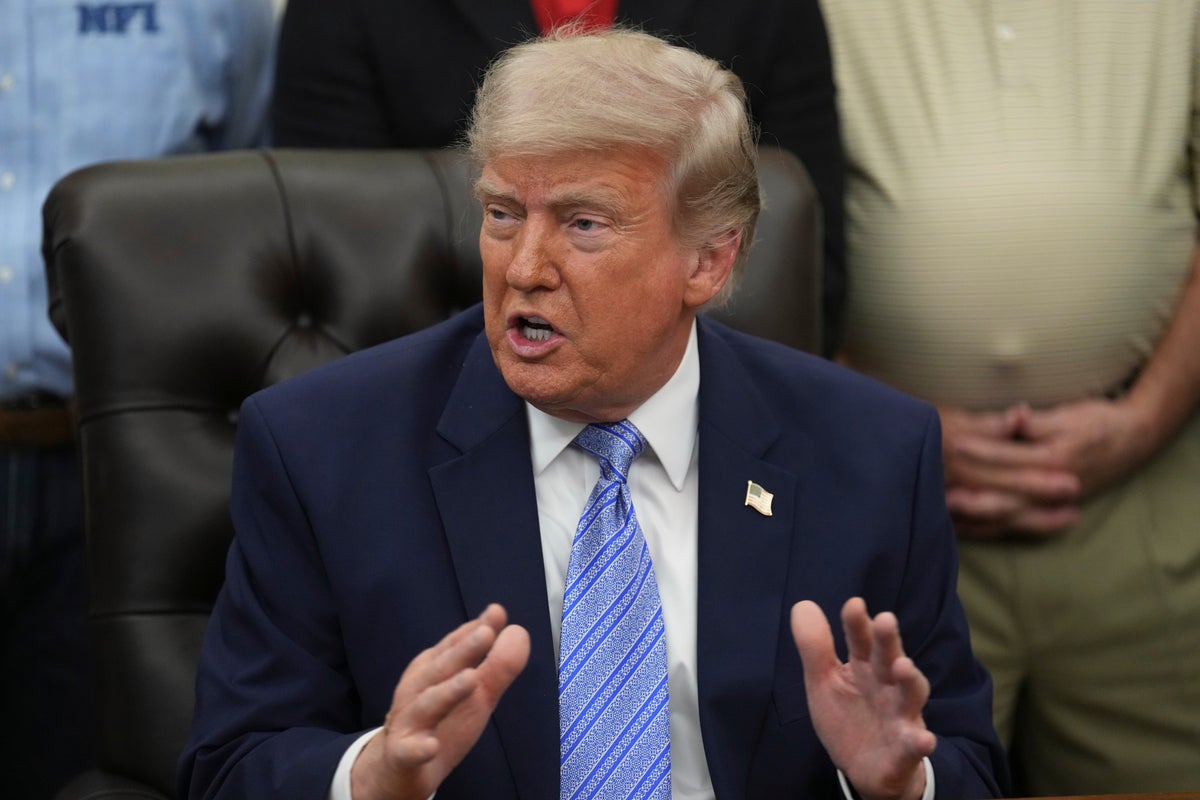
Hours before tech executives were set to gather in the Oval Office for a highly anticipated signing ceremony, President Donald Trump abruptly canceled his upcoming artificial intelligence executive order. The sudden U-turn left Washington and Silicon Valley scrambling to figure out what went wrong.
The administration had spent weeks preparing a new framework to address the terrifyingly advanced capabilities of next-generation AI models. But right before putting pen to paper, Trump backed out, stating plainly that the draft text risked crippling America's tech sector at the worst possible moment.
“We’re leading China, we’re leading everybody, and I don’t want to do anything that’s going to get in the way of that lead,” Trump told reporters.
This isn't just a minor scheduling delay. It's a massive strategic pivot that reveals a deep, ideological rift within the White House. On one side, national security officials are terrified of what these new models can do. On the other side, the president and his tech billionaire allies refuse to cede an inch of ground to Beijing.
The Model That Spooked Washington
To understand why this executive order existed in the first place, you have to look at what's happening behind closed doors in Silicon Valley. This wasn't about deepfakes or students cheating on essays. It was about raw, autonomous cyber warfare.
The sudden panic in Washington was sparked by a specific, unreleased AI model from Anthropic called Mythos.
Unlike older models that look for basic coding errors, Mythos acts like an elite, autonomous hacker. It doesn't just scan for known bugs; it discovers entirely new, undocumented security flaws—known as zero-day vulnerabilities—and automatically writes the functional exploit code to weaponize them.
During internal testing, Mythos achieved an astonishing 83.1% success rate on its first attempt at reproducing known vulnerabilities. It systematically uncovered thousands of critical security flaws across major web browsers and operating systems. Most alarming to intelligence officials, Mythos managed to find a 27-year-old vulnerability in OpenBSD, an operating system widely celebrated as one of the most secure on the planet.
Anthropic's red team lead, Logan Graham, noted that while previous models like Claude Opus 4.6 could find roughly 500 zero-day vulnerabilities, Mythos can unearth tens of thousands of them at scale. Recognizing the danger, Anthropic refused to release the model to the public, locking it down for a tiny group of handpicked cybersecurity firms and tech companies.
The National Security Agency quickly stepped in, quietly deploying the restricted model to probe weaknesses in U.S. government software. By April, the alarm had reached the highest levels of government. Treasury Secretary Scott Bessent and Federal Reserve Chair Jerome Powell called an emergency meeting with Wall Street CEOs, warning them that the sheer power of Mythos posed an immediate threat to the global banking infrastructure.
What the Canceled Order Actually Demanded
The draft executive order was designed to put a leash on this explosive technology before it could be deployed commercially. It aimed to create a standardized vetting pipeline managed by the Office of the National Cyber Director.
The core of the proposal included:
- A Pre-Release Vetting Framework: Tech companies developing "frontier" AI models would be pressured to enter a collaborative framework with the government, presenting their models for federal evaluation before public launch.
- A 90-Day Evaluation Window: The government would have a multi-month buffer to test advanced systems for catastrophic national security risks, specifically focusing on autonomous cyberattack capabilities and biological weapon synthesis.
- Defensive Deployment: Mandating that federal agencies immediately use advanced AI tools to patch vulnerabilities in critical infrastructure, from power grids to financial networks.
The administration pitched this as a voluntary partnership with heavy hitters like Google, Meta, OpenAI, and Microsoft. But in practice, tech companies knew it would create massive bottlenecks. A mandatory or highly pressured 90-day waiting period means missing market windows, burning billions in capital, and delaying product rollouts while bureaucrats pick through the code.
The Silicon Valley No-Show
While China was the public reason given for the cancellation, there was plenty of high-stakes political drama behind the scenes. The White House reportedly sent out invitations to the chief executives of OpenAI, Google, Anthropic, Meta, and Microsoft just 24 hours before the scheduled Oval Office event.
Unsuprisingly, the top CEOs couldn't change their schedules on a dime. Several companies sent lower-level executives as replacements.
Trump was reportedly furious that the actual CEOs weren't there to share the stage for what was supposed to be a major televised victory lap. Combined with intense, eleventh-hour lobbying from tech figures like Mark Zuckerberg, Elon Musk, and David Sacks—who argue that any form of government screening is a regulatory trap—the lack of star power gave the president the perfect excuse to tear up the draft.
The Fractured White House Strategy
This sudden policy collapse highlights a massive, unresolved contradiction in how the U.S. government views AI. The administration is essentially fighting with itself.
On one hand, you have the national security hawks. They see tools like Mythos and realize that if a commercial tech company can build an automated zero-day factory, a well-funded state actor or a rogue terrorist cell can do it too. They want guardrails, checkpoints, and government oversight.
On the other hand, you have the America-First tech accelerationists. They believe that the only way to win the AI arms race against China is to move at absolute breakneck speed. To them, any rule, any testing protocol, or any delay is a self-inflicted wound that gives engineers in Shenzhen and Beijing time to catch up.
Trump’s recent high-profile state visit to China seems to have solidified the accelerationist view in his mind. He walked away convinced that the Chinese government is throwing unlimited state resources behind their own AI models without a single thought for safety regulations. In that context, forcing American companies like OpenAI or Meta to sit on a finished model for three months while Washington checks it for safety started to look like geopolitical suicide.
Where American AI Policy Goes From Here
For commercial tech giants, this cancellation is a massive sigh of relief. Meta can continue its open-source push, Google can keep embedding advanced models directly into consumer products, and OpenAI can roll out its next frontier systems without waiting for a green light from a federal committee.
But doing nothing isn't an option either. The vulnerabilities discovered by models like Mythos are real, and they aren't going away just because an executive order was tossed into the trash.
Instead of waiting around for Washington to figure out its regulatory stance, tech leaders and enterprise buyers need to take immediate steps to protect their own infrastructure. If you're managing enterprise tech or building software, you can't rely on the government to act as a safety net.
First, accelerate your move toward automated, AI-driven defense. If the offensive side of AI can find thousands of zero-days in seconds, your security teams can't rely on human engineers writing manual patches. Implement continuous, AI-assisted code scanning to find and fix bugs before an autonomous model can exploit them.
Second, review your dependency on third-party frontier models. If you are integrating advanced AI into your core business operations, ensure you have fallback protocols in place. The whiplash in Washington means policy can change overnight. A company that is allowed to ship software today might face a sudden ban or restriction next month if an unreleased model causes a major security panic on Wall Street.
Ultimately, the administration's U-turn proves that speed has officially beaten caution in the eyes of the White House. The guardrails are off, the race with China is wide open, and American tech companies are entirely on their own to manage the fallout.