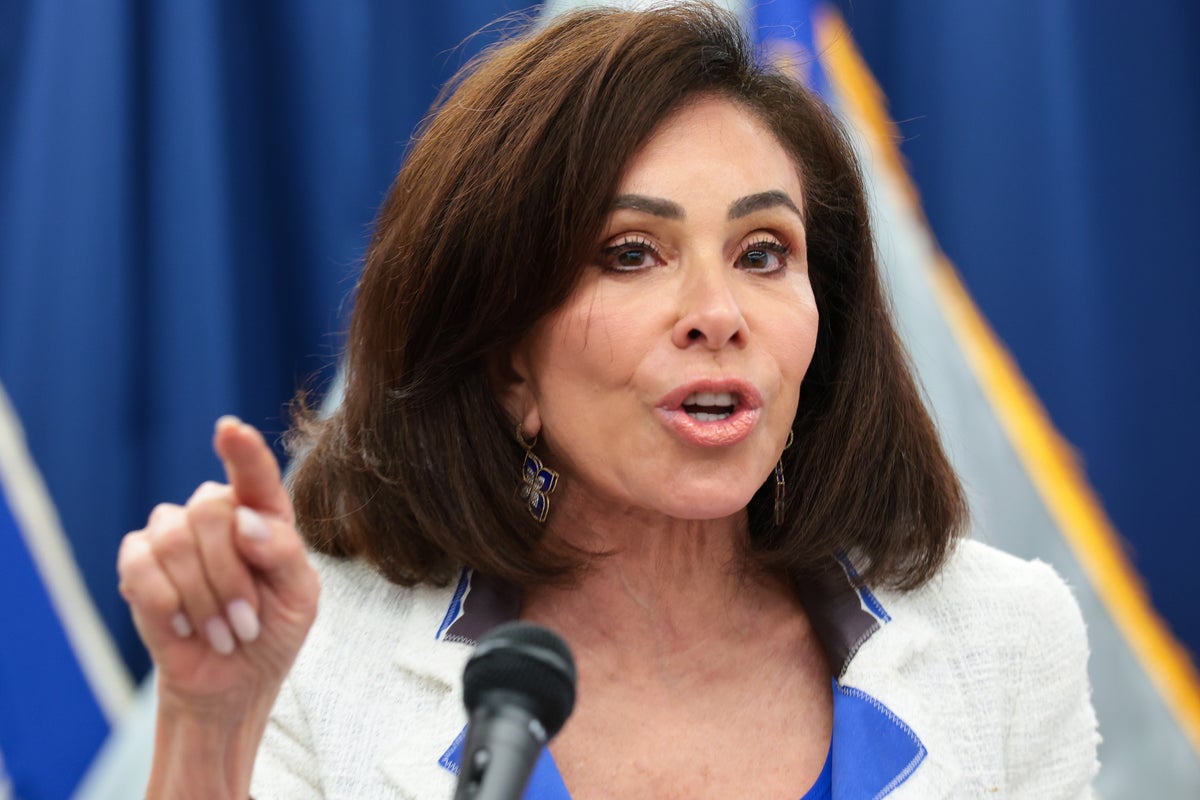
Donald Trump doesn't usually tolerate being publicly contradicted by his own appointees. When U.S. Attorney Jeanine Pirro moved to dismiss criminal charges against former Olympic athlete David Hearn over alleged damage to the Lincoln Memorial Reflecting Pool, a collision course became inevitable. Trump wanted a high-profile prosecution for vandalism on a pet infrastructure project. Pirro got trapped between a skeptical judge and a mountain of contractor evidence, choosing a legal retreat over an unwinnable court battle.
The fallout was immediate, noisy, and remarkably public. Trump slammed his longtime ally on social media and in the Oval Office, claiming she folded like an umbrella. Yet, despite heavy speculation that an immediate firing was coming, Pirro remains at her post. Understanding why Trump held off on the axe requires looking past the political theater and examining the weird mechanics of Washington loyalty, legal pragmatism, and a botched 14 million dollar pool renovation.
Anatomy of a Public Feud
The trouble started long before the courtroom filings. Ahead of the country's major milestone celebrations, the administration rushed a massive overhaul of the iconic Washington landmark. Workers slapped down a new blue liner and painted the basin, aiming for a pristine look. Almost immediately, the sealant began to bubble, peel, and choke on algae.
Instead of admitting to contractor errors or a rushed timeline, the administration pointed fingers outward. They blamed left-wing vandals for tearing up the lining with box cutters. Enter David Hearn, a 67-year-old former Olympic canoeist who found himself indicted on a felony property destruction count after touching the peeling material.
Federal prosecutors initially backed the vandalism narrative. But as discovery moved forward, reality intruded. Defense attorneys punched massive holes in the government's case, pointing out that the damage happened in areas where vandals had no logical access, and that the Interior Department's initial disclosures were sketchy at best. Confronted by a hostile D.C. Superior Court judge pressing hard on the merits, Pirro's office did what prosecutors are technically supposed to do when evidence falls apart: they dropped the case.
Trump felt blindsided. He took to Truth Social to declare he disagreed one hundred percent, arguing that the security footage showed people slicing at the material. By Monday, his frustration boiled over in the Oval Office, where he told reporters that Pirro had choked under judicial pressure.
Why the Firing Never Came
When a president publicly accuses a top prosecutor of choking, political survival usually looks bleak. Whispers of an imminent dismissal swept through Washington corridors. Meetings happened behind closed doors, including a sit-down between Trump, Pirro, and Interior Secretary Doug Burgum.
No resignation letter materialized. No pink slip was handed out.
Firing a U.S. attorney over a local municipal pool dispute creates more administrative headaches than it solves. Pirro is a high-profile defender of the administration, a former television host, and a loyal political soldier whose broader alignment with Trump's agenda runs deep. Swapping her out means starting a messy confirmation process or installing an interim head who might bring unwanted scrutiny to other ongoing district investigations.
Trump values fierce public displays of alignment, but he also understands practical friction. Pirro didn't defect to the opposition; her office simply ran into a brick wall of bad documentation provided by a different government agency. In her filing, Pirro explicitly blamed the Interior Department for giving her office less than fulsome information at the outset. That finger-pointing inside the administration gave Trump enough breathing room to keep his powder dry. He could vent his anger to the press, satisfy his base's desire for toughness, and avoid destabilizing the D.C. federal prosecutor's office over a soggy patch of plastic liner.
The Broader Impact on Accountability
This strange episode exposes the fragile nature of high-stakes public projects managed under tight deadlines. When political optics demand perfection, corners get cut. Contractors rush, paint fails to cure, and bureaucrats cover their tracks by shifting blame onto citizens or activists.
David Hearn's legal team blasted the entire prosecution as a reckless abuse of executive power, noting that touching a peeling public pool liner shouldn't land an Olympian in criminal court. Meanwhile, administration officials are left draining the pool yet again to fix the persistent baseline flaws.
Trump's decision to hold off on firing Pirro shows a pragmatic streak beneath the bluster. He knows the pool saga is a local embarrassment wrapped in national headlines. Doubling down on a bad prosecution would only drag the embarrassing details through a prolonged trial where construction flaws would take center stage.
For now, the charges are gone, the pool is empty, and Pirro keeps her office. The administration gets to move past the courtroom defeat without the added bloodletting of a messy personnel war.

.png?itok=1mb05mKJ)

