The results of the June 2026 Los Angeles mayoral primary expose a structurally fragmented city that cannot be understood through simple geographic divisions. By mapping precinct-level returns against demographic matrices, socioeconomic data, and housing tenure, a clear pattern emerges: the electorate has fractured into three distinct ideological and functional coalitions.
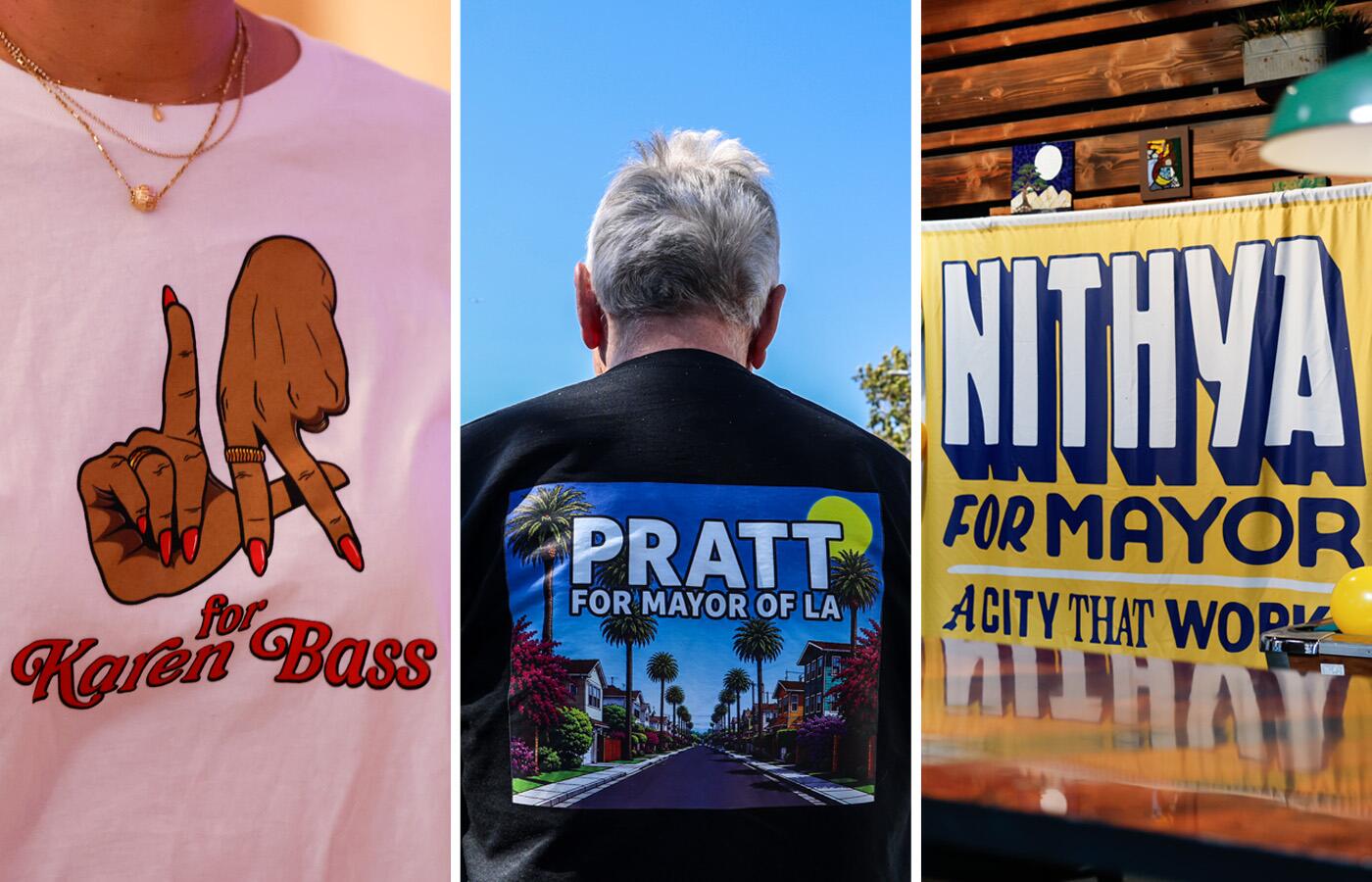
Incumbent Karen Bass, insurgent conservative Spencer Pratt, and progressive challenger Nithya Raman did not merely win different neighborhoods. They activated fundamentally different socioeconomic engines across the city. Analyzing the mechanics of these voting blocks reveals the structural friction points that will determine the general election runoff in November.
The Three Pillars of Electoral Distribution in Los Angeles
The preliminary allocation of votes establishes three distinct geographic and ideological strongholds, each operating on a specific socio-political axis.
1. The Institutional Core: Bass and the Legacy Network
Mayor Karen Bass secured her primary advantage by consolidating the traditional institutional base of the city. Her coalition operates as a network of deep-seated community ties, high-propensity older voters, and working-class homeowners.
- Geographic Focus: South Los Angeles, historic mid-city enclaves, and select working-class pockets of the East San Fernando Valley (such as Northridge and North Hills).
- Socioeconomic Variables: High concentrations of long-term Black and Latino homeowners, strong union density, and deep alignment with institutional Democratic networks.
- Performance Metrics: Bass demonstrated overwhelming dominance south of the Santa Monica Freeway, securing up to 82% of the vote in specific Gramercy Park precincts and 64% in Baldwin Hills.
2. The Affluent Dissident Class: Pratt and the Suburban Coalition
Spencer Pratt captured the anti-incumbent, right-of-center electorate by replicating the geographic footprint established by Rick Caruso in the 2022 mayoral primary. This coalition is bound by shared concerns over public safety, capital flight, and the municipal handling of the 2025 wildfire recovery.
- Geographic Focus: The Westside (including Pacific Palisades, Brentwood, and Hancock Park) and the West San Fernando Valley (Chatsworth, Encino, West Hills, and Woodland Hills).
- Socioeconomic Variables: High-income homeowners, high-net-worth individuals, commercial property interests, and a concentration of the city’s remaining registered Republicans.
- Performance Metrics: Pratt maximized margins in high-income coastal areas, capturing 60% of the vote in a single Pacific Palisades precinct, while holding roughly 30% of the citywide vote in early tallies.
3. The Progressive Tenant Bloc: Raman and the Left Flank
Councilmember Nithya Raman’s late entry into the race weaponized a highly mobilized, ideologically coherent left flank. This coalition operates almost entirely independent of the city's institutional Democratic apparatus.
- Geographic Focus: The urban core and gentrified rental corridors, including Echo Park, Silver Lake, Los Feliz, and central parts of Council District 4.
- Socioeconomic Variables: High concentration of renters, younger college-educated professionals, workers in the creative and entertainment industries, and organizations aligned with the Democratic Socialists of America (DSA).
- Performance Metrics: Raman disrupted Bass’s left flank, eroding the mayor's 2022 progressive margins and capturing significant multi-family residential precincts while contending for the second runoff position.
The Cost Function of Ideological Convergence
The primary mechanical error made by superficial analyses is treating the Los Angeles electorate as a single linear spectrum running from left to right. Instead, voter behavior in this election is dictated by two competing municipal cost functions: the Safety/Infrastructure Cost Function and the Housing/Affordability Cost Function.
                           [Safety & Infrastructure Crisis]
                                     (High Cost)
                                    /           \
                                   /             \
                                  /               \
         [Affluent Dissident Class]                [Institutional Core]
         - Focus: Crime, Property Values           - Focus: Public Investment,
         - Candidate: PRATT                        - Candidate: BASS
                                  \               /
                                   \             /
                                   \           /
                                [Progressive Tenant Bloc]
                                - Focus: Rent Control, Direct Aid
                                - Candidate: RAMAN
                                        |
                            (High Affordability Pressure)
                             [Housing & Cost of Living]
The Safety and Infrastructure Axis
For the affluent dissident class, the perceived cost of municipal failure is driven by property risk and public disorder. Pratt’s campaign leveraged the physical destruction of the 2025 fires and visible street homelessness as immediate threats to asset values. His platform prioritized traditional law enforcement expenditure and aggressive encampment clearings. This messaging resonated in high-value, low-density zip codes where homeowners view municipal taxation as yielding diminishing returns on public safety.
The Housing and Affordability Axis
For the progressive tenant bloc, the primary cost function is the rising cost of living and housing insecurity. Raman’s platform treated homelessness as a downstream symptom of systemic housing scarcity and wealth inequality. Her coalition favors municipal intervention via rent stabilization, eviction defense, and the reallocation of law enforcement funds toward mental health response networks. This messaging optimized turnout in dense, renter-dominated precincts where the immediate threat is displacement rather than property damage.
The Institutional Center
Bass occupies the center of these two vectors. Her strategy requires managing a delicate equilibrium: funding the Los Angeles Police Department sufficiently to quiet the concerns of moderate Valley and Westside homeowners, while deploying targeted resources to South Los Angeles to retain her working-class base. The primary risk to this strategy is structural erosion from both sides.
Shift Analysis: 2022 vs. 2026 Electoral Mechanics
Comparing the 2026 primary data with the 2022 primary between Karen Bass and Rick Caruso reveals clear shifts in voter behavior and candidate positioning.
| Electoral Metric | 2022 Primary (Bass vs. Caruso) | 2026 Primary (Bass vs. Pratt vs. Raman) |
|---|---|---|
| Ideological Structure | Bipolar (Establishment Progressive vs. Centrist/Conservative Outsider) | Tripartite (Institutional Center vs. Populist Right vs. Insurgent Left) |
| Westside Baseline | Caruso captured affluent homeowners via centrist business-friendly messaging. | Pratt consolidated these voters through aggressive anti-incumbent populism. |
| San Fernando Valley | Sharp East/West split; Caruso dominated the West Valley entirely. | Bass expanded into Northridge/North Hills; Pratt held the affluent West Valley perimeter. |
| Progressive Coalition | United behind Bass to prevent a business-aligned takeover. | Fractured; Raman peeled away dense, tenant-heavy precincts from Bass. |
The most significant structural shift is the fragmentation of the progressive coalition that carried Bass to victory in 2022. Four years ago, the threat of a Caruso mayoralty consolidated both moderate and democratic socialist voters behind Bass. In 2026, the absence of an immediate, unified threat in the primary allowed Raman to capture voters who view Bass's administration as overly accommodating to landlords and police unions.
Concurrently, Pratt’s performance demonstrates that the conservative/moderate base in Los Angeles remains remarkably durable at approximately 30% of the active electorate. Pratt capitalized on his personal background—using his experience losing his Pacific Palisades home in the 2025 fires—to transform a standard policy debate into an emotional indictment of city management.
Late-Counting Ballots and the Runoff Bottleneck
A critical mechanism of California electoral dynamics is the structural delay in final tallies, which consistently creates an ideological shift between election night and the final certification.
Early returns, which lean heavily toward older, wealthier, and more conservative voters who return mail ballots early or vote in person, initially placed Pratt in a commanding second position. However, post-Election Day processing systematically favors younger, lower-income voters and renters who hold their mail-in ballots until the final deadline.
This late-stage ballot influx drives the current bottleneck for the second runoff slot. The outcome hinges on a specific operational variable: the volume of late-arriving ballots from progressive-leaning precincts relative to conservative West Valley strongholds.
If the historical pattern holds, the late-processed ballots will continue to trend progressive. This trend presents a structural hurdle for Pratt, whose support faces a clear mathematical ceiling. Internal polling indicates that more than 90% of Raman voters select Bass as their secondary preference.
The structural distribution of these votes dictates the following strategic mechanics:
- Scenario A: Bass vs. Pratt Runoff. If Pratt maintains his narrow lead and advances, the general election becomes an asymmetric ideological contest. Bass enters the general election with a major structural advantage, as she is positioned to absorb the vast majority of Raman’s progressive voters, who will systematically reject a Trump-approved, registered Republican.
- Scenario B: Bass vs. Raman Runoff. If the late mail-in ballots lift Raman past Pratt, the general election transforms into an intrademocratic struggle for the soul of the city's progressive supermajority. This scenario eliminates the partisan safety net for Bass, forcing her to defend her record on policing and housing against a pure left-wing critique without the benefit of an oppositional conservative foil.
Strategic Action Plan for the General Election Campaign
The candidates must pivot from primary consolidation to structural expansion based on the underlying demographic data.
The Bass Defense Vector
The mayor must arrest the erosion on her left while maintaining her institutional base. Relying solely on endorsements from national figures like Governor Gavin Newsom will not suffice in a city dealing with acute local crises.
Bass must deploy a dual-track strategy: reinforce her infrastructure achievements in South Los Angeles while rolling out specific, targeted policy concessions on tenant protections to neutralize the progressive critique. If facing Pratt, her path is simple containment; if facing Raman, she must pivot to a pragmatic defense of governance, framing her opponent’s platform as fiscally unfeasible.
The Pratt Consolidation Dilemma
Pratt faces a severe scaling issue. To challenge Bass in November, he must expand beyond the ~30% Caruso ceiling. To accomplish this, his campaign must pivot from online populism and artificial intelligence-generated media toward practical economic arguments that target moderate, middle-income Latino and Asian homeowners in the San Fernando Valley and Mid-City.
He must reframe his platform from a ideological crusade into a technocratic intervention focused on municipal competence, lower business costs, and infrastructure recovery.
The Raman Infrastructure Requirement
Should Raman narrow the gap and secure the second runoff slot, her challenge changes from mobilizing a highly ideologically aligned base to building a broader, cross-racial working-class coalition. She cannot win a citywide runoff solely on the turnout of high-propensity progressive renters in District 4 and Echo Park.
Her campaign must build operational inroads into South and East Los Angeles, translating her progressive macroeconomic policies into concrete economic benefits for working-class families who have historically trusted institutional leadership.