International market penetration for American country music typically relies on deliberate distribution infrastructure, corporate localization, and targeted marketing expenditure. Yet the deep resonance of Dolly Parton across disparate African regions over five decades occurred entirely outside corporate expansion strategies or formal export campaigns. Understanding this cross-continental adoption requires examining how narrative structures, socio-economic parallels, and localized institutional adoption can bypass traditional barriers of geographic and cultural distance.
The mechanism of this adoption rests on three structural pillars: thematic universality regarding economic scarcity, the adaptability of narrative-driven lyricism, and high-profile institutional validation from localized figures of authority.
The Economics of Scarcity and Narrative Translation
Cultural products frequently fail to cross borders when their core value proposition depends on hyper-specific localized contexts. Parton's catalog consistently subverted this limitation by anchoring itself in the universal economic realities of rural poverty, class stratification, and manual labor.
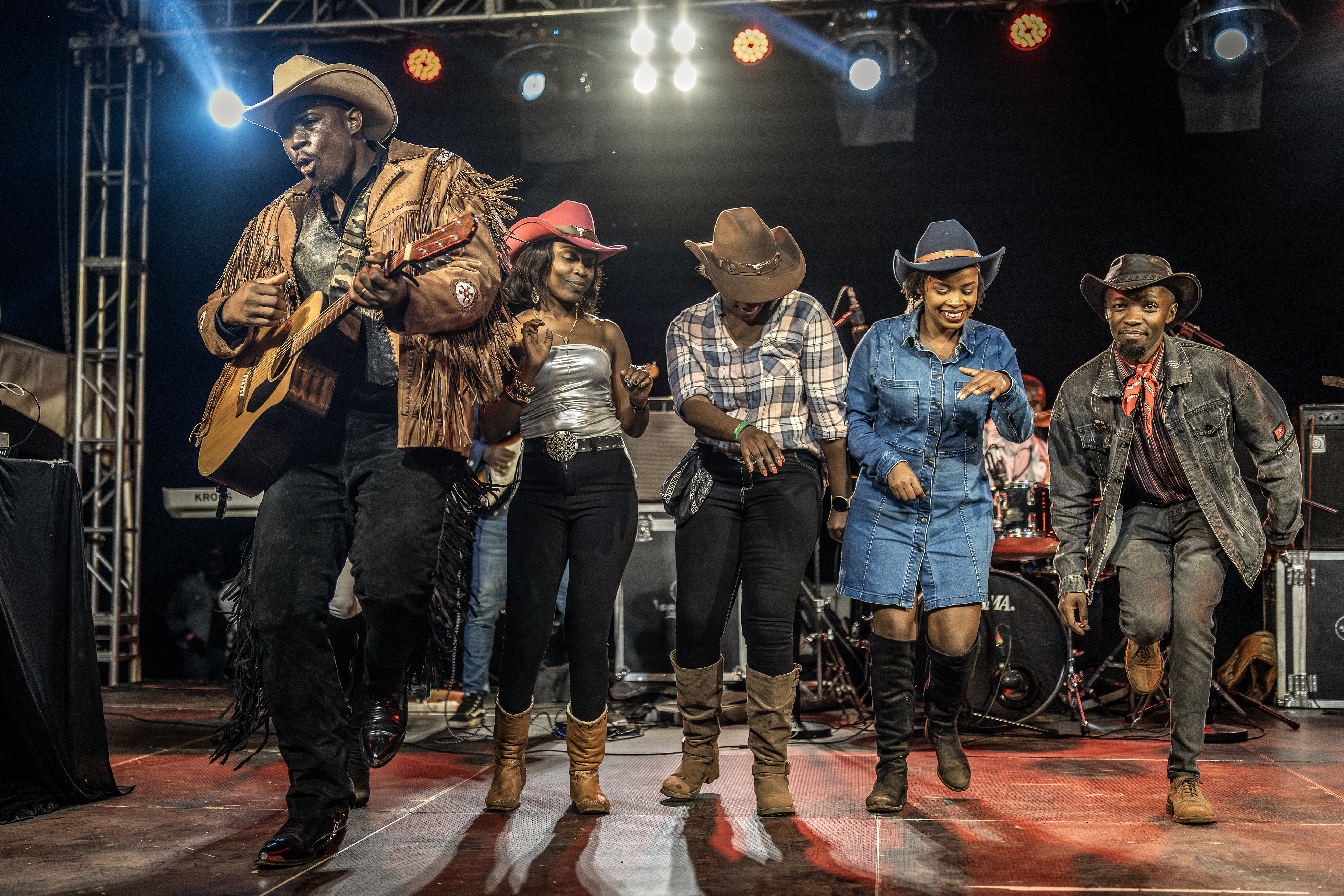
In East Africa, particularly Kenya, state-run and independent radio programmers frequently featured American country music because its thematic focus on agrarian life, family hardship, and subsistence labor mirrored local lived environments. Tracks like "Coat of Many Colors" bypassed the barrier of American localization by addressing a cross-cultural constant: the conversion of minimal material resources into personal dignity. Listeners in developing economies mapped these narratives onto their own experiences of rising from impoverished beginnings. The structural equation here relies on emotional transposition, where specific geographic references to the Smoky Mountains dissolve, leaving behind pure economic and familial struggle that resonates globally.
Institutional Validation and Asymmetric Diffusion
Organic cultural diffusion often stalls without high-status endorsement. In South Africa, Parton's catalog gained institutional weight through an unexpected node of influence: Robben Island. Nelson Mandela’s documented selection of "Jolene" during his imprisonment introduced a high-authority vector of validation. When political prisoners utilize specific pop culture artifacts as auditory anchors against institutional oppression, those artifacts acquire secondary symbolic value within counter-culture movements.
This dynamic created an asymmetric diffusion model. Rather than moving outward from a corporate record label’s regional office in Johannesburg, awareness propagated downward from political leadership and intellectual circles into broader public consciousness. The music was decoupled from commercial Nashville machinery and absorbed into the domestic fabric of resistance and survival narratives.
Collaborative Friction and Cross-Cultural Synthesis
Global artists attempting cross-border collaborations frequently fall into paternalistic curation, treating foreign musicians as exotic textural additions. Parton’s 1995 collaboration with Ladysmith Black Mambazo avoided this structural flaw by relying on structural parity. By integrating her vocal delivery with the distinct a cappella harmonies of the renowned Zulu vocal group, the exchange became bidirectional.
This collaboration demonstrated that traditional Appalachian vocal styling shares harmonic roots with various forms of polyphonic folk traditions, reducing the cognitive friction for African audiences encountering American country music. When artistic output respects indigenous complexity rather than flattening it, foreign entry barriers collapse.
The Cost of Market Blindness
The limits of this organic cross-border connection were exposed in 1982 when Parton performed at the Sun City resort in Bophuthatswana, operating inside the apartheid-era entertainment complex during a period of strict international cultural boycotts. This incident highlights a recurring vulnerability in decentralized artistic expansion: the absence of geopolitical intelligence. While her micro-level storytelling connected deeply with individual listeners, macro-level institutional ignorance created immediate reputational friction, which Parton later publicly acknowledged and corrected.
Global cultural durability does not depend on managed PR campaigns or algorithmic targeting. It relies on structural thematic alignment, high-authority organic endorsement, and collaborative parity. When an artist articulates universal precarity without condescension, foreign markets establish ownership of the work independently of its origin.
For a deeper dive into the complexities of her performance history and its reception, watch this analysis Dolly Parton's Performance in South Africa was Controversial, which explores the historical context of the cultural boycotts and international artist involvement during the apartheid era.