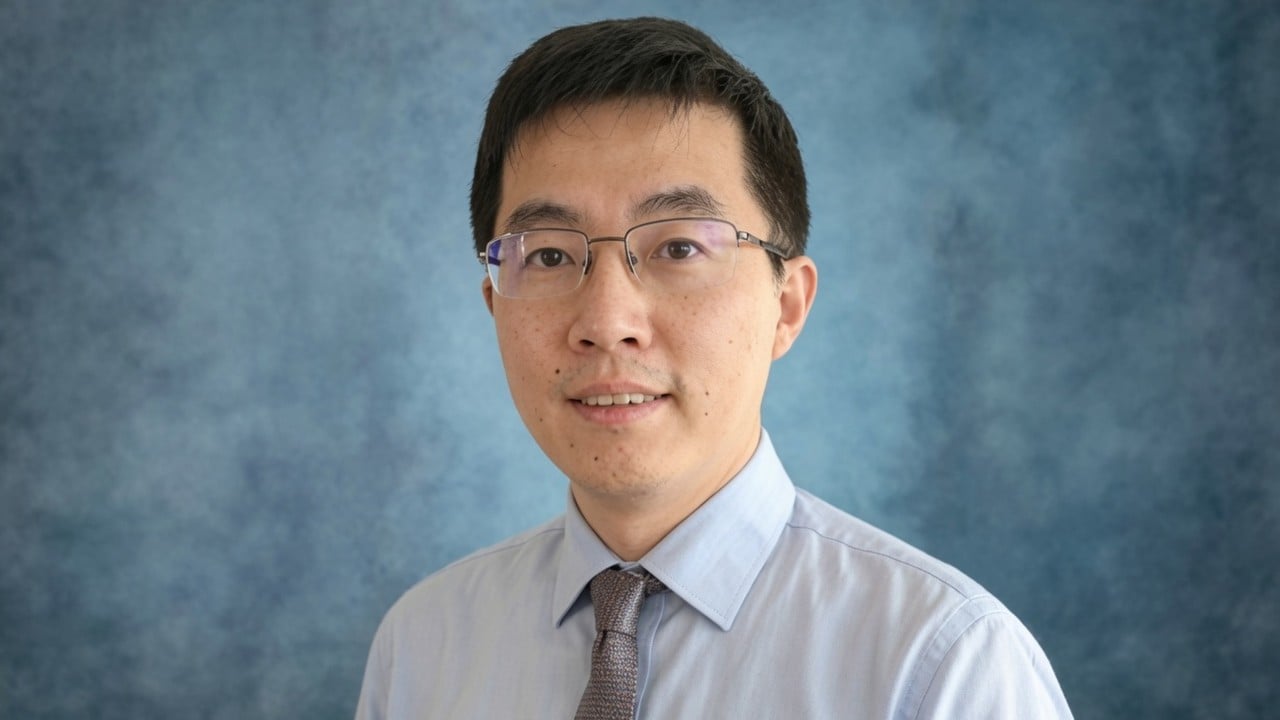
Silicon Valley is losing its grip on elite artificial intelligence minds. The recent move by one of Google DeepMind's top leaders proves that the global center of gravity for AI research is shifting. Professor Cao Liangliang, an IEEE Fellow and former Director at Google DeepMind, just left the upper echelons of American corporate tech to return to Hong Kong.
He took up a role as Chair Professor of Artificial Intelligence Systems at The Hong Kong Polytechnic University on June 29, 2026. This isn't just a standard academic hiring announcement. It represents a massive tectonic shift in how world-class tech talent views the trade-offs between big corporate paychecks and regional institutional power. For another perspective, check out: this related article.
For Hong Kong, this is a major victory. The city has spent years trying to position itself as a serious competitor in the global technology race. Bringing back a heavyweight who helped build systems like Gemini, Project Astra, and Apple Intelligence is exactly the kind of validation the local ecosystem needed.
The Boomerang Effect in Asian Tech Talent
This move is a true homecoming. Cao earned his Master of Philosophy from The Chinese University of Hong Kong back in 2005. After that, he followed the traditional elite trajectory. He went to the United States, completed his doctorate at the University of Illinois Urbana-Champaign, and spent over two decades climbing the ranks of Western tech giants. Similar analysis on this trend has been provided by Engadget.
He built an extraordinary career. He worked at IBM Thomas J. Watson Research Center, joined Yahoo Labs, and co-founded Switi Inc., which Google snatched up in 2018. He led the Google Cloud Speech Modelling Team, jumped to Apple as a Principal Scientist, and ended up at Google DeepMind as a Principal Engineer and Director.
Then he walked away from it all. Why would someone at the peak of the corporate AI world leave California for an academic department in Kowloon?
The answer lies in autonomy and regional momentum. Big Tech has become bogged down by bureaucracy, compute bottlenecks, and intense regulatory scrutiny. Universities in Hong Kong are offering massive funding, fresh research departments, and direct access to both local and mainland Chinese industrial supply chains.
What PolyU Gained in the Academic Arms Race
The Hong Kong Polytechnic University didn't just hire a teacher. They secured an individual whose fingerprints are all over the software running on your phone right now.
Cao's track record spans across multiple domains of modern artificial intelligence. His work has directly advanced computer vision, cloud infrastructure, large language models, and on-device processing.
Contributions to Global AI Systems
- Gemini and Project Astra: Cao helped direct core engineering efforts for Google's foundational multimodal models, specifically focusing on how machines process live audio and visual inputs simultaneously.
- Apple Intelligence: During his tenure at Apple, he worked on the fundamental architecture required to run highly efficient language models directly on consumer devices without melting the battery.
- Google Cloud Vision and Speech: He led teams that built the commercial APIs used by millions of developers worldwide to transcribe audio and detect visual objects.
With over 11,000 academic citations and 15 patents to his name, Cao gives PolyU immediate credibility. His appointment sits within the newly minted Department of Data Science and Artificial Intelligence. By placing a corporate veteran at the helm, the university is signaling that it wants to build practical, commercializable tech, not just write theoretical papers.
Why Big Tech is Losing its Luster for Top Researchers
To understand this talent migration, you have to look at what's happening inside Silicon Valley. The culture has changed. The early days of open exploration at places like Google Brain or early DeepMind have been replaced by a frantic race to deploy products.
Researchers are often treated as cogs in a massive corporate machine designed to boost cloud subscription revenues. Creative freedom is shrinking. If your research doesn't immediately serve the next product update cycle, it gets shelved.
In contrast, Hong Kong is throwing immense resources at AI. The government's Innovation and Technology Fund is handing out billions. Universities are building massive data centers. For a top-tier scientist, the chance to build a brand-new research program from scratch with unlimited backing is far more enticing than managing another mid-level engineering team in Mountain View.
There is also the geopolitical reality. US restrictions on technology transfers and visas have made life incredibly complicated for Chinese-born scientists working in America. Many feel that their career ceilings are capped by political anxieties. Hong Kong offers a neutral, highly stable environment where they can operate globally while remaining culturally connected to Asia.
The Practical Impact on Regional Startups
Cao's return will likely trigger a wave of new startup activity in the Greater Bay Area. Don't forget that he is an entrepreneur who successfully sold a company to Google. He knows how to take a laboratory concept and turn it into a multi-million-dollar acquisition target.
Students working under him will get direct exposure to Silicon Valley engineering standards. They won't just learn textbook algorithms. They will learn how Google scales data pipelines and how Apple optimizes neural networks for local silicon chips. This bridges a massive gap. The biggest complaint from Asian tech firms has always been that local graduates lack the hands-on, large-scale systems experience found in the US.
We should expect to see PolyU spin out highly specialized startups focusing on multimodal AI and on-device processing within the next few years. The proximity to Shenzhen’s hardware ecosystem makes Hong Kong the perfect playground for deploying the types of real-time AI systems Cao specialized in at DeepMind.
Turning Theoretical Knowledge into Local Infrastructure
If you are an engineer, researcher, or tech investor in Asia, you need to watch this space closely. The era of assuming the best AI work only happens in California is over.
The immediate next steps for the local ecosystem are clear. Local tech firms must establish joint laboratories with these newly reinforced university departments. Investors need to park capital closer to campus boundaries. The talent is arriving, the infrastructure is tracking right behind them, and the projects coming out of Hong Kong over the next 24 months will likely surprise the Western tech establishment.