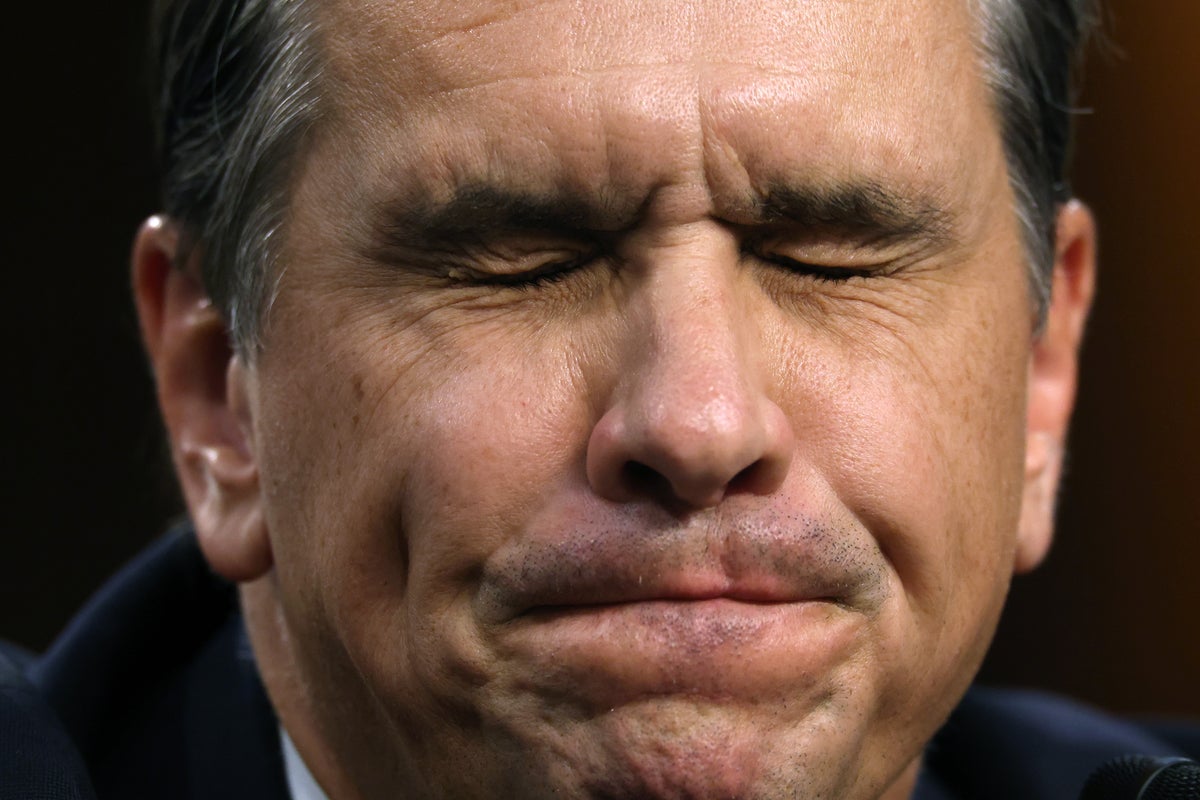
Todd Blanche wants you to believe he's ready to lead an independent Justice Department. He sat before the Senate Judiciary Committee on July 15, 2026, trying to convince skeptical lawmakers that he isn't just a loyal soldier executing a political agenda. But during five hours of tense questioning, a single, unprompted slip of the tongue exposed the reality of his relationship with Donald Trump.
When Republican Senator John Kennedy asked if he and the president were friends, Blanche didn't hesitate.
"I’m his lawyer," Blanche said.
He caught himself almost instantly, quickly correcting the statement to the past tense: "was his lawyer". But the damage was done. In a brief, unguarded moment, the man nominated to be the chief law enforcement officer of the United States revealed how he still views his role. He isn't acting as the public's advocate. He’s still acting as Trump's personal defense attorney.
The Slip of the Tongue That Said It All
The distinction between a president’s personal attorney and the attorney general is the bedrock of American legal ethics. One owes total, unwavering loyalty to a single client. The other owes loyalty to the Constitution and the American people. Blanche’s slip wasn't just a verbal hiccup; it was a window into his mindset.
For months, critics have argued that Blanche’s rapid ascent from Trump’s criminal defense lawyer to Acting Attorney General has completely erased the line between the White House and the Department of Justice. During the hearing, Senate Judiciary Chair Dick Durbin pointed out that when Blanche was asked what he would say to Trump, his recorded response was simple: "I love you, sir".
That isn't how an independent institutional head speaks to the chief executive. It’s the language of absolute fealty. When you combine that emotional loyalty with a subconscious belief that you're still the president's lawyer, the promise of an impartial Department of Justice completely evaporates.
The $1.8 Billion Slush Fund and the Tax Deal of a Lifetime
If you want to understand why Blanche’s "I'm his lawyer" slip is so alarming, look no further than the bizarre legal settlements he has championed since taking over the Justice Department in an acting capacity.
Earlier this year, Blanche signed off on a settlement to resolve a lawsuit Trump filed against the IRS over the leaked disclosure of his tax returns. The terms of that agreement are staggering.
- Audit Immunity: The settlement shields Donald Trump, his sons, and his businesses from IRS audits related to any past tax filings. Under questioning from Senator Adam Schiff, Blanche conceded that this protection remains fully in place, even though a federal judge recently labeled the entire lawsuit collusive and designed to engineer a preferred political outcome.
- The Shelved Slush Fund: Originally, the deal also created a massive $1.8 billion "anti-weaponization" fund. The plan was to use taxpayer money to compensate Trump's political allies. Facing fierce bipartisan backlash and a scathing judicial review, Blanche ultimately scrapped the fund.
During the hearing, Republican Senators John Cornyn and Thom Tillis were visibly frustrated by the fund. Tillis openly mocked it, calling on Blanche to "stick a fork in this turkey" and help draft legislation to ensure the fund could never be resurrected. Blanche agreed, but the fact that he signed off on such an egregious use of public funds in the first place shows where his priorities lie. He used the power of the Justice Department to negotiate a highly favorable, unprecedented shield for his former client.
When pressed on why he agreed to a deal that essentially places Trump above the law, Blanche offered a defensive refrain. He claimed the settlement was "typical" and that "nobody is above the law". But average citizens don't get to sue the government and walk away with a permanent pass on past tax audits.
Cleaning House and the Loss of Independence
The policy decisions under Blanche's acting tenure show a systematic dismantling of the Justice Department's traditional safeguards. More than 1,200 former Department of Justice employees signed a joint letter urging the Senate to reject his nomination. Their concern isn't just partisan policy differences. It's the targeted purge of the apolitical career workforce.
Since stepping into leadership, Blanche has overseen the systematic firing of career prosecutors, investigators, and analysts who were deemed insufficiently loyal to the administration. This includes individuals who worked on investigations into Trump's efforts to subvert the 2020 election.
When Senator Chris Coons challenged him on these firings, Blanche shifted the blame. He argued that he inherited an inherently politicized department and was merely "fixing" it.
But "fixing" the department apparently looks like defending sweeping presidential pardons for over 1,500 people, including individuals convicted of violently assaulting Capitol Police officers on January 6. While Blanche claimed he wasn't personally "celebrating" the pardons, he called the president's decision "very generous" and refused to question Trump's authority on the matter.
This is the core of the issue. Whether the topic is tax immunity, mass pardons, or weaponizing the department against political adversaries, Blanche's default position is absolute deference. He does not see himself as a check on executive power.
Why This Matters for the Future of Justice
The Senate Judiciary Committee is facing a incredibly tight confirmation vote. With a razor-thin Republican majority, Blanche cannot afford to lose more than a single GOP vote if Democrats remain unified in their opposition.
The focus now lands squarely on Republican Senators like John Cornyn. Following the hearing, Cornyn told reporters he remains "undecided" on Blanche's nomination. The concern for constitutional conservatives is clear: if the attorney general operates as the president's personal shield, the rule of law becomes entirely transactional.
If you want to keep a close eye on where this goes next, watch the Senate executive business meetings over the coming days. The committee's upcoming vote on whether to send Blanche’s nomination to the full Senate floor will tell us exactly how much appetite remains in Congress for a fully politicized Justice Department. You can track the committee's schedule and executive business transcripts directly through the U.S. Senate Judiciary Committee portal to see if more lawmakers begin to distance themselves from Blanche's nomination.