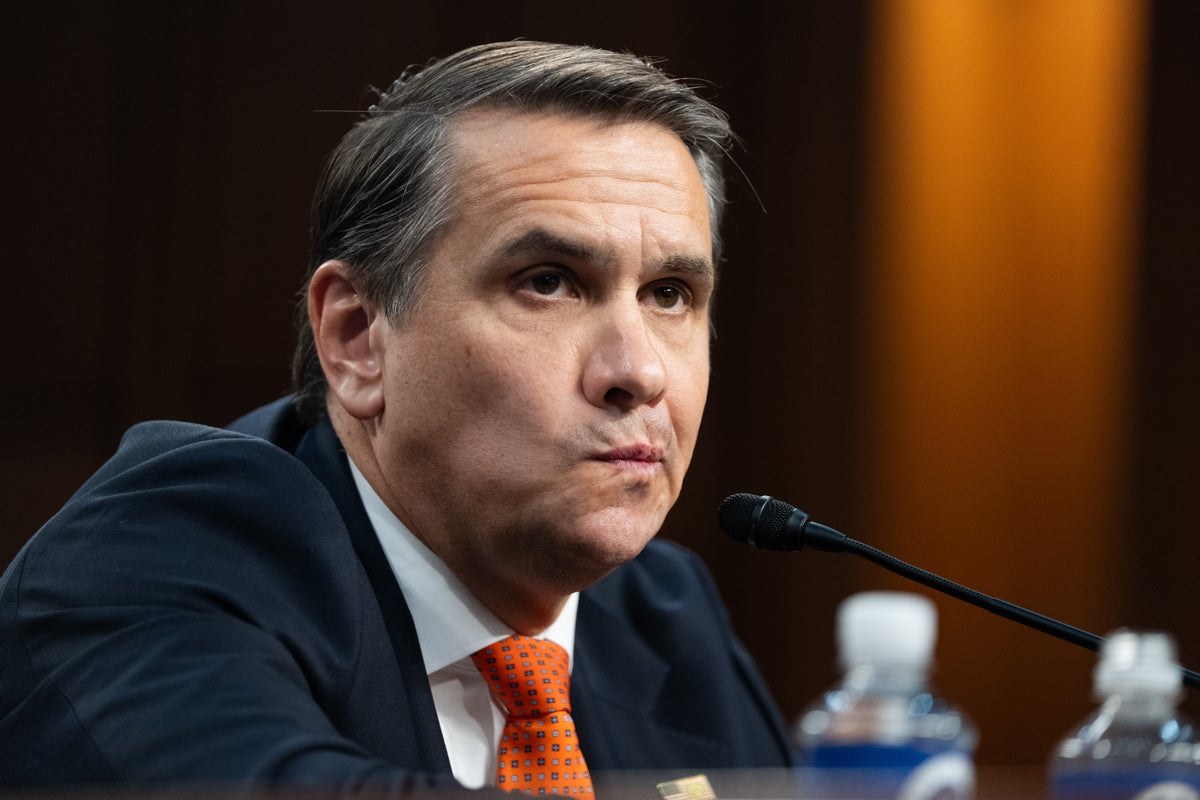
Todd Blanche wants you to know he has a resume that stretches far beyond his most famous client. He's a career prosecutor, a former paralegal, and an alumnus of the Southern District of New York.
But on Capitol Hill, none of that seems to matter.
During his high-stakes Senate Judiciary Committee confirmation hearing, the acting attorney general tried desperately to pivot away from his reputation as President Donald Trump's personal defense attorney. He wanted the committee to see him as an independent institutionalist. Instead, he gave his critics the ultimate ammunition with a single, telling slip of the tongue.
"I'm his lawyer," Blanche said, before immediately catching himself. "I was his lawyer".
For the Democrats on the panel, it was a Freudian slip that confirmed their worst fears. For skeptical Republicans, it highlighted the incredibly thin tightrope Blanche has to walk to secure a permanent spot as the nation’s top law enforcement officer.
The Ultimate Conflict of Interest
The central tension of Blanche’s nomination lies in a fundamental question: Can the person who defended Trump in his darkest legal hours transition into a completely independent head of the Justice Department?
Historically, the Department of Justice maintains an arm's-length relationship with the White House. Yet Blanche’s brief tenure as acting attorney general—following the abrupt April firing of Pam Bondi—has been anything but traditional.
Democrats, led by Senator Adam Schiff, didn't hold back. Schiff asked Blanche how he had transformed from a respected federal prosecutor into someone "willing to sacrifice everything" for the title of attorney general.
"What happened to you, Todd Blanche?" Schiff demanded.
"I'm still here," Blanche shot back. "I am the exact same person I was when I was a federal prosecutor".
But his record tells a more complicated story, especially when it comes to how the Justice Department has handled Trump's personal legal battles since Blanche took the helm.
The IRS Settlement and the Slush Fund That Won't Die
The most intense grilling focused on Blanche's role in settling Trump's $10 billion lawsuit against the IRS over the leak of his tax returns.
Opponents point to a pair of highly controversial elements in that settlement:
- The liability shield: A provision that broadly protects Trump and his sons from legal liability for past tax violations.
- The "Anti-Weaponization Fund": A proposed $1.8 billion taxpayer-backed fund designed to compensate Trump’s political allies.
Earlier in the week, a federal judge called the underlying IRS lawsuit an "improper" attempt to manipulate the judicial system. Senator John Cornyn, a Texas Republican who has become increasingly critical of the administration, noted that both provisions of the settlement were highly "unusual". Cornyn remarked that Blanche "certainly leaned in to help the president beyond what was necessary".
The Core Dilemma:
Is Todd Blanche serving the American public, or is he still acting as Donald Trump's shield?
Blanche insisted that the controversial anti-weaponization fund is officially "dead" and "not moving forward". However, when pressed by Senator Chris Coons on whether he had advised Trump against creating the fund in the first place, Blanche clammed up. He refused to answer, invoking executive and attorney-client privilege.
"I am not, will not, talk about communications I have with the president," Blanche said.
Redacting the Epstein Files
If the IRS settlement didn't do enough damage, the Justice Department's handling of the Jeffrey Epstein files certainly did.
Congress passed the Epstein Transparency Act to force the release of materials related to the late sex offender. Blanche’s department undertook the review, but the execution was a disaster. The department released documents with severe redaction errors, exposing the personal information and photos of Epstein’s survivors.
Blanche apologized during the hearing, calling it a "herculean task" where mistakes were made. But when Senator Dick Durbin asked if he would personally meet with the victims—some of whom were sitting directly behind Blanche in the gallery—Blanche declined, citing legal restrictions because the victims have active legal counsel. He offered to have a staffer meet with them instead, a move that went over terribly with the committee's Democrats.
Where the Nomination Stands
While Republican Judiciary Committee Chair Chuck Grassley praised Blanche’s "admirable" performance, the nominee's path to confirmation remains incredibly rocky.
With a razor-thin Republican majority, Blanche cannot afford to lose more than a couple of GOP votes. Key swing Republicans like Thom Tillis and John Cornyn have made it clear they aren't fully convinced yet. They want firm guarantees that Blanche knows where the presidency ends and the Justice Department begins.
Blanche did draw a few boundaries during his testimony. He stated he would resign if asked to do something illegal. He also broke with Trump by stating he does not believe in impeaching judges who rule against the president.
But in a Washington where loyalty is the ultimate currency, those small acts of defiance might not be enough to wash away his past. If you want to understand why the Senate is stalling, you don't need to look at his policy positions. You just have to look at those three words he accidentally uttered on the record: "I'm his lawyer".
To salvage his nomination, Blanche's next steps are clear. He must secure private meetings with holdout Republican senators to offer the ironclad assurances of independence they refused to accept on camera. He needs to prove that his primary loyalty belongs to the Constitution, not the man in the Oval Office.