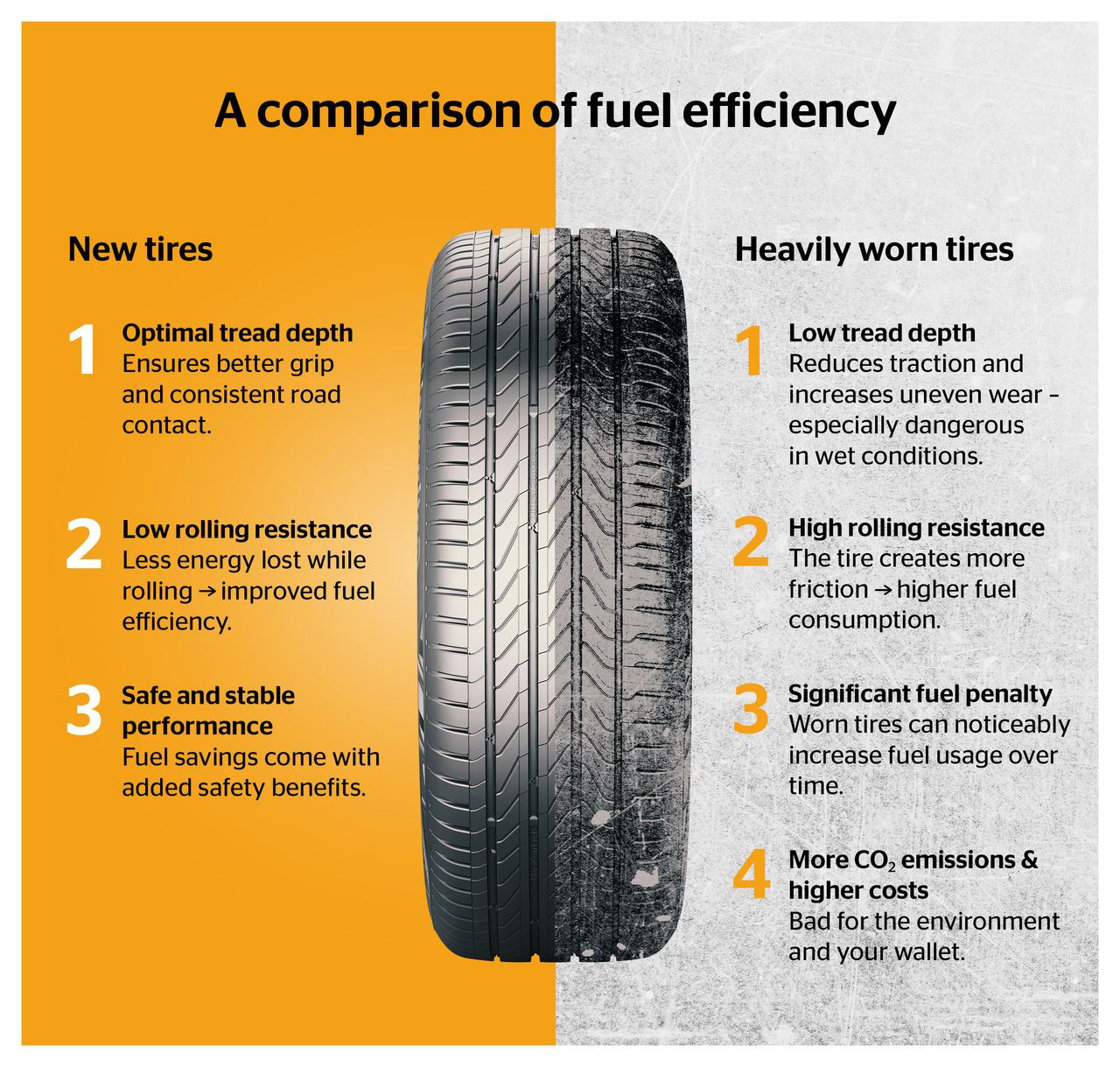
Brussels and Washington love a clean narrative. Regulators sit in climate-controlled conference rooms, look at a spreadsheet showing transport emissions, and decide that the easiest lever to pull is the humble piece of rubber meeting the asphalt. The lazy consensus is clean, comforting, and completely detached from physical reality: force tire manufacturers to lower rolling resistance, mandate low-rolling-resistance tires on every new vehicle rolling off the assembly line, and watch fuel consumption and tailpipe emissions magically drop.
Except physics does not negotiate with bureaucrats. Also making headlines in related news: Inside the Meta Trial That Could Break Big Tech.
I have spent years watching fleet managers, engineers, and tier-one suppliers scramble to meet arbitrary efficiency targets, only to watch real-world safety, tire longevity, and total cost of ownership crater. The entire premise of mandatory tire efficiency rests on a dangerous illusion: that you can squeeze friction out of a tire without sacrificing the only thing that actually keeps you out of a ditch.
The Friction Fallacy
Let us define the core mechanism here. Rolling resistance is the energy your engine must expend to keep the tire rolling. Lowering that resistance means changing the compound, the tread depth, and the sidewall stiffness. Sounds great on paper. Less energy wasted, right? Additional insights regarding the matter are detailed by Ars Technica.
Wrong.
The moment you engineer a tire to minimize rolling resistance, you alter its grip profile. To reduce energy loss from hysteresis—the internal flexing of the rubber as it meets the road—chemists mess with polymers and fillers like silica. But rubber needs to deform to grip microscopic imperfections in the pavement. When you make a tire slicker and stiffer to satisfy an efficiency index, you are systematically trading away traction.
The regulators tell you that modern chemistry bridges this gap. I have watched engineering teams bend over backwards trying to prove it. The truth is starker: every percentage point you shave off rolling resistance exacts a toll in wet braking distances and cornering stability. You are trading a marginal, barely measurable gain in fuel economy for a major downgrade in dynamic capability.
The Heavy Vehicle Hypocrisy
Let us talk about the math nobody wants to publish. Modern passenger vehicles are heavier than ever, bloated by battery packs for hybrids and electric platforms. A standard electric crossover weighs thousands of pounds more than its internal combustion predecessor.
When you put high-efficiency, low-rolling-resistance tires on a three-ton electric vehicle, the wear rate accelerates exponentially. Torque delivery on electric motors is instantaneous. Combine instant high-torque delivery with hard, low-friction rubber compounds, and you get accelerated tread wear.
Here is the irony that institutional analysts miss: tire manufacturing is a carbon-intensive industrial process. If a driver has to replace their low-rolling-resistance tires twice as often because the tread blocks scrub away prematurely under heavy vehicle weight, where is the environmental benefit? You saved a fraction of a gallon of fuel over the life of the tire, but you doubled the manufacturing, shipping, and disposal footprint of the rubber itself. It is greenwashing disguised as engineering compliance.
Imagine a scenario where a fleet adopts ultra-low-resistance tires to hit corporate ESG metrics, only to watch their winter accident rates spike and their tire replacement budgets double. That is not a hypothetical thought experiment. That is the exact P&L statement of major logistics firms over the last five years.
The Safety Penalty Hidden in Plain Sight
Ask any stunt driver or vehicle dynamics engineer what matters most in an emergency maneuver. It is not your engine map. It is the contact patch of your rubber.
When you prioritize efficiency over mechanical grip, the penalty manifests when conditions deteriorate. Hydroplaning resistance drops when tread depths are manipulated to reduce mass and resistance. Stopping distances on wet tarmac lengthen by crucial feet. Those few feet are the difference between a near-miss and a multi-car pileup.
The regulatory bodies wave away these compromises with standardized laboratory tests. They roll tires on smooth steel drums under controlled indoor conditions. But asphalt is not a steel drum. Real roads have grit, oil, potholes, standing water, and temperature swings. Laboratory efficiency ratings are marketing documents for politicians who need a win to show constituents. On actual pavement, the compromise bites back.
What You Should Do Instead
If you want to optimize your vehicle footprint without falling for regulatory snake oil, stop buying tires based solely on energy ratings or fuel-efficiency grades.
- Prioritize compound integrity over green labels. Look for tires designed for wet grip, structural durability, and predictable breakaway characteristics rather than maximum coasting distance.
- Account for vehicle mass. If you drive a heavy vehicle, you need a reinforced sidewall and a higher load index. Slapping a light-duty efficiency tire on a heavy chassis is an invitation for premature failure.
- Manage pressures religiously. The single biggest enemy of tire efficiency and safety is incorrect inflation. Proper pressure preserves the contact patch and prevents overheating far better than any chemical magic trick in the rubber compound.
Stop letting bureaucrats design your contact patch from a desk. Your tires are the only thing connecting you to the earth. Treat them as safety equipment, not a carbon offset scheme.