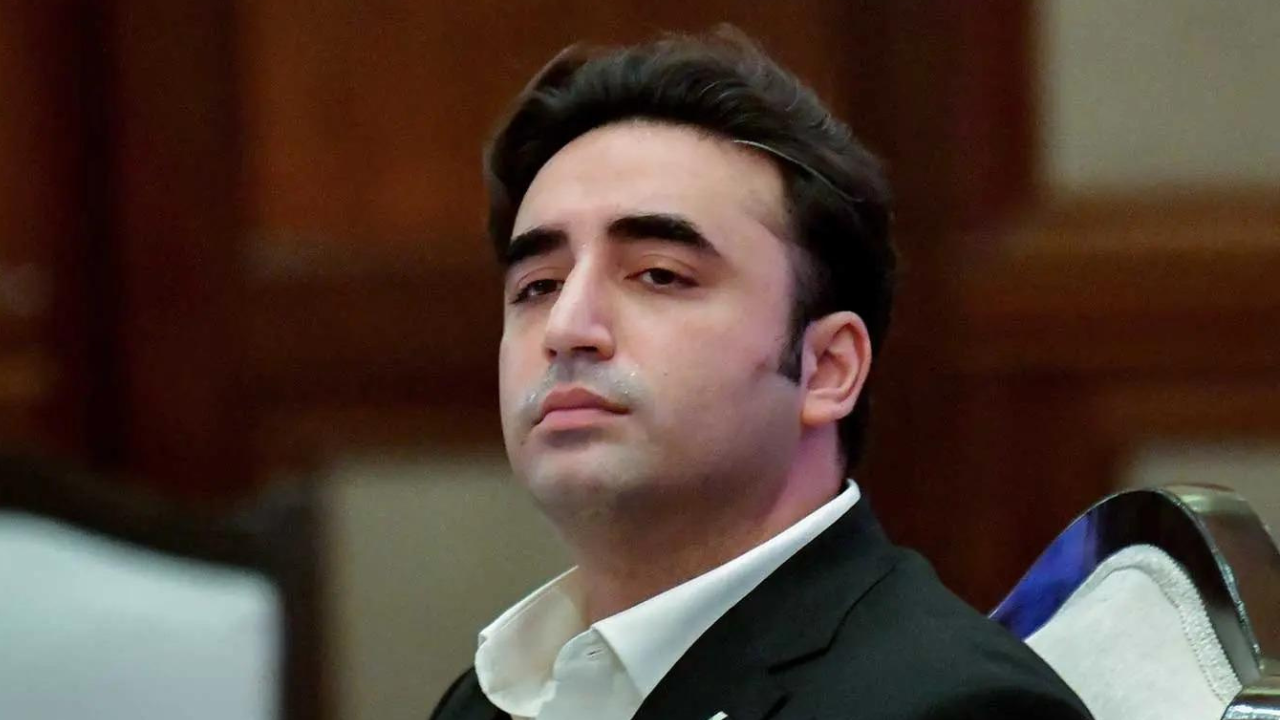
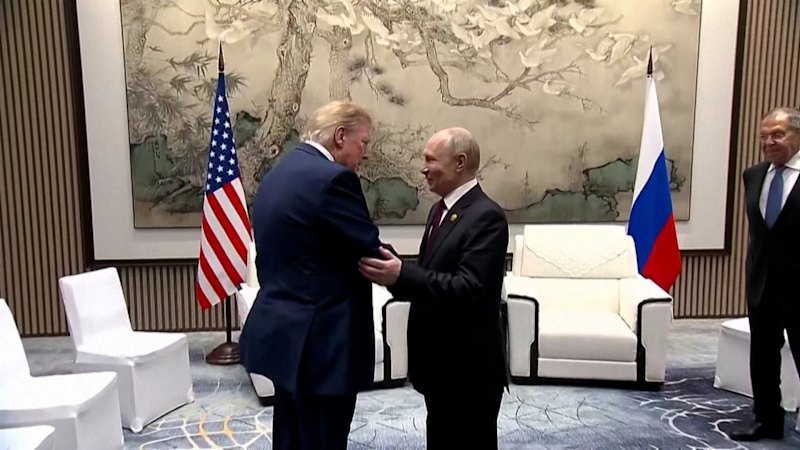
Cold.
That is the first thing you notice about geopolitics when you actually live inside its margins—not the heat of televised speeches or the glare of camera flashes, but the sudden, inexplicable chill in a supply chain office six thousand miles away.
Picture a hypothetical freight broker named Elena sitting in a cramped, fluorescent-lit office near the Port of Long Beach at four in the morning. Her coffee has gone lukewarm. On her monitor, three red alerts blink beside container manifests bound for Shenzhen and Rotterdam. She does not know the private words spoken behind closed doors in China, nor does she care about the choreography of handshakes. She only knows that when three men—Donald Trump, Vladimir Putin, and Xi Jinping—sit in the same room at an unprecedented summit in Beijing, the invisible floor beneath her shipping rates tilts by three degrees.
And when the floor tilts in Beijing, your grocery bill, your retirement fund, and the quiet assumptions of your daily life slide with it.
The Architecture of a Room We Have Never Seen Before
To understand why this trilateral summit in China carries the weight of a tectonic shift, we have to strip away the theater. Standard news reports treat these gatherings like championship prize fights, scoring rounds based on who smiled first or whose motorcade stretched longer down Chang'an Avenue. That framing misses the mechanism entirely.
Think of the post-1945 global order as a massive, load-bearing suspension bridge. For decades, Washington designed the blueprints, guaranteed the steel cables, and policed the tollbooths. Beijing became the foundry that forged the girders, while Moscow sat on the raw iron and energy reserves beneath the riverbed. For thirty years, the engineers argued over maintenance fees, yet everyone agreed the bridge had to stay standing because everyone's trucks were crossing it.
Now, consider what happens when the three chief stakeholders step off the bridge and walk into a private room in Beijing without the rest of the world's blueprints.
Historically, three-power summits carry a specific, haunting gravity. When Roosevelt, Churchill, and Stalin met at Yalta in February 1945, they were not merely ending a war; they were drawing lines across maps that determined where millions of families would live, what languages their children would learn, and which currencies would buy bread for the next forty-five years. The citizens of Warsaw or Prague were not invited to the Livadia Palace, yet their entire existence was negotiated over brandy and cigarette smoke.
Today, the geometry is starkly different, yet the human vulnerability remains identical. The United States, China, and Russia together account for more than forty percent of global economic output by purchasing power, possess nearly ninety percent of the world's nuclear warheads, and control the decisive choke points of global energy, semiconductors, and agricultural exports. When Trump, Putin, and Xi convene on Chinese soil—a venue deliberately chosen to signal Beijing's centrality as host and broker—they are not merely discussing bilateral grievances. They are testing whether three spheres of influence can carve up the twenty-first century without triggering a direct collision.
I have spent years watching markets and border towns react to far smaller tremors than this, and the emotional signature is always the same: a strange, suspended disbelief. People assume the world they woke up in yesterday is permanent because the streetlights still work and the supermarket shelves are still stocked. We confuse the inertia of daily routine with structural stability.
What Actually Happens Behind the Velvet Rope
When readers search for news about an unprecedented Trump, Putin, and Xi summit in China, they are usually looking for three concrete answers: Why are they meeting now? What does each leader actually want? And what happens if they fail?
The answers do not live in diplomatic communiqués. They live in cold, hard arithmetic.
Start with Xi Jinping. Hosting both the American president and the Russian president in China is the ultimate realization of Beijing's long-standing diplomatic ambition: positioning China as the indispensable hub of global statecraft. Yet behind the immaculate banquets at the Great Hall of the People lies acute domestic pressure. China is navigating a prolonged property market contraction, youth unemployment that has strained social confidence, and a demographic curve that is aging faster than its social safety net can expand. Xi does not need endless ideological warfare with Washington; he needs predictable access to Western consumer markets and high-end technology while keeping Russia anchored as a secure, discounted supplier of oil, gas, and grain along his northern border.
Then look across the table at Vladimir Putin. Years of grinding conflict in Eastern Europe and sweeping Western financial sanctions have rewired the Russian economy into a wartime industrial machine tethered heavily to Beijing and New Delhi. Russia has survived the initial shock of exclusion from Western banking networks, yet survival is not the same as leverage. Being overly dependent on a single buyer—even a friendly neighbor like China—leaves Moscow vulnerable to price discounts and strategic subordination. By sitting down in a three-way format with both Trump and Xi, Putin reclaims the status Moscow craves above all else: recognition as an equal co-architect of global security, negotiating directly over European security architecture, sanctions relief, and energy corridors without intermediaries.
And what of Donald Trump? Returning to the White House with an instinct for transactional deal-making and a deep skepticism of multilateral entanglements, Trump views summitry through the lens of direct, leader-to-leader leverage. His calculus rests on disruption: tariffs as blunt instruments, bilateral trade balances as scorecards, and personal rapport as a substitute for decades-old institutional treaties. To Trump, sitting in Beijing with both Xi and Putin offers a chance to bypass layers of diplomatic bureaucracy, demand massive purchasing commitments for American energy and agriculture, press for a negotiated settlement in Ukraine on terms that reduce Washington's financial burden, and test whether the tightening bond between Moscow and Beijing can be pried apart—or at least managed—through direct bargaining.
Watch the tension inside that triangle. Every leader enters the room holding a different map.
- Washington wants to decouple strategic supply chains while keeping American exports flowing and avoiding simultaneous conflicts across Europe and the Indo-Pacific.
- Beijing wants a multipolar order where American dominance recedes, tariffs ease, and China sets the rules for Asian trade and technology standards.
- Moscow wants formal recognition of its security perimeter, the lifting of economic isolation, and an end to American-led alliance expansion.
The Invisible Stakes in Your Living Room
It is easy to read about tariffs, rare earth minerals, and nuclear arms treaties as if they were chess pieces on a distant board. They are not. They are the raw ingredients of ordinary life.
Return for a moment to our hypothetical freight broker, Elena, in Long Beach. Suppose the three leaders emerge from their Beijing summit with a grand transactional bargain: Washington agrees to pause sweeping new tariffs on Chinese manufactured goods and ease select sanctions on Russian energy exports in exchange for a ceasefire framework in Eastern Europe, massive Chinese purchases of American soybeans and liquefied natural gas, and renewed guardrails on strategic weapons.
Within seventy-two hours, container shipping rates across the Pacific drop by eighteen percent. Fertilizer prices—heavily tied to Russian natural gas and potash—soften before the spring planting season in Iowa and Nebraska. Tech stocks rally because semiconductor supply chains across Taiwan and South Korea breathe a collective sigh of relief. Your 401(k) jumps four percent before Friday afternoon.
Now flip the coin. Suppose the talks stall behind closed doors. Suppose Trump demands concessions on trade deficits and Russian energy flows that Xi and Putin reject as humiliation, and the motorcades depart Beijing early without a joint statement.
Within a week, retaliatory tariffs snap shut like steel traps. Rare earth minerals—processed overwhelmingly in China and essential for everything from your smartphone battery to electric vehicle motors and hospital MRI machines—face sudden export licensing delays. European energy markets brace for another winter of price spikes. Defense budgets swell across three continents, pulling capital away from roads, schools, and healthcare. Inflation, that quiet thief you thought had finally been wrestled to the floor, creeps back into the price of eggs, lumber, and auto loans.
That is the hidden truth of summitry. You never sign the treaty, yet you co-sign every consequence.
The Illusion of Control
If I am honest with you, the most unsettling part of watching three men gather in China to negotiate the shape of the coming decade is not the malice in the room. It is the fragility of human judgment under absolute pressure.
We like to imagine that global leaders operate like supercomputers, weighing probabilities with cold, mathematical precision. History tells a far messier story. In October 1962, during the Cuban Missile Crisis, the fate of hundreds of millions of people hung on back-channel notes translated by exhausted aides, misread radar blips, and the personal instincts of two men trying to guess whether the other would blink. Today, the variables are infinitely more tangled. Cyber capabilities, autonomous weapons systems, artificial intelligence race dynamics, and brittle financial markets mean that a miscalculation in the South China Sea or Eastern Europe no longer unfolds over weeks. It unfolds in milliseconds.
Even a successful summit carries a quiet peril that few commentators mention: the danger of what gets traded away in the dark.
When three superpowers strike an understanding to keep peace among themselves, smaller nations often become the currency of compromise. Allies from Warsaw to Tokyo, from Taipei to Kyiv, watch a summit like this with a knot in their stomachs. They know the oldest proverb in international relations: When elephants fight, the grass gets trampled; when elephants make love, the grass gets trampled too.
If Washington, Beijing, and Moscow establish a tacit understanding about spheres of influence, it may lower the immediate temperature between the world's largest nuclear arsenals. Yet it simultaneously sends an unmistakable message to every mid-sized democracy on earth: your security guarantees are only as durable as the mood inside a banquet hall in Beijing. Once that realization takes root, countries begin hedging their bets, building their own arsenals, and fracturing global trade into fortified regional blocs.
How to Read the Signals When the Cameras Turn Off
Because official statements from summits are written in the sterile dialect of diplomacy—phrases like "frank and constructive dialogue" or "mutual respect for core interests"—you need a better filter to see what actually happened once the doors closed.
Ignore the choreography of the handshakes. Watch three tangible indicators over the ninety days following the meeting:
- The Movement of Commodities, Not Words. If real progress occurred in Beijing, you will see it first in bulk shipping contracts: Chinese state firms booking cargoes of American grain and energy, or subtle adjustments in customs enforcement at major ports.
- Military-to-Military Hotlines and Patrol Distances. Watch whether naval vessels and reconnaissance aircraft in the Taiwan Strait, the Baltic Sea, and the Black Sea maintain wider, calmer operating distances. Restraint in the water is worth ten thousand words on paper.
- Currency and Central Bank Settlements. Pay attention to how Beijing and Moscow settle cross-border energy trades and whether Washington pauses secondary sanctions on financial institutions. Money always reveals the true temperature of a truce before politicians admit it.
Understanding these mechanics strips away the helplessness that modern news cycles are engineered to provoke. When you know where the pressure points actually sit—in ports, pipelines, central banks, and shipping lanes—you stop reacting to every dramatic headline and start seeing the underlying architecture clearly.
The Quiet After the Motorcades Leave
Late on the final evening in Beijing, after the translators have closed their notebooks and the heavy mahogany doors of the state guesthouse have clicked shut, the black armored limousines pull away into the night. The red carpets are rolled up. The television crews coil their cables and pack their lenses into aluminum cases.
Six thousand miles away in Long Beach, Elena finally finishes her shift, steps out into the cool Pacific air, and watches a massive container ship glide silently past the breakwater toward the open sea, its running lights blinking red and green against the dark water—carrying cargo whose price, destination, and safe arrival were decided hours earlier by three men sitting around a table she will never see.