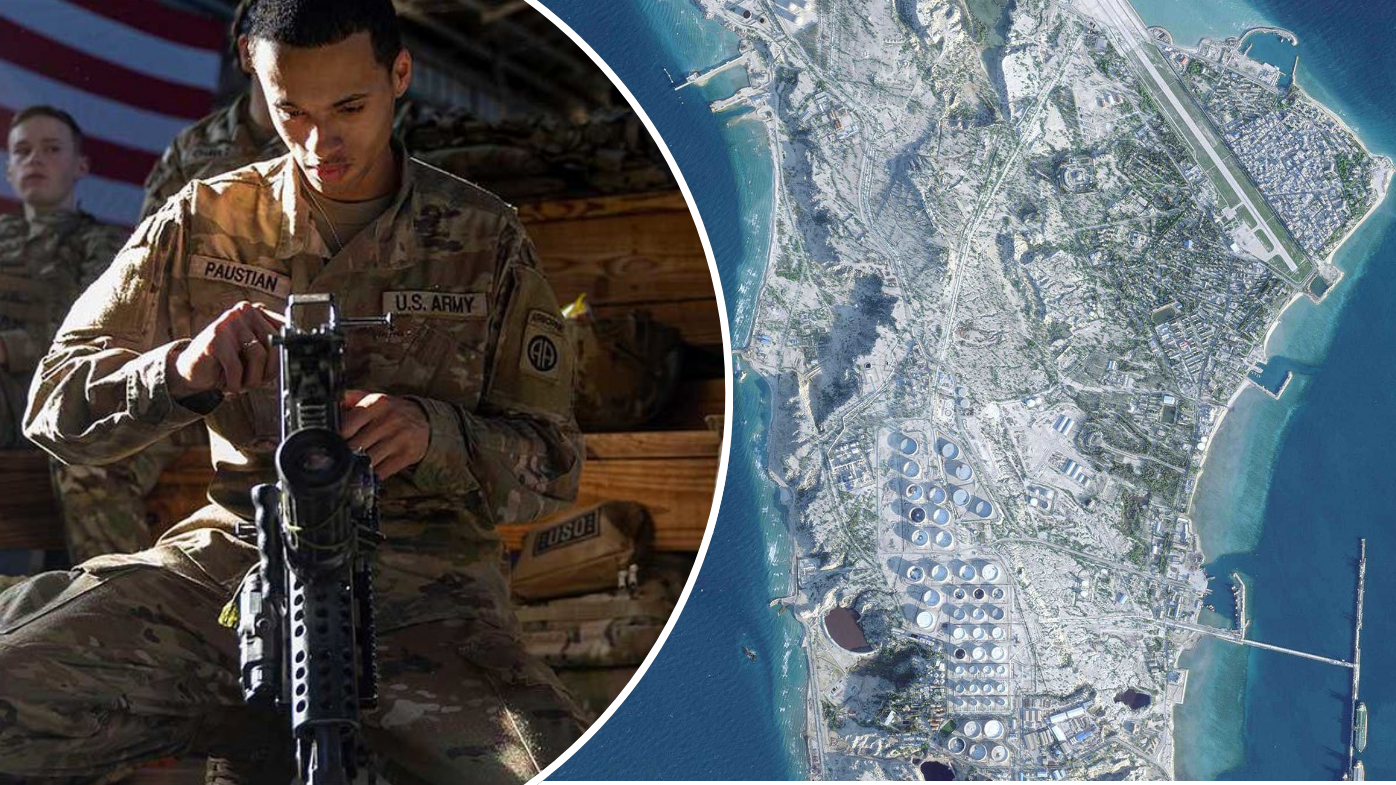
The Persian Gulf is currently a powderkeg, and someone just lit a very short fuse. When a high-ranking Iranian politician like Abolfazl Amouei starts talking about "Iran's enemies" prepping for a ground invasion of a specific island, you shouldn't just look at the map. You need to look at the timing. We're talking about Abu Musa, a tiny speck of land that carries enough geopolitical weight to tip the entire region into a hot war.
This isn't just standard saber-rattling. It's a calculated response to shifting naval dynamics. For decades, the dispute over Abu Musa and the Greater and Lesser Tunbs remained a quiet legal simmer between Iran and the United Arab Emirates. Now, it’s a loud, aggressive roar. If you’ve been following the troop movements and the sudden spike in "defensive drills" by the Islamic Revolutionary Guard Corps (IRGC), it’s clear they aren't just practicing. They’re Posturing for a fight they think is already coming.
The Strategic Obsession with Abu Musa
You might wonder why anyone would risk a global conflict over an island that’s barely 12 square kilometers. It’s about the throat of the world's energy supply. Abu Musa sits right near the entrance of the Strait of Hormuz. Roughly 20% of the world’s petroleum passes through this narrow chokepoint. If you control the island, you control the traffic.
Iran has occupied the island since 1971, just days before the UAE became a formal federation. Since then, they've turned it into a literal fortress. We aren't just talking about a few bunkers. Recent satellite imagery and intelligence reports suggest a massive buildup of anti-ship missiles, fast attack boats, and sophisticated radar systems. Amouei’s claim that enemies are preparing a ground invasion suggests that Tehran believes Western powers—or their regional allies—are tired of the "shadow war" and are looking to seize physical control of these strategic assets.
Reading Between the Lines of the Invasion Claims
When Tehran uses the phrase "enemies," they aren't being vague. They’re pointing directly at the United States and the growing military cooperation between Israel and the Gulf states under the Abraham Accords. From Iran's perspective, the presence of advanced Western naval assets in the Persian Gulf isn't about "freedom of navigation." It’s an encirclement.
The rhetoric about a ground invasion serves two purposes. First, it’s meant to galvanize domestic support. Nothing unites a fractured public like the threat of foreign boots on "sacred soil." Second, it acts as a deterrent. By claiming they know an invasion is being planned, Iran is telling the world they’re ready to sink every ship in the vicinity the moment a landing craft hits the beach. It’s a high-stakes game of chicken where the "chicken" is a global oil crisis.
What the Competitors Missed About Naval Drills
Most news outlets just report that Iran held another military exercise. That’s lazy journalism. What actually happened in the recent "Fada'iyan-e Khabash" drills was a massive shift in tactics. Iran didn't just fire missiles at stationary targets. They practiced "swarming" techniques with hundreds of small, unmanned boats and integrated their drone fleet with ground-based artillery on Abu Musa.
This tells us they don't expect a traditional naval battle. They expect a chaotic, multi-domain mess where they can use the island’s geography to nullify the technological advantages of a larger navy. If you’re a commander on a multi-billion dollar destroyer, a swarm of 50 explosive-laden speedboats coming from the direction of Abu Musa is your worst nightmare.
The UAE Factor and the Legal Quagmire
The UAE hasn't stayed silent, though they've been more diplomatic than Tehran. They've consistently called for international arbitration or direct negotiations. Iran refuses. To Tehran, the islands are "non-negotiable" parts of their territory. This creates a permanent stalemate that can only be broken by force or a total collapse of the current Iranian regime.
Russia and China have even waded into this mess. Recently, Russia signed joint statements with Gulf Arab states that questioned Iran’s sovereignty over the islands. This sent shockwaves through Tehran. It felt like a betrayal from a supposed ally. It’s likely that Amouei’s recent outbursts are partly a reaction to this perceived isolation. When you feel like your friends are backing your rivals, you start screaming louder about "invasions" to remind everyone you still have teeth.
The Reality of a Ground Conflict
Could a ground invasion actually happen? Honestly, it’s unlikely in the traditional sense. A full-scale amphibious assault on a heavily fortified island like Abu Musa would be a bloodbath for both sides. However, "limited kinetic actions" or special forces raids to disable missile batteries are very much on the table.
If "enemies" were to attempt to neutralize the threat Abu Musa poses to shipping, they wouldn't send a division of Marines. They’d use stealth, cyber warfare to blind the radars, and precision strikes. Iran knows this. By framing it as a "ground invasion," they’re prepping their population for the most dramatic version of the story to ensure maximum emotional impact.
What Happens if the Fuse Blows
If conflict breaks out on Abu Musa, the price of oil doesn't just go up. It teleports. Analysts at major financial institutions have warned that a closure of the Strait of Hormuz—even for a week—could push Brent crude well over $150 a barrel. The global economy is too fragile for that kind of shock.
This is why the rhetoric matters. It’s not just "foreign news." It’s a direct threat to the cost of your gas, your groceries, and the stability of the global market. Iran is using Abu Musa as a lever. They know that as long as they hold that island, they hold a knife to the throat of the global economy.
Keep a close eye on the movements of the U.S. 5th Fleet and any further "unannounced" drills by the IRGC. The next few months will determine if this was just more loud talking or the beginning of a genuine military shift. If Iran starts moving its most advanced S-300 or Bavar-373 air defense systems to the island, the "invasion" talk stops being a theory and starts being a countdown. Watch the satellite feeds and the official state media channels. The truth is usually hidden right in the middle of the loudest threats.