The air inside a commercial airplane cabin at thirty-five thousand feet is an artificial fragile bubble. We tend to forget this. We complain about the legroom, the price of the onboard sandwiches, the delay on the tarmac, or the infant crying three rows back. We settle into the synthetic fabric of our seats, turn on our screens, and surrender to boredom.
But outside that aluminum tube, the world is violently hostile. The temperature drops to minus sixty degrees Fahrenheit. The air pressure is so low that your lungs would fail to extract oxygen within seconds. You are flying through a vacuum of survival, separated from sudden death by nothing more than layered acrylic and a few millimeters of metal alloy. Read more on a connected issue: this related article.
Then, the window shatters.
The Sound of Decompression
It does not sound like it does in the movies. There is no cinematic buildup, no ominous creaking of the airframe. There is only a sudden, deafening clap, like a lightning strike occurring inches from your ear, followed immediately by an roar that swallows all human screaming. Additional reporting by National Geographic Travel delves into related views on this issue.
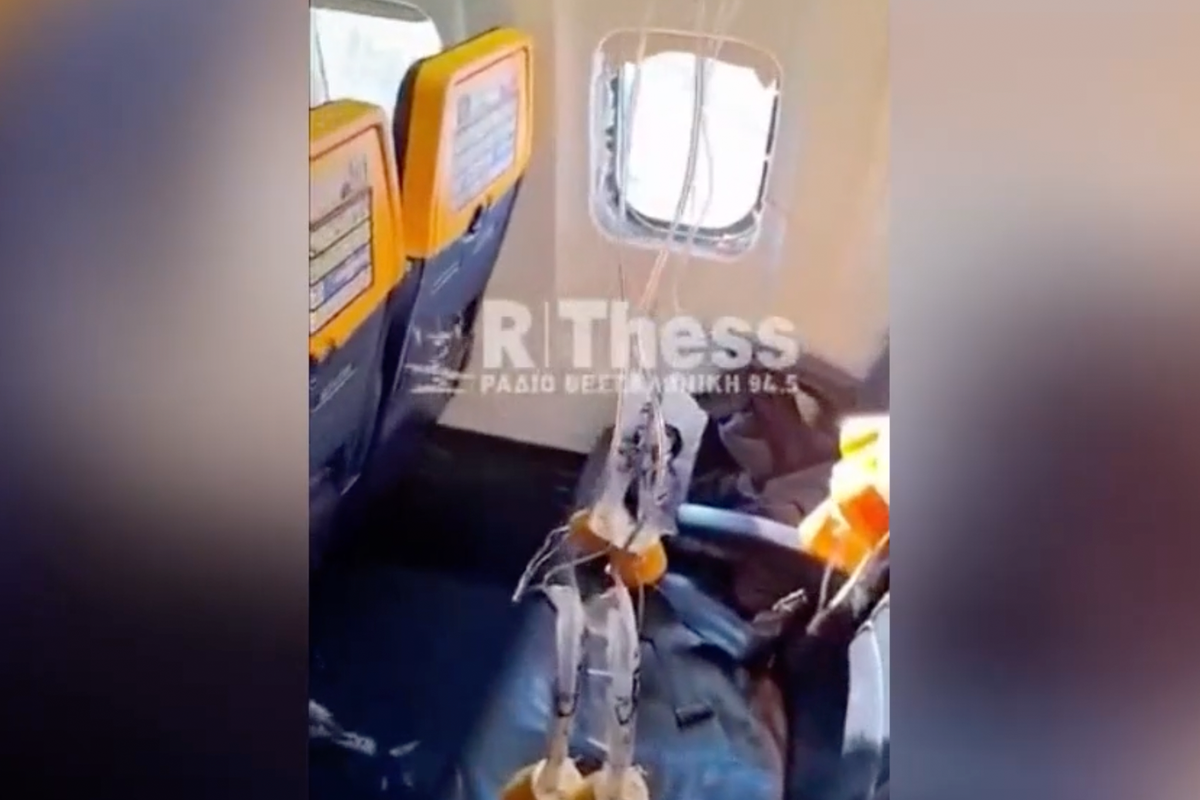
On a routine European flight, the cabin pressure equalized with the outside atmosphere in a fraction of a second. The physical reality of decompression is brutal. The air inside the cabin does not merely escape; it explodes outward. Anything not securely fastened is swept toward the breach.
For one man sitting in the window seat, the world inverted.
The pressure differential turned the small rectangular window into a vacuum cleaner with thousands of pounds of pulling force. In the space of a single heartbeat, he was no longer a passenger on a budget holiday. He was an object being pulled into the sky. His upper body was dragged through the shattered frame, his torso jammed into the freezing, rushing slipstream outside the aircraft.
Imagine the sheer velocity of that moment. The wind at that altitude moves with the force of a permanent hurricane, tearing at the skin, freezing the breath before it can leave the throat. Inside the cabin, fog instantly formed as the pressure dropped, plunging the passengers into a blinding, freezing mist.
Oxygen masks dropped from the ceiling, dancing wildly on their plastic tubes. Chaos reigned. But amidst the flying papers, the dropping masks, and the collective panic of over a hundred people realizing they might be falling out of the sky, one person did not freeze.
The Reflex of Survival
We like to think we know how we would react in a catastrophe. We construct narratives of heroism in our minds during quiet moments. But when the thin veneer of safety is ripped away, our bodies make the choices for us.
Sitting directly next to the man was his wife.
She did not look for a flight attendant. She did not reach for her own oxygen mask. As her husband was pulled toward the empty sky, she lunged across the armrest. Her fingers locked onto his clothing, his belt, his legs—anything she could grasp to anchor him to the inside of the plane.
The physical strain was immense. The airflow outside was trying to strip him away from the aircraft, pulling with a relentless, mechanical strength. Her muscles burned under the sudden, terrifying weight of a human life. If her grip slipped even a fraction, he would be gone into the clouds, lost to the atmosphere before the pilots could even begin an emergency descent.
Other passengers watched in horror, paralyzed by the suddenness of the event. The cabin environment had become a nightmare of rushing wind, sub-zero cold, and the terrifying tilt of the airplane as the flight crew initiated a rapid dive to reach a breathable altitude.
She held on.
She held on through the terrifying drop as the pilots brought the aircraft down through the sky. She held on while her fingers grew numb from the freezing air rushing through the broken window. It was a raw, visceral display of human willpower overriding the primal instinct to protect oneself.
The Physics of the Break
To understand why this happens, look at the structure of an airplane window. It is not made of standard glass. It is a three-layer system of stretched acrylic. The scratch shield—the one you can touch from your seat—is just there to protect the middle and outer panes from the passengers. The middle pane has a tiny hole in it, a breather hole, designed to manage the massive pressure differences between the cabin and the sky.
When an outer pane fails, the middle pane is supposed to hold the line. It is engineered to withstand the full force of the pressure differential. But engineering can only account for what is predictable. When a catastrophic structural failure occurs, the air inside the cabin acts like a coiled spring, expanding violently to meet the thin air outside.
The human body is remarkably resilient, but it is no match for the laws of thermodynamics. When a person is partially sucked out of an aircraft, they are subjected to a violent combination of forces: aerodynamic drag, extreme hypothermia, and immediate hypoxia. The mind stops functioning clearly within fifteen seconds without oxygen at that altitude.
He was entirely dependent on the strength of another person's hands.
The Long Descent
The longest minutes of a flyer's life are those spent in an emergency descent. The engines idle, the nose points down sharply, and the aircraft drops thousands of feet per minute to reach ten thousand feet, where the air is thick enough for humans to breathe without assistance.
For the passengers on board, every second felt like an hour. The roar of the wind through the broken window made communication impossible. The wife remained locked in place, her entire existence narrowed down to a single task: do not let go.
Slowly, the air grew warmer. The violent shaking of the aircraft began to smooth out as the pilots leveled off in the thicker air of the lower atmosphere. The immense pulling force at the window began to subside, transitioning from a violent vacuum into a heavy, dragging wind.
Only then could other passengers and the cabin crew move forward to help. Together, they managed to pull the man back completely into the safety of the cabin. He was battered, freezing, and in deep shock, but he was alive.
The Unseen Scars of Flight
The airplane eventually landed safely, greeted by an array of emergency vehicles on the tarmac. Flashing red lights reflected off the metal fuselage that had so narrowly avoided a larger disaster. The physical injuries were treated by paramedics—bruises, frostbite, lacerations from the shattered acrylic.
But the real aftermath of an event like this is carried silently.
Every time those passengers step onto a plane in the future, they will look at the small window next to them. They will touch the plastic scratch shield. They will remember the day the sky tried to pull them out.
We live in an age where air travel has become mundane, automated, and deeply corporate. We treat flights like bus rides across the sky. It takes an extraordinary, terrifying anomaly to remind us of the incredible forces we harness every time we leave the ground.
And more than that, it reminds us of the fragility of the human bonds that keep us anchored when our world suddenly tears wide open. The true barrier between that man and the void was not a piece of engineering or a safety protocol. It was the frantic, unyielding grip of his wife's hands.