The rain in South London does not fall; it mists, sticking to the windscreen of a parked Vauxhall Astra like a layer of grease. Inside, a detective constable named Sarah—a pseudonym to protect her career—stares at a laptop screen balanced on her knees. The battery is at twelve percent. She has spent the last three hours completing an internal equity and inclusion auditing spreadsheet, documenting the demographic breakdown of a community outreach panel that three people attended.
Three miles away, a storefront window shatters. A family-owned electronics shop is cleaned out in four minutes flat. The owner calls 999. The operator breathes a tired sigh, knowing the nearest available response unit is buried under a mountain of digital compliance forms, forty minutes away. If you liked this post, you might want to look at: this related article.
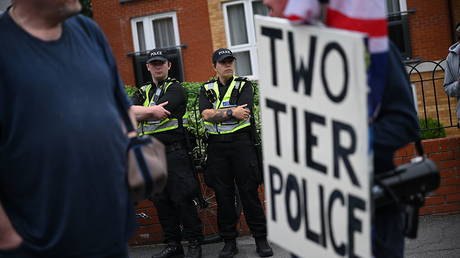
This is the quiet crisis fracturing British policing. It is not a crisis born of a lack of funding or a shortage of vehicles, though those pressures are real enough. It is a crisis of identity. Somewhere over the past decade, the mission mutated. The fundamental promise of the police—to protect life and property, to preserve the peace, and to pursue criminals—has been crowded out by a desire to fight ideological battles on the internet and micro-manage social harmony.
A major independent report recently laid bare what millions of citizens have felt intuitively. The verdict was scathing: UK police forces must abandon the distraction of culture wars and return to the grit and grind of basic law enforcement. For another look on this development, check out the recent coverage from BBC News.
The Mathematics of Deterrence
When a home is violated, the psychological damage lingers far longer than the physical mess. A burglary is an invasion of sanctuary. Yet, if you live in England or Wales today, the statistical reality is bleak. The vast majority of domestic burglaries go unsolved. In many areas, the closure rate for these offenses hovers in the single digits.
Consider the arithmetic of a local police station. There are only so many hours in a shift. Every hour a sergeant spends attending a mandatory seminar on pronoun usage or validating offensive tweets is an hour stolen from the streets. Criminals understand this math perfectly. They do not read policy documents, but they read the streets. They know when the blue line has grown thin, distracted, and hesitant.
The report details an alarming trend where senior officers appear more concerned with managing public relations on controversial social issues than with tracking down the syndicates stealing cars out of suburban driveways. This shift has not happened in a vacuum. It is driven by a top-down bureaucratic culture that rewards compliance over competence, optics over outcomes.
Let us look at a hypothetical shopkeeper named Michael. He runs a newsagent in a provincial town. Over six months, shoplifters walk into his store, openly take goods from the shelves, and walk out. When Michael calls the police, he is given a crime reference number over the phone. No officer arrives. The message sent to Michael is clear: your livelihood is below the threshold of our concern.
But then look at what happens when someone posts a deeply offensive, crude comment on a local community Facebook group. Within days, two officers show up at the poster's door to "check their thinking."
The contrast is jarring. It breaks the social contract.
The Psychology of Disengagement
The term "policing by consent" is the bedrock of the British system. It dates back to Sir Robert Peel in 1829. It means the power of the police comes from the common consent of the public, not from the power of the state. To maintain that consent, the public must believe the police are impartial, objective, and focused on the dangers that threaten everyday life.
When the public sees officers taking the knee at political protests, painting patrol cars in factional livery, or spending thousands of pounds of taxpayer money on rainbow-themed merchandise while street crime surges, trust evaporates. Impartiality is sacrificed on the altar of contemporary trends.
The internal effect on rank-and-file officers is equally devastating. Most people join the police force for a simple reason: they want to catch bad guys and help victims. They do not join to become arbiters of speech or social workers with handcuffs.
Young officers find themselves caught in a vice. On one side is a public demanding action on anti-social behavior and knife crime. On the other is a management structure hypersensitive to political correctness, ready to discipline officers for minor missteps in terminology.
Fear sets in. Hesitation follows.
A hesitant police force is a dangerous one. When an officer hesitates before making a stop-and-search because they worry about how the demographic data will look on a quarterly spreadsheet, the criminal wins. The weapon stays on the street. The next victim is selected.
Turning the Supertanker
Fixing this does not require a complex ideological revolution. It requires a return to basics.
The report outlines several clear steps that must be taken to steer British policing back on course. Chief constables must be judged on hard metrics: arrest rates, response times, and crime reduction. The obsession with non-crime hate incidents—where speech that breaks no law is still recorded against a person's name—must be severely curtailed.
Resources need to be stripped away from internal diversity bureaus and pushed back into neighborhood policing teams. The public needs to see uniforms on the street, not avatars on Twitter.
Change will be resisted. Bureaucracies excel at self-preservation, and an entire industry of consultants and advisors has grown up around the current model. They will argue that abandoning these initiatives is a step backward, a regression into a less enlightened era.
But there is nothing enlightened about an elderly woman lying terrified in her bed while an intruder rumbles through her downstairs rooms, knowing that nobody is coming to save her. There is nothing progressive about a community where small businesses close down because rampant shoplifting has made them uninsurable.
The true measure of a compassionate society is its ability to protect the vulnerable from harm. British policing has lost its way because it mistook social engineering for public safety. It is time to put the clipboard down, step out of the office, and get back on the beat. The streets are waiting.


