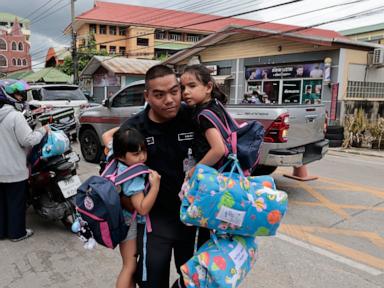
Two sudden acts of violence in Nonthaburi province have shaken public safety in Thailand to its core. Prime Minister Anutin Charnvirakul didn't wait around for public outcry to fade. He ordered an urgent, sweeping review of national gun regulations.
When a 14-year-old student opened fire at Debsirin Nonthaburi School and his family home, leaving eight dead and over twenty injured, the nation gasped. Just three days later, a separate shooting at a government office claimed another life. These consecutive tragedies forced authorities to confront an uncomfortable truth. Thailand has a massive underground firearms market and a staggering civilian gun inventory that standard enforcement has failed to manage.
Inside the Emergency Government Crackdown
The Thai government is moving fast. Prime Minister Anutin instructed the Interior Ministry to draft comprehensive legal amendments within sixty days. The proposed changes target the heart of the crisis: tightening oversight on the commercial gun trade, upgrading national firearms data tracking, and ramping up legal penalties for offenders.
Right now, illegal possession carries prison terms ranging from one to ten years alongside fines up to 20,000 baht, roughly 600 USD. Lawmakers argue these deterrents are simply too weak. Government spokesperson Lalida Persvivatana made the administration's stance clear, stating that the ultimate goal is to remove firearms from daily civilian life wherever possible to secure public safety.
As part of the immediate response, authorities suspended the issuance of all new firearm purchasing permits. Existing permits are also undergoing a mandatory audit. But critics point out that paperwork and permit freezes only affect law-abiding citizens. The underground network of smuggled and modified weapons remains a massive loophole.
The Reality of Gun Ownership in Southeast Asia
You might wonder how widespread civilian firearm ownership actually is in the region. Statistically, Thailand stands out. Data compiled by groups like the Small Arms Survey and GunPolicy.org indicates that Thai civilians hold roughly 15 firearms per 100 people.
That figure places Thailand second only to Pakistan in all of Asia for per capita civilian gun ownership. To put that into perspective, neighboring Malaysia logs less than one gun per 100 people. While Malaysia's strict prohibitions keep numbers low, Thailand's historical culture around gun possession—fueled by legal laxity and porous borders—created a vastly different environment.
World Population Review statistics from 2023 place firearm-related deaths in Thailand at 3.49 per 100,000 residents. While Latin America and parts of the Caribbean experience far higher rates, Thailand leads Southeast Asia alongside the Philippines. Mass violence incidents remain statistically uncommon, but high-profile rampages have spiked over recent years.
Think back to the horrific 2022 tragedy in the northeast where an ex-policeman killed 36 people. Or the 2020 massacre in Nakhon Ratchasima. Or the 2023 shopping mall shooting involving another 14-year-old using a modified handgun. Each event triggers promises of reform. Each time, public grief gives way to political inertia until the next disaster strikes.
Cracking Down on the Black Market
Stopping mass violence requires addressing how teens and criminals obtain firearms in the first place. In the recent Nonthaburi school tragedy, the perpetrator used a weapon legally registered to his grandfather. Safe storage laws in Thailand are practically nonexistent, meaning thousands of household firearms sit unsecured, accessible to minors and troubled individuals.
Beyond registered weapons, online black markets thrive. Previous investigations revealed that modified blank-firing guns and smuggled components are easily bought online and shipped through standard postal services. Unless the upcoming Interior Ministry amendments tackle digital black-market sales and mandate strict household storage accountability, banning new permits won't fix the underlying danger.
Mental health support infrastructure also needs a massive overhaul. Following the Nonthaburi shooting, the Ministry of Health deployed multiple crisis assessment teams to schools, but reactive mental health services arrive too late. Experts argue that identifying adolescent distress, bullying, and behavioral changes early must become part of the educational framework.
The next sixty days will test whether political pressure can break decades of complacency. If the Interior Ministry delivers toothless regulations, the cycle of grief and temporary outrage will simply repeat. Real safety demands confronting the cultural normalization of firearms head-on.