Most Western anime fans know the exact frame. A bruised, exhausted boxer sits slumped on a wooden stool in the corner of a ring, head tilted forward, eyes closed, a faint smile frozen on his face. He's burned himself out to pure white ash. Even if you've never read a single page of Ashita no Joe, you've seen that pose parodied in everything from Gintama and Kill la Kill to Hunter x Hunter.
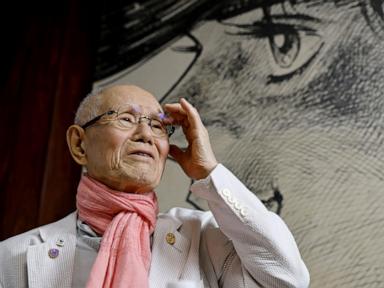
Tetsuya Chiba drew that scene. And with his passing at 87, the manga industry hasn't just lost one of its last living ties to the medium's postwar Golden Age—it's lost the man who proved comics could carry the weight of a nation's grief and class anger.
If you only remember Chiba as "the guy who drew a boxing comic in the sixties," you're missing the entire point of why Japanese prime ministers, student radicals, and generations of creators treated his work like scripture.
What Most Obituaries Get Wrong About Tetsuya Chiba
When major news outlets summarize Chiba's life, they usually reduce him to a few bullet points. Born in 1939. Raised in Manchuria. Created Ashita no Joe. Won big awards. Died at 87.
That summary feels sterile, and honestly, it misses what made him dangerous and vital as an artist. Chiba wasn't an ivory-tower genius sketching pretty pictures in a quiet Tokyo studio. His family barely survived the chaotic repatriation from Japanese-occupied Manchuria after World War II. They lived in extreme poverty, crowded into tiny rooms, eating whatever they could scrape together.
That hunger never left his ink brush.
While Osamu Tezuka was building dazzling sci-fi worlds and romantic adventures for children, Chiba looked down at the mud. He drew the kids living in Tokyo's doya-gai—the slum districts of Sanya where day laborers drank cheap shochu and fought for scraps of work. When Chiba drew dirt under a character's fingernails or the sagging roof of a tin shack, he wasn't guessing what poverty looked like. He knew.
The Partnership That Broke the Mold
You can't talk about Ashita no Joe (serialized in Weekly Shonen Magazine from 1968 to 1973) without mentioning writer Asao Takamori, better known by his pen name, Ikki Kajiwara. Kajiwara provided the raw, melodramatic, hyper-masculine scripts. Chiba brought the humanity.
Left alone, Kajiwara's stories could easily tip into pure macho absurdity. Chiba grounded them. He gave Joe Yabuki—a teenage delinquent who drifts into Sanya with nothing to his name—a crooked, defensive smirk that slowly softened as he learned to care about the neighborhood kids and his one-eyed, alcoholic trainer, Danpei Tange.
Chiba's genius was pacing and facial expression. He would spend four pages on a quiet conversation over bowls of cheap ramen, letting the tension build until a single punch felt like an earthquake.
Why Ashita no Joe Became a Political Weapon
To understand how massive Chiba's impact was in 1970, you have to picture Japan during the Anpo protests. University students were clashing with riot police in the streets of Tokyo, fighting against the renewal of the U.S.-Japan Security Treaty and the rigid, corporate conformity of Japan's rapid economic miracle.
To those protesters, Joe Yabuki wasn't a sports hero. He was a rebel who refused to bow to authority, institutions, or polite society.
Two real-world events cement just how blurred the line between Chiba's fiction and Japanese reality became:
- The Funeral for Rikiishi Toru. In March 1970, Chiba and Kajiwara killed off Joe's greatest rival, Rikiishi Toru, after a brutal bantamweight bout that forced Rikiishi to starve himself to make weight. Readers were devastated. Poet Shuji Terayama organized a real funeral at Kodansha's headquarters in Tokyo. Roughly 700 fans showed up wearing black armbands, bringing incense and flowers for a fictional character. Buddhist monks chanted sutras while Chiba sat quietly in the crowd, stunned by the grief his ink had triggered.
- The Yodogo Hijacking. Just days after Rikiishi's funeral, members of the Japanese Red Army Faction hijacked Japan Airlines Flight 351 and forced it to fly to North Korea. Before releasing the passengers, their leader declared to the press: "We are Ashita no Joe."
Think about that. A shonen manga meant for teenage boys had become the rallying cry for radical revolutionaries and mourning intellectuals alike. Chiba himself was deeply uncomfortable with the hijacking—he hated violence and never wanted Joe to inspire real-world terror—but he couldn't control the fire he'd lit.
Beyond the Ring Chiba's Quiet Mastery
If Ashita no Joe had been his only major work, Chiba would still sit in the manga hall of fame. Yet treating him as a one-hit wonder ignores decades of wildly different storytelling.
Before Joe ever stepped into a ring, Chiba broke out in 1961 with Chikai no Makyu (The Magic Pitch of the Vow), a baseball manga that helped establish the supokon (sports guts) genre. In 1966, he created Harisu no Kaze, following a chaotic, big-hearted kid named Kunimatsu Ishida who excels at every sport he touches.
Then, right after finishing Ashita no Joe in 1973, Chiba pivoted sharply. He launched Ore wa Teppei, a series about a wild mountain boy thrust into an elite Tokyo academy and kendo club. Teppei wasn't brooding or tragic like Joe. He was loud, feral, funny, and joyful. That series ran until 1980 and won the Kodansha Manga Award, proving Chiba could dominate slapstick comedy just as easily as gut-wrenching tragedy.
Later in life, he turned inward. His autobiographical manga Hinemosu Notari Nikki (All Day Long, a Leisurely Diary), serialized in Big Comic starting in 2015, showed a completely different side of the master. Drawn with soft, trembling lines that reflected his aging hands and declining eyesight, it documented his daily walks, his struggles with heart surgery, his memories of fleeing Manchuria as a child, and his quiet reflections on friends like Tezuka and Fujiko F. Fujio passing away before him.
He literally kept drawing until his body gave out.
How Chiba Changed the Way Manga Is Drawn
Modern manga artists owe a massive technical debt to Chiba, even if they don't realize it. Before the late 1960s, most action manga relied on stiff, theatrical poses—characters standing squarely in front of the reader like actors on a stage.
Chiba broke the camera free.
- Dynamic perspective: He distorted limbs and foreshortened fists so punches looked like they were flying straight out of the page toward your face.
- Imperfect anatomy: His characters didn't look like Greek statues. They had knobby knees, lanky arms, hunched shoulders, and messy hair. When Joe got hit, his nose bled, his eyes swelled shut, and his mouth twisted in ugly, realistic pain.
- Negative space: Chiba knew when to strip away backgrounds entirely. During psychological breaking points, he'd leave the panel pure white or slash it with frantic, jagged ink lines, forcing you to stare straight into a character's panic.
If you love the gritty, kinetic street fights of Tokyo Revengers, the visceral boxing choreography of Hajime no Ippo, or the emotional weight of Slam Dunk, you're looking at Chiba's fingerprints. George Morikawa, the creator of Hajime no Ippo, has spoken openly for decades about how Ashita no Joe pushed him to become a manga artist in the first place.
Why His Legacy Hits Harder Today
We live in an era where entertainment is often engineered by committee to be safe, palatable, and endlessly franchised. Main characters rarely lose permanently. They almost never stay broken.
Chiba rejected that safety net. When he drew the final chapter of Ashita no Joe in 1973, he didn't give Joe a happy ending, a championship belt, or a miraculous recovery. He gave Joe total, irreversible commitment to the thing he loved, even if it cost him everything.
And Chiba lived his own career the exact same way. He served as chairman of the Japan Cartoonists Association, fought tirelessly to protect creators' copyrights and working conditions, and kept sketching in his hospital bed between surgeries because stopping meant giving up.
If you want to actually understand what Tetsuya Chiba left behind, don't just read a Wikipedia summary or share a tribute post. Pick up the first volume of Ashita no Joe (recently released in an official English hardcover edition by Kodansha) or track down Osamu Dezaki's 1970 and 1980 anime adaptations. Watch how a kid with nothing refuses to stay down, and pay attention to the ink lines holding him together.