When a prospective buyer crashes a high-performance vehicle during a dealership test drive, the resulting financial burden rarely falls neatly onto the dealership’s commercial insurance policy. In Canadian jurisdictions, civil liability and contractual indemnity frequently shift the entire capital loss onto the driver, transforming a twenty-minute evaluation into a six-figure personal liability. Understanding this outcome requires examining the intersection of provincial statutory negligence regimes, bailment law, and the specific risk-transfer mechanisms embedded in dealership test drive agreements.
The Structural Reality of Dealership Risk Transfer
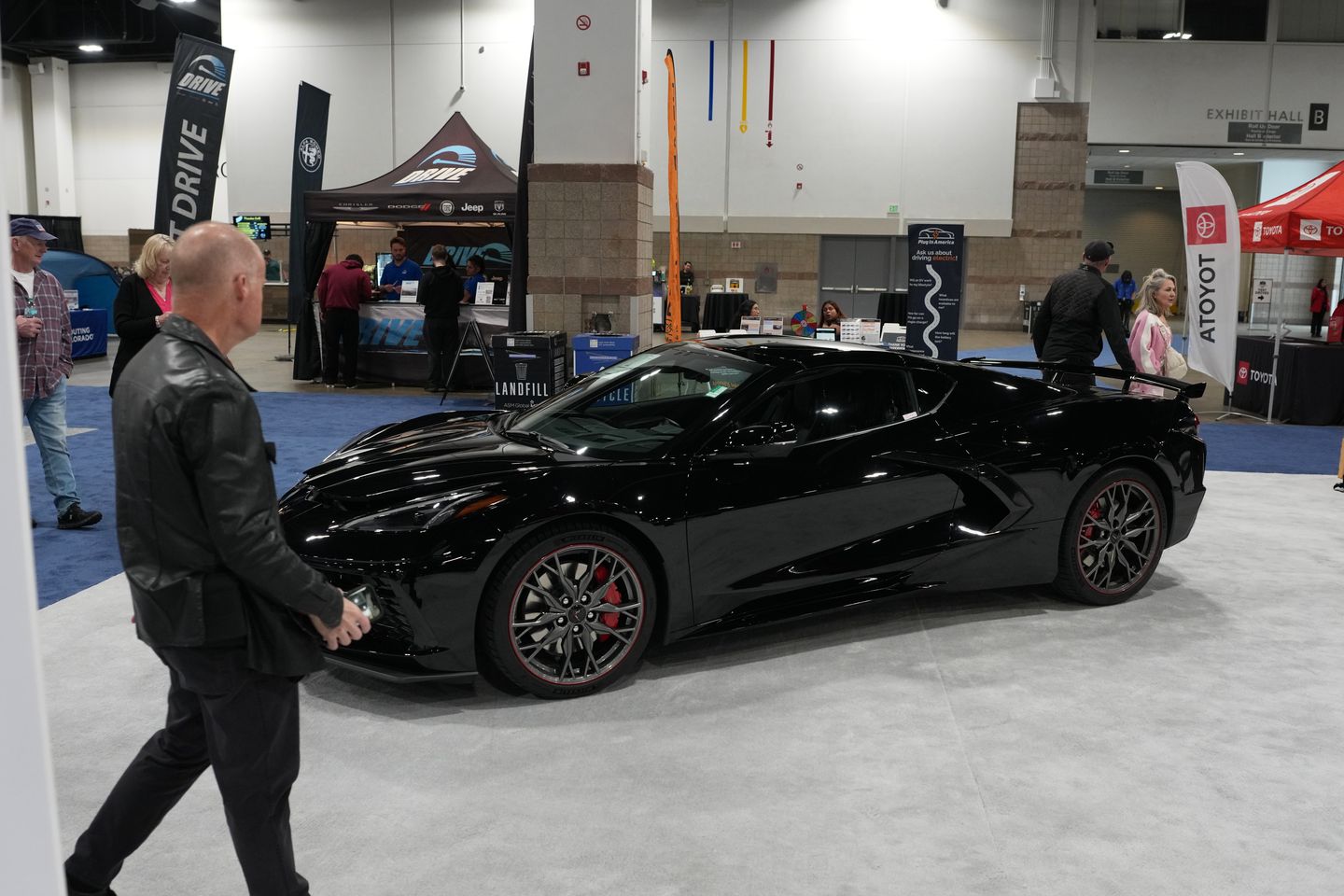
Most consumers operate under an asymmetric assumption regarding automotive retail operations. They assume that because a dealership holds title to the inventory and maintains a commercial fleet policy, the business absorbs accidental physical damage incurred during normal sales activities. In practice, commercial garage policies are engineered to protect the dealership’s balance sheet against catastrophic insolvency, not to subsidize customer negligence on high-depreciation assets like a Chevrolet Corvette.
When a customer takes possession of a dealership vehicle, the legal relationship immediately shifts into a bailment for mutual benefit. Under common law principles applicable across Canadian provinces (excluding Quebec, which operates under the Civil Code’s mandate and deposit frameworks), the dealership is the bailor and the prospective buyer is the bailee.
This classification triggers three distinct operational realities:
- The Rebuttable Presumption of Negligence: Once the bailor proves that the vehicle was delivered in undamaged condition and returned damaged, the burden of proof inverts. The driver must affirmatively prove that the damage occurred without their negligence, rather than the dealership having to prove fault.
- Contractual Modification of Standard Care: Dealerships routinely execute pre-drive waivers or test drive agreements. These documents function as private risk-allocation contracts, explicitly overriding general assumptions about commercial insurance coverage.
- Subrogation and Deductible Exposure: Even when a dealership’s garage policy pays for initial repairs or total loss replacement, the insurer retains the right of subrogation—the legal authority to step into the dealership's shoes and sue the negligent bailee to recover the payout, alongside the dealership suing directly for its commercial deductible and diminished value.
The Three Pillars of Driver Liability
To understand why a Canadian court enforces full financial restitution against a test driver, the liability equation must be broken down into its three constituent components: statutory vicarious liability, contractual indemnity, and personal insurance policy exclusions.
1. Statutory Owner Liability vs. Driver Tort Liability
Across Canadian provinces—such as under Ontario’s Highway Traffic Act or British Columbia’s Motor Vehicle Act—the registered owner of a vehicle is vicariously liable for loss or damage sustained by third parties due to the negligent operation of that vehicle. However, statutory owner liability is a public protection mechanism designed to ensure injured third parties are compensated; it does not shield the negligent driver from direct tort liability to the vehicle's owner.
If a test driver loses control of a rear-wheel-drive sports car due to excessive throttle input on cold tires, the driver has breached the standard of care expected of a reasonably prudent motorist. The dealership, as the property owner, holds a direct cause of action in tort (negligence) against the driver for the destruction of its chattel. Statutory owner liability does not extinguish this claim; it merely makes the dealership jointly liable to any external parties hit during the incident.
2. The Mechanics of the Test Drive Agreement
Before handing over the key fob to a high-value asset, dealership risk-management protocols require the execution of a Test Drive Agreement. These contracts are rarely negotiated, yet they hold decisive weight in small claims and superior court litigation.
A standard dealership indemnity clause typically establishes:
- Unconditional Assumption of Deductible: Commercial garage policies for high-performance inventory carry deductibles ranging from $5,000 to $25,000 CAD per occurrence to keep annual premiums viable. The agreement binds the driver to pay this deductible regardless of fault.
- Primary Coverage Assignment: The contract stipulates that the driver’s personal automobile insurance policy acts as the primary layer of coverage, rendering the dealership’s garage policy strictly excess.
- Full Restitution for Uninsured Loss: If the driver’s personal policy denies coverage or lacks sufficient limits, the contract obligates the driver to indemnify the dealership for the full Actual Cash Value (ACV) of the vehicle, towing, storage, and administrative costs.
3. The Personal Auto Policy Bottleneck
The critical failure point for most drivers occurs when they assume their existing personal auto policy automatically extends comprehensive and collision coverage to a dealership vehicle. In Canada, standard owner’s forms (such as the OAP 1 in Ontario or APV250 in British Columbia) provide coverage for "non-owned automobiles," but this coverage is governed by strict underwriting boundaries.
First, Value Caps and Underwriting Limits frequently restrict non-owned physical damage coverage. A driver insuring a ten-year-old commuter sedan may carry a policy with an implicit or explicit cap on non-owned vehicle values, or they may have waived collision coverage entirely on their own policy to save on premiums. If a driver does not carry collision coverage on their personal vehicle, that coverage does not materialize when they step into a $100,000+ Corvette.
Second, Commercial Use and Care, Custody, or Control Exclusions create severe friction. Standard personal policies exclude damage to property in the insured's "care, custody, or control" unless specific endorsements (such as Ontario’s OPCF 27, Liability for Damage to Non-Owned Automobiles) are active on the policy. Even when OPCF 27 is present, it is typically subject to a strict dollar limit—often $25,000 to $50,000 CAD. In the case of a late-model Corvette, a $50,000 coverage limit leaves a massive uninsured gap that the driver must satisfy out of personal liquid assets or wage garnishment.
The Cost Function of a Destroyed Performance Asset
When a dealership sues a driver—or when an insurer subrogates against them—the financial calculation extends far beyond the sticker price of the vehicle. Courts assess damages based on the principle of restitutio in integrum, aiming to restore the injured party to the exact financial position it occupied prior to the tort.
The total financial exposure is governed by the following cost function:
$$\text{Total Liability} = (V_{\text{wholesale}} - V_{\text{salvage}}) + C_{\text{carry}} + C_{\text{legal}} - I_{\text{recovered}}$$
Where:
- $V_{\text{wholesale}}$ (Replacement Cost / Dealer Valuation): Courts generally award the dealership its actual replacement cost or documented wholesale value, rather than the inflated retail MSRP, though lost profit margins on a pre-sold or scarce allocation unit can occasionally be argued if the dealership proves an immediate, guaranteed sale was lost.
- $V_{\text{salvage}}$ (Salvage Recovery): The residual value recovered by auctioning the wrecked chassis and intact drivetrain components. High-performance vehicles with mid-engine layouts (such as the C8 Corvette) suffer catastrophic frame and transaxle damage in moderate collisions, driving $V_{\text{salvage}}$ toward zero.
- $C_{\text{carry}}$ (Carrying and Incident Costs): Towing, hazardous material cleanup, municipal property damage (guardrails, light poles), and daily floorplan interest charges accrued while the damaged unit sits in limbo awaiting adjustment.
- $C_{\text{legal}}$ (Litigation and Subrogation Costs): Court filing fees, expert accident reconstruction reports, and partial indemnity legal costs awarded to the prevailing plaintiff.
- $I_{\text{recovered}}$ (Valid Insurance Payout): The net funds successfully extracted from the driver's non-owned auto endorsement.
If the vehicle is repairable rather than a total loss, the dealership introduces a claim for Accelerated Depreciation (Diminished Value). A brand-new sports car with a major collision record on its Carfax report loses a substantial percentage of its market value immediately upon repair. Canadian courts recognize diminished value claims by commercial dealers because the vehicle is held as inventory for resale, directly impairing the business's revenue-generating capacity.
Asymmetric Information and Operational Failures in the Sales Process
The recurrence of these disputes stems from a structural misalignment of incentives during the sales funnel. Sales representatives are compensated on volume and gross profit; their primary objective is to get the prospect behind the wheel to create emotional attachment to the vehicle. Explaining the nuances of OPCF 27 coverage limits or handing a customer a dense legal waiver creates friction that threatens the sale.
Consequently, dealerships rely on rapid, administrative execution of the test drive agreement—often presented on a digital tablet alongside a driver's license scan—without verbalizing the financial exposure. The customer, focused on evaluating vehicle dynamics, signs an indemnity contract without verifying whether their personal insurance policy covers a mid-engine sports car.
Furthermore, high-horsepower vehicles introduce a distinct moral hazard and competence gap. Modern sports cars feature sophisticated traction and stability management systems that mask driver error until the vehicle exceeds the physical limits of tire adhesion. Drivers accustomed to front-wheel-drive or all-wheel-drive commuter vehicles frequently disable stability controls or apply mid-corner throttle improperly, inducing snap oversteer. Because the driver has zero equity in the vehicle at the moment of the test drive, their internal risk calibration is often decoupled from the actual financial downside.
Limitations of Legal Defenses Available to the Driver
Once a collision occurs and the dealership initiates recovery proceedings, the driver's legal defenses are severely constrained by established Canadian tort and contract precedent.
- The "Unconscionability" Defense: Drivers frequently argue that test drive waivers are contracts of adhesion signed under rush, rendering them unenforceable. Canadian courts routinely reject this defense for licensed adults engaging in voluntary consumer transactions, provided the indemnity language is legible and not buried in deceptive formatting.
- Mechanical Failure Claims: A driver may allege that a sudden mechanical defect—such as brake fade or steering rack failure—caused the crash, thereby rebutting the presumption of bailee negligence. Succeeding on this defense requires expensive forensic engineering testimony. If the vehicle's Event Data Recorder (EDR) shows 100% throttle application, high steering angle, and deactivated traction control seconds before impact, the mechanical failure defense collapses immediately.
- Salesperson Accompaniment: Having a dealership employee in the passenger seat does not transfer operational control or legal liability back to the dealership. Unless the salesperson physically grabbed the steering wheel or actively instructed the driver to violate traffic laws, the person in control of the primary driving inputs retains sole tort liability.
Risk Mitigation Protocol for High-Value Vehicle Evaluations
For prospective buyers evaluating high-value inventory, eliminating catastrophic financial exposure requires executing a strict pre-drive verification protocol before signing any dealership paperwork.
- Audit Non-Owned Auto Endorsements: Contact your personal auto broker prior to visiting the dealership to confirm the presence and exact dollar limit of your non-owned physical damage endorsement (e.g., OPCF 27 in Ontario, SEF 27 in Alberta and Atlantic provinces). If the limit is capped at $50,000 CAD and the target vehicle is valued at $115,000 CAD, request a temporary rider or verify whether your umbrella policy extends to non-owned auto physical damage.
- Strike Unconditional Indemnity Clauses: Review the test drive agreement before signing. If the contract binds you to pay for damages regardless of fault, or obligates you to cover the dealership's diminished value claims without an insurance backstop, refuse to sign until the language is amended to limit your liability strictly to proven personal negligence.
- Verify Commercial Garage Deductible Exposure: Ask the sales manager for the exact collision deductible on the dealership's garage policy. Ensure you have sufficient liquid cash reserves or confirmed first-dollar insurance coverage to absorb that specific deductible figure without financial distress.
- Maintain Electronic Driver Aids: Never alter drive modes to "Track" or disable electronic stability control (ESC) and traction control systems on public roadways during a dealership evaluation. The EDR logs every electronic state change; disabling factory safety systems serves as prima facie evidence of gross negligence in subsequent litigation.