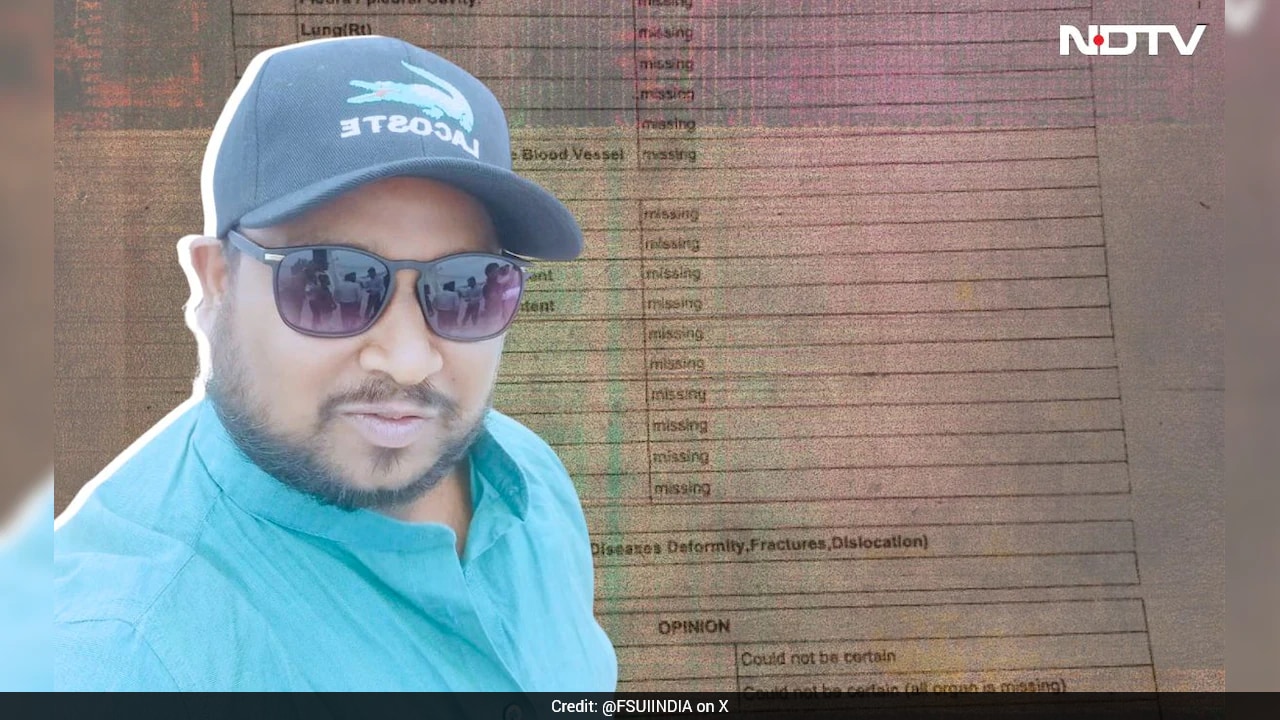
The media loves a good international organ trafficking conspiracy. When the body of an Indian sailor returns home from Venezuela hollowed out, missing its brain, heart, and lungs, the narrative writes itself. Hysteria ensues. Families demand high-level diplomatic probes. Outraged commentators point fingers at shady South American medical syndicates.
It is a gripping, cinematic story. It is also medically and logistically impossible.
The lazy consensus surrounding these cases treats the human body like a stolen vehicle stripped for parts in an illicit chop shop. This perspective ignores the rigid laws of transplant biology and the messy, bureaucratic reality of global forensics. The outrage is misplaced, directed at imaginary black-market surgeons rather than the real culprit: a broken international communication system and standard forensic protocols that nobody bothers to explain to grieving families.
The Mathematical Impossibility of Post-Mortem Harvesting
Let us dismantle the core myth immediately. You cannot harvest transplantable organs from a corpse sitting in a maritime morgue.
The public narrative assumes that a corrupt medical examiner can simply slice open a deceased sailor, extract his heart and lungs, sell them to the highest bidder, and ship the empty shell back home. This version of events ignores basic biology.
For an organ transplant to succeed, the donor must typically be declared brain dead while their heart is still beating, keeping the organs perfused with oxygenated blood until the exact moment of extraction. The timeline is merciless. Once the heart stops beating, warm ischemia sets in.
- The Heart: Irreversible damage occurs within 30 minutes of cardiac arrest.
- The Lungs: Viability drops to near zero within an hour or two without specialized intervention.
- The Brain: A completely useless organ for transplantation. No one is buying a black-market brain.
The idea that a sailor who died in Venezuela could have his thoracic organs harvested for illicit transplants days after his death is a biological absurdity. The organs would be dead tissue, completely useless to any surgeon, legitimate or otherwise.
The Formalin Factor
If the organs were not stolen to save a billionaire in need of a transplant, where did they go? The answer lies in the standard operating procedures of forensic pathology, specifically a process called formalin fixation.
When a person dies under suspicious or unclear circumstances in a foreign jurisdiction, the local coroner must determine the cause of death. You cannot diagnose a complex cardiac event, a pulmonary embolism, or a subtle neurological issue by simply poking a fresh organ with a scalpel. The tissue is too soft, too malleable.
To conduct a proper histopathological examination, the pathologist must remove the entire organ and submerge it in a solution of formaldehyde, known as formalin. This process hardens the tissue, preserving the cellular structure so it can be sliced into microscopic sections weeks later.
Imagine trying to slice a perfectly thin piece of warm gelatin vs. a block of chilled butter. The brain, in particular, requires up to two to three weeks in formalin before it is stable enough to be examined for trauma or aneurysms.
Here is where the logistics of international repatriation clash with medical science:
- The Clock is Ticking: A foreign embassy and shipping company cannot leave a decomposing body in a local morgue for a month while the pathologist waits for the brain and heart to fix in formalin.
- The Body Ships First: The shell of the body is embalmed, stuffed with absorbent materials, and flown back to its home country to meet legal and cultural burial deadlines.
- The Organs Stay Behind: The vital organs remain in jars in a laboratory in Caracas, Mumbai, or London, undergoing slow-motion chemical preservation and analysis.
When the body arrives at its destination and a second autopsy is conducted by suspicious local authorities, they find an empty cavity. The immediate conclusion is theft. The actual reason is standard laboratory wait times.
The Sovereign Sovereignty Blindspot
When a citizen dies abroad, families naturally turn to their home government for justice. They expect their local police to march into a foreign country and demand answers. This expectation ignores the absolute wall of state sovereignty.
A forensic laboratory in Venezuela operates under Venezuelan law, answering to Venezuelan courts. They are under no legal obligation to sync their autopsy timelines with the shipping schedules of international freight forwarders.
Furthermore, once organs are removed for legal evidence in a criminal or coroner's investigation, they become property of the local state's judicial system. They are evidence. In many jurisdictions, once the microscopic analysis is complete, the remaining tissue is incinerated as medical waste according to local biohazard laws. It is almost never reunited with the body for international shipping because shipping biohazardous jars of formalin-soaked tissue across international borders is a regulatory nightmare.
I have watched families spend their life savings hiring lawyers to sue shipping companies and foreign governments over "missing" organs, only to discover that the organs were legally disposed of in a furnace six months prior according to local municipal codes. The trauma is real, but it is manufactured by a total lack of transparency, not a criminal conspiracy.
The Failure of the Second Autopsy
The secondary outrage usually peaks when a home-country medical board performs a review and declares, "We cannot determine the cause of death because the primary organs are missing."
This statement is often interpreted by the public as proof of a cover-up. In reality, it is an admission of technical limitation. A local pathologist cannot verify a foreign autopsy report without the original tissue.
Instead of explaining this systemic limitation, institutional self-preservation kicks in. Local officials lean into the ambiguity, letting the family believe a crime occurred abroad rather than admitting that international forensic medicine is a fragmented mess with zero standardization.
Consider the baseline reality of global shipping and labor. A sailor dies on a vessel. The shipping company wants the body off the boat immediately to avoid costly port delays. The local port authority wants the paperwork cleared. The embassy wants to avoid a diplomatic incident. Everyone is rushing to move the physical body, while the actual scientific investigation operates on a completely separate, agonizingly slow timeline.
Fixing the Real Broken System
Stop looking for phantom organ syndicates in the shipping ports of the developing world. If you want to prevent this nightmare from happening to another family, the solution is mundane paperwork, not international police task forces.
International maritime contracts must include mandatory forensic notification clauses. If an autopsy requires organ retention for histopathology, the local embassy must receive a formal inventory sheet before the body is cleared for flight. The family must be told explicitly: Your relative is coming home, but their heart is staying in a lab for the next six weeks.
Until that administrative bridge is built, bodies will continue to arrive empty, families will continue to scream conspiracy, and the media will continue to feed on the panic. The truth isn't a shadowy horror movie; it is just a lonely jar of formalin sitting on a shelf in a government lab, completely forgotten by the system that filled it.