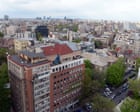
Picture this. You book a stunning, newly renovated "designer condo" in the heart of Bucharest for €100 a night. It has exposed brick, chic mid-century furniture, and glowing reviews praising its central location near University Square. You unpack, grab a coffee, and feel like you've scored the ultimate travel deal.
But there is a silent, terrifying detail the listing completely forgot to mention. Your gorgeous holiday rental sits inside a building officially designated as RS1. That means it has the highest level of seismic risk in Europe. In the event of a major earthquake, the very roof over your head is highly likely to collapse. If you found value in this article, you might want to look at: this related article.
Even worse, staying there is technically illegal.
A quiet crisis is unfolding in the Romanian capital. Thousands of unsuspecting tourists are booking apartments that double as death traps. Despite a strict national ban that went into effect on January 1, 2024, hundreds of these high-risk properties remain actively listed on major booking platforms. For another perspective on this event, see the latest update from Travel + Leisure.
The Law Airbnb and Booking.com Are Ignoring
Romania took a major step to address its crumbling infrastructure by banning the rental of any apartment located in seismic risk class 1 (RS1) buildings. The law was clear. If a building is deemed a collapse hazard, you cannot run a business or rent out rooms inside it. Owners who violate this face hefty fines.
Yet, a quick search on any major vacation rental platform shows that the law is mostly treated as a suggestion.
Data compiled by Re:Rise, a Romanian organization dedicated to seismic risk reduction, revealed a shocking reality. Their analysis identified at least 207 active tourist rentals across Airbnb and Booking.com operating out of RS1 buildings. Combined, these illegal listings have the capacity to host over 1,000 tourists every single night.
How does this happen? The platforms point fingers at the hosts. Hosts point fingers at the slow bureaucracy. Meanwhile, tourists are left entirely in the dark.
Neither of the major platforms requires hosts to declare whether their building is structurally sound. They don't block listings in flagged buildings. When activists tried to alert these tech giants, the response was a classic corporate shrug. The platforms insisted that complying with local safety laws is solely the responsibility of individual property owners.
Why Bucharest Is a Ticking Time Bomb
To understand why this is so dangerous, you have to look at Bucharest’s geography. The city is the most earthquake-prone capital in Europe. It sits directly in the crosshairs of the Vrancea seismic zone, a deep-focus fault area capable of generating massive, destructive tremors.
The city still carries the scars of the catastrophic 1977 earthquake. That 7.2-magnitude quake killed over 1,500 people, injured thousands more, and brought down dozens of large buildings in the city center.
Experts warn that history is waiting to repeat itself. A 2022 risk assessment by the Bucharest City Committee for Emergency Situations painted a grim picture. A major modern earthquake could severely damage 23,000 buildings, kill approximately 6,500 residents, and seriously injure another 16,000.
Many of the vulnerable structures are the beautiful, historic apartment blocks built before 1940. They look incredibly charming on Instagram. They are structurally terrifying in reality.
The "Red Dot" Loophole and Savvy Speculators
For decades, Bucharest authorities have marked these high-risk buildings with a physical "red dot"—a small, circular ceramic plaque mounted near the entrance to warn the public.
But over the years, many of these red dots mysteriously disappeared. Landlords scraped them off because the warning plummeted property values.
This created a highly profitable loophole for opportunistic real estate investors. Because banks refuse to issue mortgages for RS1 buildings, these properties can't be bought by average Romanians looking for a home. Instead, wealthy buyers swoop in with cash, buying these historic apartments for cheap. They remodel them with modern aesthetics, list them as luxury rentals, and rake in massive profits from foreign tourists who don't know what a red dot is.
Local authorities are slow to act. The city hall admits that police only inspect properties when a formal complaint is filed. With thousands of properties to monitor and a severe lack of resources, enforcement is virtually nonexistent.
Faced with official inaction, volunteers from Re:Rise took matters into their own hands. They began walking the streets of Bucharest, plastering hard-to-remove stickers directly onto the lockboxes mounted outside RS1 buildings. The stickers contain a QR code that links directly to a database of seismic risks. It is a desperate, grassroots effort to warn tourists at the very moment they are checking in.
How to Protect Yourself Before Booking in Bucharest
You don't have to avoid Bucharest entirely. It is a vibrant, beautiful city rich in culture and history. But you absolutely must take your safety into your own hands. Do not rely on booking platforms to protect you.
Follow these steps to make sure your accommodation is safe before you pay.
- Ask the host directly. Before booking, send a message asking: "Is this building classified as seismic risk class 1 (RS1) or does it have a red dot designation?" A reputable host will answer honestly. If they dodge the question, cancel the booking.
- Check the building's age. Avoid renting apartments in buildings constructed before 1978 unless they have been officially consolidated and retrofitted. Buildings constructed during the communist era after the 1977 quake, or modern buildings constructed after 1990, are built to much stricter seismic standards.
- Look at the facade. Use Google Street View to inspect the building exterior. Look for cracks, crumbling masonry, or circular red plaques near the entrance. If the exterior looks neglected, the structural skeleton likely is too.
- Use interactive risk maps. Romania has active civic tech communities mapping these hazards. Before you book, cross-reference the exact address of your rental with local databases or interactive seismic maps like those provided by Re:Rise or local geographers.
The charm of an old historic building isn't worth risking your life. When traveling to Bucharest, prioritize safety over vintage aesthetics. Stick to modern apartments, certified hotels, or verified consolidated buildings. Keep your eyes open, ask hard questions, and don't let a stylish interior blind you to structural danger.