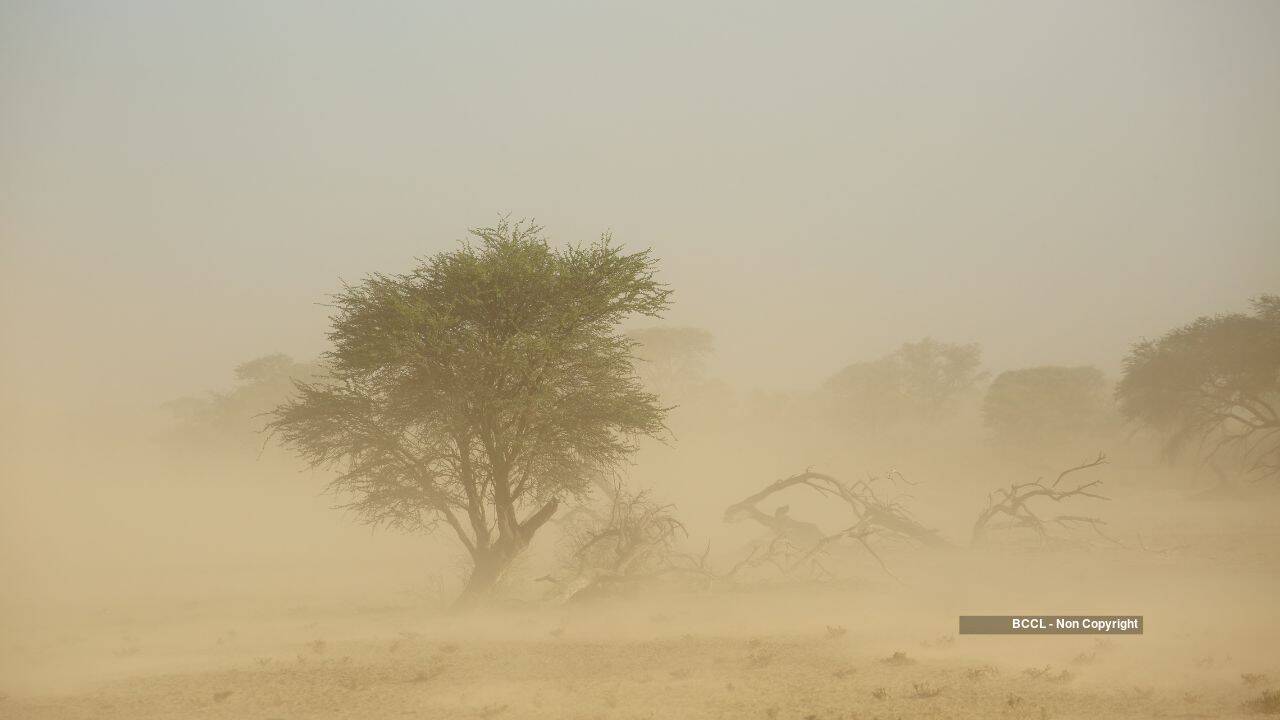
Everybody loves a feel-good environmental headline. Hand out a modest check, plant a few thousand trees in the arid red dirt of the Goldfields, snap a photo with local dignitaries holding shovels, and declare victory over desertification. The narrative writes itself. A tiny corporate or government injection acts as a catalyst, community spirit rallies, and Mother Nature submits to human persistence.
It is a comforting illusion. It is also entirely useless. For an alternative view, see: this related article.
I have spent the better part of two decades watching well-meaning bureaucrats and corporate ESG departments throw pocket change at ecological theatre in regional Australia. I have seen millions of dollars vanish into dry creek beds, swallowed by an environment that treats human intervention like a minor mosquito bite. Handing a community a ten thousand dollar check to establish thousands of hectares of protective forest around an industrial mining hub like Kalgoorlie is not conservation. It is an expensive PR stunt masquerading as stewardship.
Let us dismantle the lazy consensus. Further reporting on this matter has been published by Reuters Business.
The Arid Reality Check
The core premise of the grant-funded forestry model relies on a fundamental misunderstanding of hydrology and botany in the Western Australian goldfields. Kalgoorlie receives an average annual rainfall that barely hovers around the two-hundred-and-sixty-millimeter mark, punctuated by evaporation rates that routinely mock plant survival.
When outsiders hear the word forest, they picture towering canopies, thick undergrowth, and a closed system that traps moisture and dampens wind. In the Eastern Goldfields, a natural woodland does not look like a European park or an eastern seaboard timber belt. It is an open-spaced mosaic of sclerophyll shrubs, stunted Eucalypts, and drought-tolerant chenopod scrublands. These ecosystems survive not because they drink deeply from the clouds, but because their root architecture and biological networking operate on razor-thin margins of water scarcity.
When you drop thousands of seedlings into a grid using grant money, you trigger a biological catastrophe. Without intensive, long-term irrigation—which costs exponentially more than the initial capital injection—the survival rate of mass-planted saplings plummets below ten percent within the first two dry summers.
The grant check clears. The press release goes out. The trees die quietly beneath the blistering sun.
The Fallacy of the Green Barrier
Proponents argue that these targeted green zones act as physical windbreaks, shielding the municipality from the notorious dust storms kicked up by adjacent open-pit mining and natural hyper-arid wind cycles.
The physics of wind erosion in flat, arid terrain expose the flaw in this logic. A permeable windbreak reduces wind velocity for a distance proportional to its height. To protect a sprawling industrial town from regional dust drift, you do not need a symbolic patch of struggling saplings a few hectares wide. You need a continuous, multi-tiered vegetative buffer stretching for dozens of kilometers, backed by millions of gallons of water that the local municipality simply does not possess.
Furthermore, introducing non-local or forced-growth species alters the local soil chemistry and increases fire loads. In semi-arid zones, dense stands of poorly adapted trees accumulate dry fuel faster than native scrub. You trade a dust hazard for a bushfire hazard, solving a chronic environmental headache by introducing an acute catastrophic risk.
If you want to stop Kalgoorlie dust, you do not plant trees. You manage tailings surfaces, enforce stricter dust suppression protocols on haul roads, and stabilize the soil crust through biological amendments. Trees are the wrong tool for an engineering problem.
Capital Allocation and the Tokenism Trap
Why do governments and corporations keep falling for the micro-grant forestry trap? Because it scales easily on a PowerPoint slide.
Writing a check for ten thousand dollars requires minimal institutional friction. It satisfies corporate social responsibility metrics, gives local politicians a ribbon-cutting ceremony, and allows distant foundations to check a box labeled climate action. It is cheap comfort.
Real land management is expensive, unglamorous, and slow. It involves decades of soil microbiome research, monitoring regional water tables, managing feral herbivore populations like goats and rabbits that treat newly planted saplings as a salad bar, and enforcing heavy industrial regulation on dust generation at the source.
Imagine a scenario where a mining conglomerate is forced to allocate that same capital directly to subsurface moisture retention engineering and localized dust suppression grids rather than buying feel-good PR trees. The dust levels drop within weeks. The landscape stabilizes. But nobody posts a photo on LinkedIn of an industrial crust stabilizer.
We fund optics because optics are politically safe. We ignore mechanics because mechanics require admitting that complex ecological problems cannot be solved with pocket change and optimism.
The Economics of Arid Reclamation
Let us look at the numbers with cold detachment. Ten thousand dollars buys roughly two thousand saplings with basic guards, transport, and initial watering setup. In a high-evaporation environment like Kalgoorlie, keeping those plants alive through their first critical establishment phase requires dedicated tanker trucks, fuel, labor, and ongoing maintenance.
Within eighteen months, the operational expenditure required to keep a grant-funded forest alive dwarfs the initial capital grant by a factor of ten. When the grant money dries up—which it always does, because project funding cycles are notoriously short-sighted—the maintenance stops. The pumps are turned off. The trees desiccate.
This is not restoration. It is an extended execution cycle for nursery stock.
If you want to invest in the longevity of a mining town, stop trying to turn the desert into a temperate forest. Respect the desert for what it is. True resilience in the Goldfields comes from working with the native biome, not fighting it with imported horticultural fantasies.
Stop funding the photo op. Fix the industrial crust. Let the scrubland breathe.