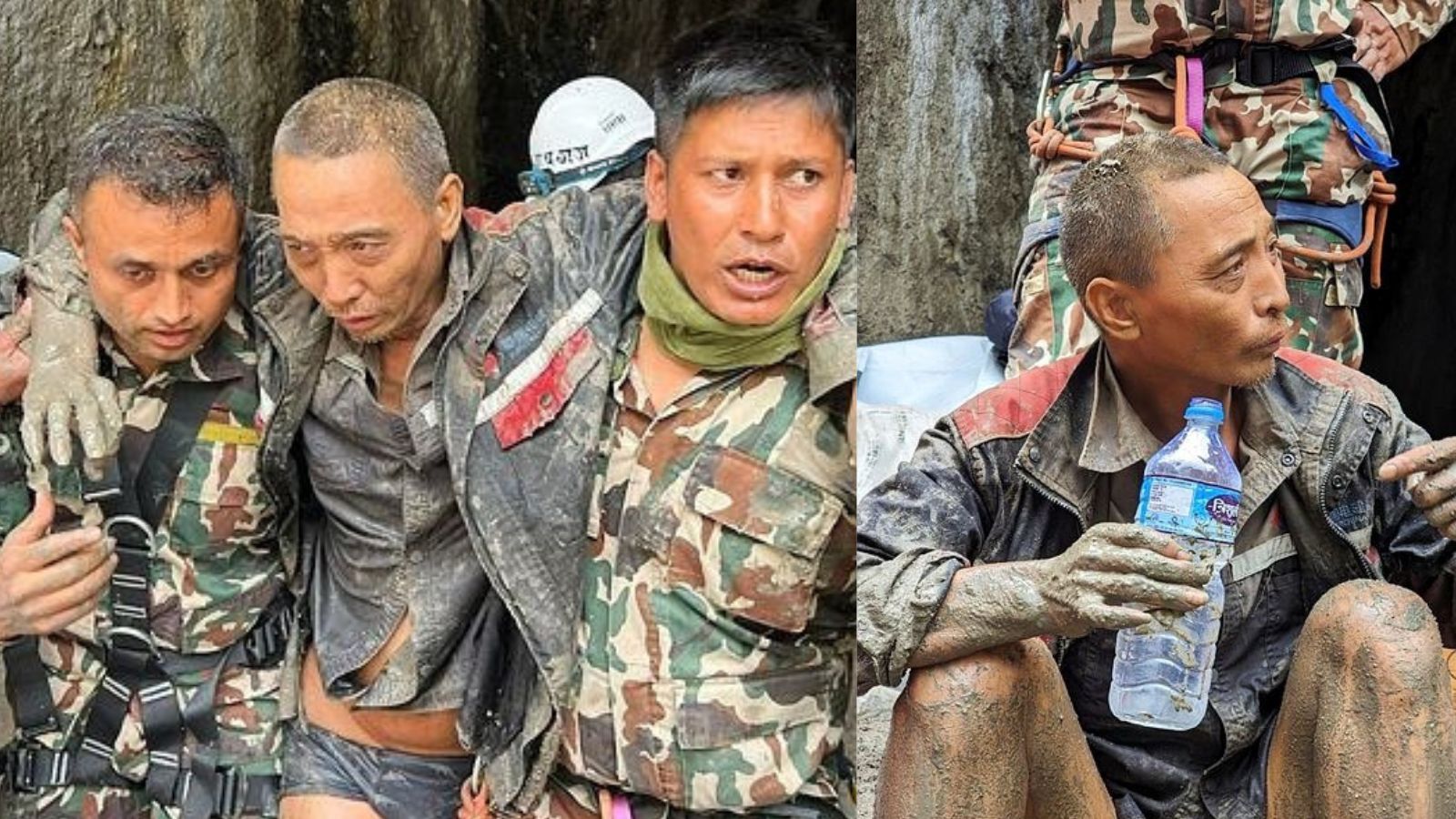
Mainstream news outlets love a neat little packaging of human survival. When headlines blared about a Chinese worker and local Nepali laborers pulled alive from pitch-black hydropower tunnels ten days after a Himalayan glacial collapse, the collective media machine immediately labeled it a miracle.
Stop calling it a miracle. Miracles imply divine randomness. What happened inside those buried concrete tubes of the Upper Trishuli projects was a masterclass in underground physics, human physiology, and the stubborn geometry of subterranean engineering. Calling it a statistical anomaly lets the infrastructure developers and disaster planners off the hook.
The Physics of Subterranean Survival
Imagine a scenario where a wall of ice, rock, and slurry wipes out a river valley, sealing a 225-meter tunnel entrance with millions of tons of dense debris. The lazy consensus assumes the people inside are immediately crushed, drowned, or asphyxiated within hours.
The data tells a starkly different story. Hydropower tunnels are not uniform tubes; they are engineered with undulating gradients, surge chambers, and structural pockets. When a catastrophic flash flood hits, the rushing water traps massive pockets of compressed air behind it. These trapped pneumatic bubbles act as atmospheric lifeboats.
A human body at rest requires minimal oxygen if core temperature regulation is managed. In a sealed, damp underground vault, the ambient humidity hovers near one hundred percent, which ironically prevents rapid dehydration through respiration. The survivor does not live because of supernatural intervention; they live because high-altitude mountain rock provides thermal insulation, keeping ambient temperatures stable enough to stave off rapid hypothermia or heat stroke while enclosed pockets of trapped oxygen sustain cellular respiration.
The Engineering Reality Behind The Rescue
Mainstream reporting frames the extraction as a triumph of raw grit by rescue teams. While the Nepal Army and international specialists deserve credit, the real hero of this operation was structural redundancy and digital data sharing.
Engineers did not hack blindly through twenty-five meters of solid rock. They relied on precision blueprints, local institutional memory, and instantaneous communications networks mapping out complex subterranean nodes. When a tunnel layout is digitized, rescue operations shift from a guessing game to a coordinate-based extraction.
We need to talk about the terrifying baseline here. Twelve hydropower projects were devastated, with hundreds of workers still missing. The handful of survivors pulled out after ten days highlights a glaring flaw in modern remote infrastructure design: the absolute absence of automated, hardened subterranean safe rooms.
Stop Building Death Traps in High Risk Zones
For decades, industrial developers have treated worker safety in mountainous terrain as a compliance checkbox rather than a high-stakes engineering puzzle. I have seen corporations blow millions on surface-level public relations campaigns while cutting corners on deep-tunnel emergency life support pods.
When you cram hundreds of workers into narrow penstocks and headrace tunnels beneath unstable glacial lakes, you are playing statistical roulette. Relying on rescue teams to punch through mud walls ten days later is not a strategy. It is a desperate gamble against geological time.
If we want to fix industrial development in the Himalayas, we must mandate independent, air-supplied refuge chambers every fifty meters in subterranean worksites. These chambers need autonomous power, independent oxygen scrubbers, and reinforced titanium bulkheads capable of withstanding hydraulic shockwaves.
Stop treating ten-day tunnel survivals as heartwarming viral moments that validate our rescue protocols. Every single one of these miraculous extractions is a screaming indictment of a system that waits for a mountain to fall before checking to see if anyone had a breath left to take.