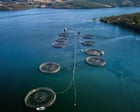
More than 150,000 underwater explosives have been deployed to deter seals at Tasmanian salmon farms since 2016 because open-net aquaculture concentrates high-value fish inside flexible pens while acoustic deterrents act as a fast, reactive shield against predator losses. When thousands of marketable fish sit inches from flexible mesh, a single seal incursion can trigger bruising, torn netting, secondary infections, and immediate write-offs. Operators reach for underwater percussion because physical containment takes months to re-engineer, whereas a blast pushes a predator away in seconds.
Across decades of watching resource industries wrestle with biological risk, one pattern repeats until margins force a reckoning. Containment systems are almost always designed for average weather and predictable biology, not for wild animals learning that a fenced pantry is easy to open. In marine farming, the perimeter is cloth and rope suspended in moving water. Seals do not read permit conditions or corporate sustainability pledges. They read calories, current, and opportunity.
Why Open Pens Turn Predators Into an Accounting Problem
Commercial salmon farming relies on scale. Stocking millions of fish across coastal leases spreads fixed costs across tonnage, keeping unit production competitive against land-based alternatives and distant supply regions. Yet that same concentration creates an irresistible attractant. For a wild seal, a pen full of slow-moving, lipid-rich salmon is not a conservation dilemma. It is a stationary buffet.
The financial damage rarely stops at the fish a seal actually swallows. A predator pressing against flexible netting leaves puncture wounds and blunt-force trauma across dozens of surrounding fish. Even when the net holds, stressed stock stop feeding, lose condition, and become vulnerable to opportunistic pathogens. A bad week of predator pressure can quietly erase a quarter's operating margin before a single fillet reaches a processing line.
Farm managers know that dead or injured fish cannot be invoiced. Once a seal starts working a lease line, crews face a stark choice between absorbing mounting mortality or intervening immediately. Waiting for a multi-year engineering overhaul makes no sense when harvest weight is slipping away day by day.
From an industry standpoint, underwater explosives sit at the intersection of urgency and habit. They require minimal lead time compared to mooring redesigns, and they deliver an immediate physical shockwave that breaks a seal's approach. Over more than 150,000 deployments since 2016, that tally reflects not a single reckless spree, but thousands of repeated tactical responses stacked across years of routine operations.
How Underwater Deterrents Actually Work in Water
Sound behaves differently beneath the surface than it does in open air. Water is roughly eight hundred times denser than air, and acoustic waves travel more than four times faster. A sharp underwater detonation creates a rapid pressure spike and a loud acoustic transient that travels far beyond the immediate pen edge.
To a seal, that sudden pressure pulse is painful and disorienting. The immediate reflex is flight. The animal bolts from the net wall, temporarily halting attacks and giving farm crews breathing room to inspect pens and repair minor snag points.
Yet deterrence in the wild is never purely mechanical. Animals learn. Over time, repeated exposure to predictable or non-lethal stimuli can produce partial habituation, especially if the reward on the other side of the noise remains high. A seal that gets blasted once might stay clear for days. A seal that gets blasted repeatedly without suffering fatal harm may test how close it can swim before the next charge goes off.
Consider a hypothetical example to see how habituation reshapes behavior on a farm site. Imagine a single lease where crews fire underwater charges whenever a dark silhouette appears near the outer walkway. During the first month, sightings drop sharply and bite marks fade. By month four, an older bull learns that charges only fire when boats are visible or during daylight shifts, prompting nocturnal approaches when acoustic coverage is thinner. Nothing in that shift requires advanced reasoning; basic conditioning explains why a blunt deterrent eventually meets diminishing returns.
That dynamic explains why counts climb into the hundreds of thousands. A deterrent that solves today's incursion rarely permanently rewrites local predator habits. It buys time.
The Supply Chain Math Behind Blast Reliance
Understanding why underwater explosives became a standard tool requires looking at capital allocation inside aquaculture firms. Upgrading marine infrastructure is slow, capital-intensive, and tied to strict marine approvals. Replacing pen arrays, re-tensioning anchor grids, or retrofitting deeper barriers competes directly with smolt procurement, feed contracts, and processing upgrades.
Insurance and lender expectations also shape behavior. When underwriters look at biological loss ratios, they want evidence of active risk mitigation. A documented protocol using approved deterrents looks concrete on paper, even when managers recognize its limits on the water.
What Physical Barriers Miss and Where Engineering Stalls
Whenever acoustic deterrents draw scrutiny, the obvious counter-argument is simple: build better fences. If seals cannot reach the fish, explosives become irrelevant. In practice, keeping seals out of open-water pens is an engineering tug-of-war with few clean wins.
Heavy-duty tensioned nets and secondary exclusion barriers can block direct bites when properly rigged and maintained. Yet heavier netting increases hydrodynamic drag. Stronger currents push harder against the entire pen structure, straining shackles, bridles, and seabed anchors. A barrier designed to stop a four-hundred-pound seal also has to survive winter swells without ripping loose and trapping the very animals it was meant to keep out.
Biofouling adds another layer of friction. Algae, barnacles, and hydroids settle on submerged mesh within weeks, choking water exchange. Reduced flow lowers dissolved oxygen inside the pen, forcing operators to clean or swap nets more frequently. Every extra lift or dive operation introduces new chances for human error and net tears.
Double-netting helps in calmer sites, and rigid or semi-rigid collar systems have improved durability in newer installations. Still, no physical enclosure is immune to sustained mechanical stress, rogue debris, or determined predators probing seams and corners. Calling physical barriers a complete fix ignores the real trade-offs between predator exclusion, fish welfare, and structural survivability.
The Hidden Cost of Acoustic Spillover
Underwater blasts do not respect lease boundaries. Sound radiates outward, and while operators aim to keep charges localized, acoustic energy inevitably reaches non-target species. Dolphins, whales, reef fish, and invertebrates share coastal waters with farmed salmon.
Even when direct injury is rare, repeated noise pulses can disrupt foraging, communication, or movement corridors. Regulators and coastal communities have grown increasingly skeptical of high-frequency or high-impulse acoustic tools precisely because sound is hard to fence in.
For farm operators, that creates a squeeze. Regulators press for lower acoustic impacts, while predators keep testing the pens. Cutting blast counts without replacing the underlying protection leaves farms exposed to sudden spike losses.
Rethinking Perimeter Control Without Pretending There Is an Easy Fix
Moving away from heavy reliance on underwater explosives requires treating predator control as a system design problem rather than a nightly patrol chore. Site selection matters more than most post-hoc fixes admit; leases situated along natural seal transit lanes or close to haul-out colonies face chronic pressure that no single gadget can erase.
Stocking density and pen geometry deserve closer scrutiny as well. Tighter, deeper, and structurally stiffer containment units reduce the slack mesh seals use to leverage fish toward the surface. Pairing physical reinforcement with targeted non-lethal monitoring—such as sonar tracking, real-time perimeter sensors, and rapid net-repair teams—can catch breaches before losses compound.
None of these measures eliminates risk. Stronger barriers cost more upfront, stricter siting narrows available water space, and non-lethal monitoring still requires disciplined crews in foul weather. The uncomfortable truth behind more than 150,000 underwater explosives since 2016 is that cheap, immediate deterrence filled a gap left by imperfect containment. Until marine farms can lock down their perimeters without turning coastal waters into an acoustic hazard, every blast remains a symptom of an unfinished containment problem.