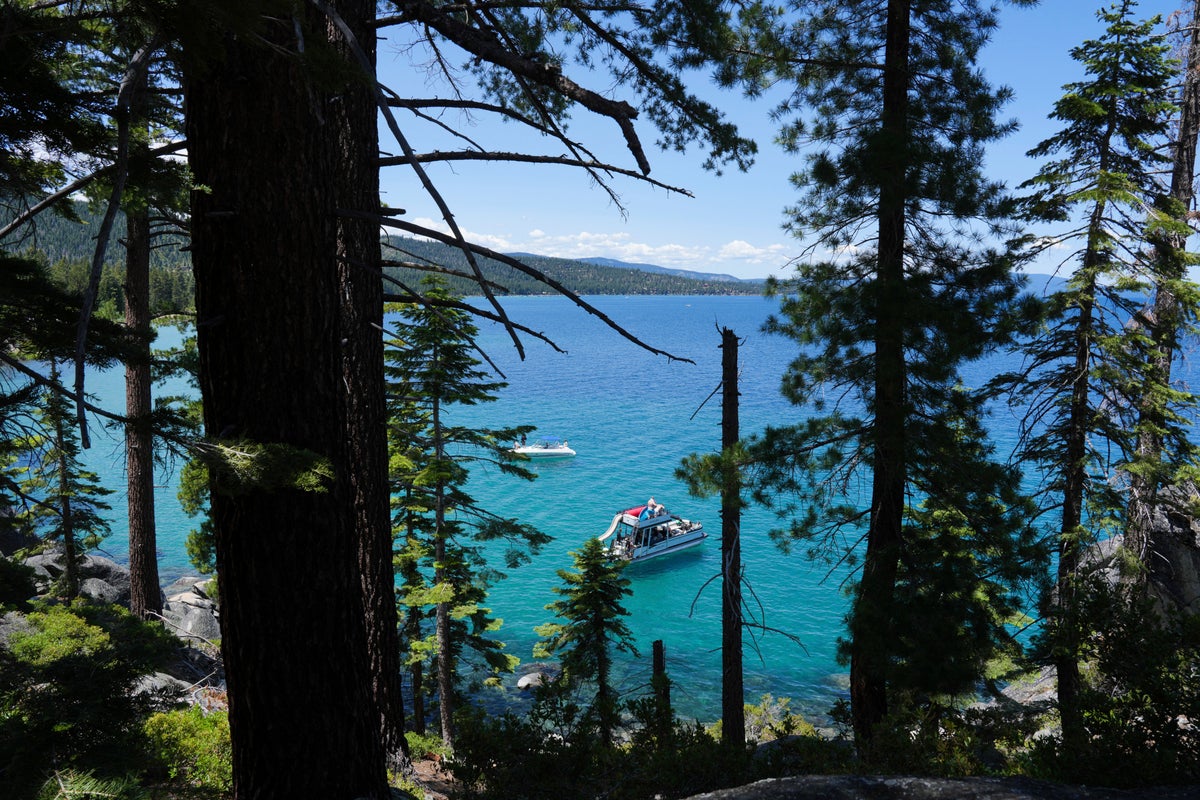
The local headlines are screaming about a "theft" of resources. They want you to believe that every time a chatbot answers a prompt, a lightbulb flickers out in a Tahoe cabin. It is a seductive, populist narrative: the big, bad silicon giants are sucking the life out of the Sierra Nevada to power their digital hallucinations. It is also fundamentally wrong.
Most reporting on the "diversion" of energy from Lake Tahoe to data centers ignores the physics of how power grids actually function. They treat electricity like water in a bucket—if someone takes a scoop here, there is less for the person over there. But the grid is not a bucket. It is a high-pressure ecosystem that has been stagnant for decades, and AI is the first thing in a generation actually forcing it to modernize. Read more on a connected issue: this related article.
The Grid Was Already Broken
Critics claim that data centers are "straining" a delicate system. I have spent years looking at utility load profiles, and the truth is the system was already rotting. The American electrical grid is a patchwork of mid-20th-century technology held together by duct tape and hope.
Before the AI boom, utilities had zero incentive to upgrade. Why spend billions on infrastructure when demand was relatively flat? By bringing massive, consistent loads to the table, data center operators are doing what regulators couldn't: they are providing the capital expenditure required to rebuild the backbone of our energy economy. Further analysis by TechCrunch delves into similar views on this issue.
When a provider like NV Energy or PG&E signs a deal with a massive data cluster, that contract often includes mandatory infrastructure build-outs. Substations get upgraded. High-voltage lines get replaced. These are improvements that benefit the "displaced" residents of Tahoe far more than a stagnant grid ever would. You aren't losing power to a server farm; you are finally getting a grid capable of supporting a 21st-century life.
The Baseload Fallacy
The "lazy consensus" argues that we should prioritize residential heating and local tourism over "useless" computations. This creates a false dichotomy between "real" energy use and "digital" energy use.
Electricity is a commodity. Like any commodity, it flows toward the most efficient and highest-value use case. Tahoe’s energy "diversion" is actually a rebalancing. Data centers provide something called "baseload demand." Unlike a ski resort that uses massive amounts of power for three months and then goes dark, or a vacation home that only draws power on weekends, a data center is a steady, predictable customer.
Predictability is the holy grail for grid stability.
- It allows for better integration of renewables.
- It reduces the need for "peaker plants"—those dirty, expensive gas turbines that only kick on when everyone in Tahoe turns on their heaters at once.
- It creates a floor for energy prices that actually keeps long-term costs down for everyone else.
If you remove the data centers, you don't get cheaper power for Tahoe. You get a more volatile, more expensive, and less reliable grid because the "anchor tenant" is gone.
The Hidden Efficiency of Virtualizing the Sierra
Let’s talk about the carbon footprint, since that is usually the next club used to beat the industry. The argument goes: "AI is burning coal to generate memes."
This ignores the massive displacement of physical waste. I’ve watched companies transition from sprawling, inefficient on-premise server rooms—which are notorious for leaking heat and wasting energy—to hyper-scale data centers. A single state-of-the-art facility in the Reno-Tahoe industrial corridor is orders of magnitude more efficient than the thousands of smaller, unoptimized cooling systems it replaces.
Furthermore, these data centers are the primary drivers of new solar and geothermal investment in the region. Tech companies aren't just taking power; they are the only ones with the balance sheets to sign the 20-year Power Purchase Agreements (PPAs) that make new green energy projects bankable. Without the "AI threat," those solar farms in the Nevada desert simply wouldn't exist.
Why Your "Local" Perspective is Skewed
"People Also Ask" columns are currently filled with variations of: Will AI make my power bill go up?
The honest answer? Your bill is going up because of climate change, aging transformers, and forest fire litigation—not because of a GPU cluster three counties away. To blame AI is to fall for a classic corporate shell game. Utilities love it when you blame the "tech bros" because it distracts you from the fact that they haven't cleared brush away from power lines in ten years.
I have seen this play out in the Pacific Northwest and in Northern Virginia. The arrival of big tech is always met with NIMBYism masked as environmentalism. Then, five years later, the tax base has doubled, the schools are funded, and the grid is more resilient than ever.
The Brutal Reality of Energy Competition
We need to stop pretending that energy is a local birthright. If you live in the Tahoe basin, you are part of a global market. The idea that "Tahoe's power" belongs to Tahoe is a charming sentiment from 1920 that has no place in a globalized economy.
Energy will always go where it is most productive. Right now, the global economy has decided that training a model to solve protein folding or optimize supply chains is a more productive use of a kilowatt-hour than heating a 6,000-square-foot second home that sits empty 40 weeks a year.
That is not a tragedy. That is progress.
The Risks We Won't Admit
Is there a downside? Of course. The "contrarian" take isn't that there is no cost; it's that the cost is worth it.
The risk is not that we run out of power. The risk is that we fail to build fast enough to keep up with the demand. If we let the "Save Tahoe's Power" crowd win, we don't save the lake. We just guarantee that the infrastructure remains fragile, the energy stays dirty, and the economic benefits of the AI revolution move to a different state or a different country.
We are currently in a race to build the most dense, most efficient energy-to-intelligence pipelines on the planet. Northern Nevada and the Sierra region are the front lines of that race. You can either be the region that powered the future, or the region that complained about it while sitting in the dark.
Stop Asking the Wrong Question
Stop asking how much power AI is "taking" from us.
Start asking why our regulatory bodies have made it so difficult to generate and transmit power that a few data centers cause a localized panic. The bottleneck isn't the AI. The bottleneck is a bureaucratic refusal to build.
If you want to save Tahoe, stop protesting the data centers. Start demanding the deregulation of geothermal permits. Start demanding the fast-tracking of transmission lines. Start realizing that the "diversion" of energy isn't a theft—it's a wake-up call for a region that has been coasting on 50-year-old laurels.
The servers are staying. The lights are staying. The only thing that needs to go is the delusion that we can power a future-facing world with a past-facing mindset.
Fix the grid or get out of the way.