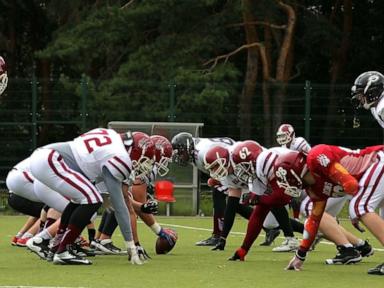
The humidity hits like a wet wool blanket at six in the morning. Out on the practice fields, before the sun clears the tree line, the grass is heavy with dew, holding the scent of cut lawn and damp earth. There are no lights yet. No roaring crowds, no pyrotechnics, no multi-million-dollar broadcast graphics. Just the dull, rhythmic thud of cleats beating against the dirt.
NFL training camp has begun.
To the casual observer scrolling through headline clips, this week is merely a prelude. It is a collection of fifteen-second videos showing quarterbacks throwing passes in shorts, coaches barking through bullhorns, and pristine helmets gleaming in the July sun. The calendar says summer, but for ninety men on every roster, the year has suddenly shrunk to the width of a white sideline marker.
Underneath the highlight reels lies a brutal, quiet economy.
Consider a hypothetical fringe linebacker, an undrafted kid from a small Midwestern school trying to hang onto the 53-man roster. Let us call him Marcus. Marcus did not fly first class to get here. He arrived in a battered sedan with two duffel bags, a foam roller, and an aching right knee he tells no one about. For Marcus, training camp is not a soft launch of a glamorous season. It is a daily trial where every single repetition on the field carries the weight of a mortgage payment, a career, an identity.
Beside him stands a veteran starter with a forty-million-dollar contract guaranteed. They wear the same jersey color. They eat at the same cafeteria tables. Yet their reality is separated by a chasm of absolute uncertainty. One bad step, one torn ligament on a Tuesday afternoon drill in ninety-five-degree heat, and Marcus is back home selling insurance by October. The veteran goes to rehab with a guaranteed check.
This is the hidden tension of late July.
The Heat Index of Ambition
In the corporate world, onboarding is soft. You get a lanyard, a laptop, and a stack of welcome slides. In professional football, onboarding is a physical beatdown.
Pads crack. Whistles slice through the thick air. The playbook, a thick digital binder filled with hundreds of complex schematics, must be memorized until it becomes instinct. A player has three seconds to read a defensive coverage, process three distinct pre-snap shifts, and execute a precise route without hesitating. Hesitation looks like laziness on film. Laziness gets you cut.
We often talk about professional sports through the lens of statistics and salary caps. We calculate passer ratings and fantasy projections as if these men were digital avatars in a video game. But stand fifteen feet from the offensive line drill during a full-contact team period, and the illusion vanishes.
You hear the gasp of air forced out of a man’s lungs as a three-hundred-pound defensive tackle strikes his chest plate. You see the salt rings dried into the collar of a coach's shirt who has been awake since four in the morning breaking down red-zone tendencies. The air smells of sweat, athletic tape, and burning grass.
It is exhausting just to watch.
The Numbers Game Nobody Wants to Talk About
Every NFL team enters late July with ninety players on its roster. By late August, that number must drop to fifty-three.
Do the math across thirty-two franchises. That means nearly twelve hundred men who poured their lives into this game—who sacrificed their joints, their youth, and their educations—will be handed a plane ticket home before the first official regular-season kickoff.
That is nearly sixty percent of the summer workforce purged in a matter of weeks.
Total Camp Roster: 90 Players
Final Roster:      53 Players
Cut per Team:      37 Players
Total League Cuts: ~1,184 Players
The process is surgical. A low-level staffer approaches a player in the dorm or dining hall and tells him to bring his playbook to the front office. The phrase is always the same, quiet and polite: "Coach wants to see you, and bring your iPad."
Inside those meeting rooms, dreams do not die with a bang. They die with a brief handshake, a thank-you for the hard work, and a bus pass to the airport.
Why We Cannot Look Away
Why do millions of us tune in to watch men run around in practice gear during the dead heat of summer?
It is not just because we miss football after a long, dark spring. It is because training camp is one of the few remaining places in modern life where raw meritocracy and human vulnerability collide so visibly. There are no participation trophies in July. There are no soft landings. You either earn the spot or you give it to the man standing behind you.
We watch because we want to see who breaks and who ascends. We want to see the thirty-second-round longshot beat the odds and make the team, just as much as we watch to see if the reigning champions still have the hunger to do it all over again.
The sun sets over the practice field, casting long, dark shadows across the turf. The players trudge toward the locker rooms, their pads clanking together, feet dragged down by sheer physical exhaustion. Tomorrow, the alarm will ring again at five-thirty in the morning. The heat will return. The whistles will blow.
And somewhere on the far field, an unknown kid will tie his cleats, take a deep breath of the humid air, and run until his lungs burn, praying that today is not the day he gets called into the office.