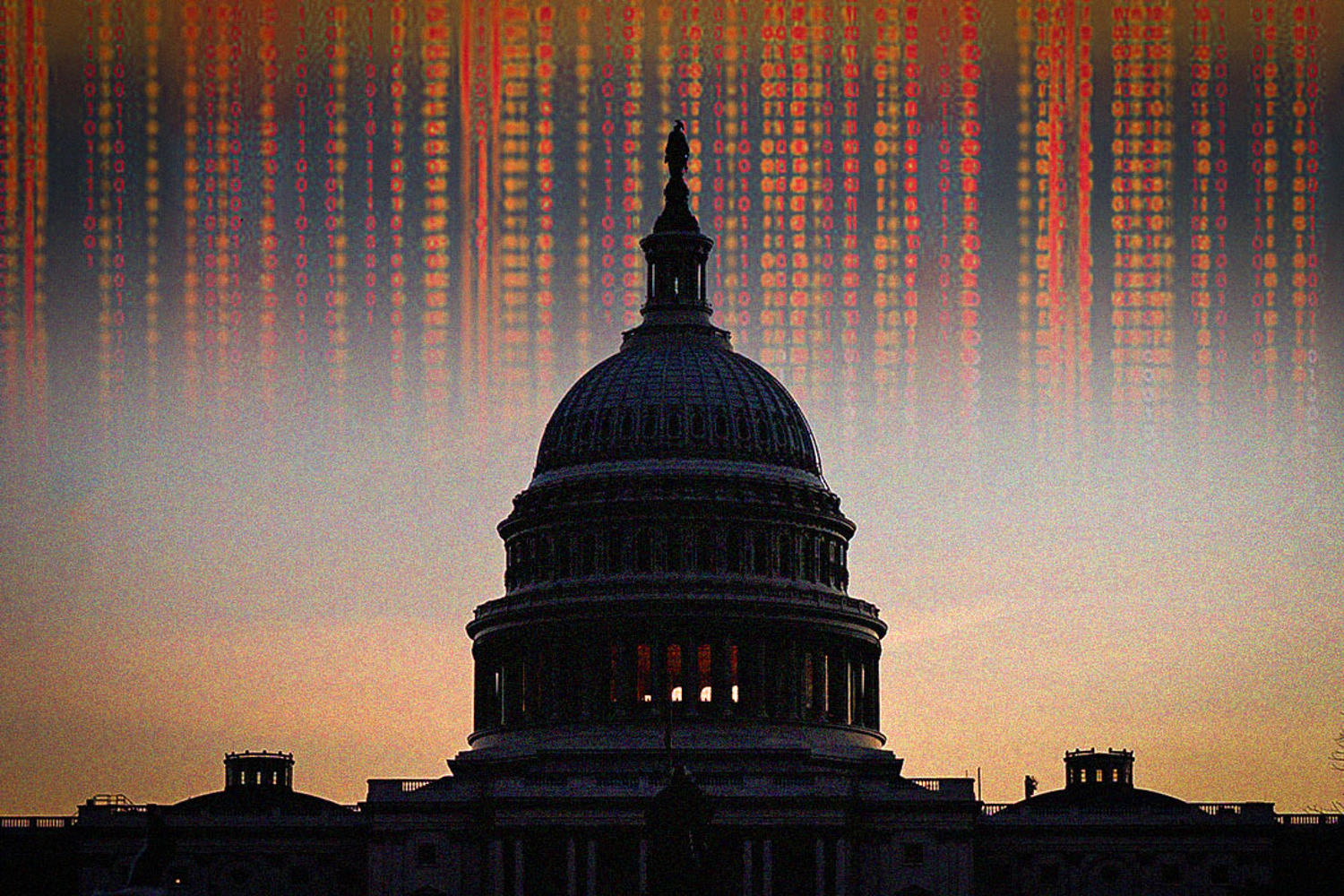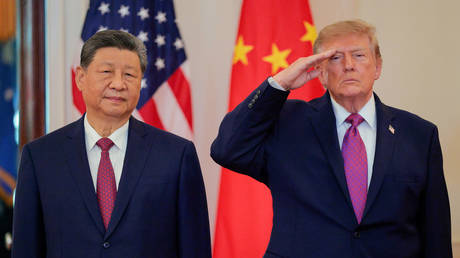
When Donald Trump and Xi Jinping meet across high-stakes diplomatic tables, the public theater usually fixates on agricultural tariffs, rare earth minerals, and the perpetual geopolitical friction over Taiwan. Yet beneath the usual posturing lies a far more consequential theater of competition: the race for dominance in artificial intelligence, or what Washington officialdom has taken to calling superintelligence (SI).
The framing of this competition is rarely understood with the cold clarity it requires. Headlines routinely herald vague notions of bilateral cooperation or safety channels, suggesting that the two superpowers might jointly manage the trajectory of next-generation algorithms. This is an illusion. Behind closed doors, treasury officials and policy architects are running a high-stakes race where neither side has any intention of slowing down. If you liked this post, you should look at: this related article.
To understand why genuine technological détente remains structurally impossible, one must examine the mechanics of power in the twenty-first century. Compute is the new petroleum, and foundational models are the ultimate strategic deterrent. When Treasury Secretary Scott Bessent outlines bilateral talks aimed at evaluating advanced models before release or maintaining human control over autonomous systems, official rhetoric masks an unyielding reality. The United States maintains a calculated lead in cutting-edge training capacity, hardware manufacture, and model architecture. Washington's stated policy is not to share the crown jewels or decelerate its own progress.
The structural incentives driving both capitals point toward permanent rivalry rather than convergence. For Beijing, domestic stability and technological self-reliance require closing the hardware gap imposed by American export controls. For Washington, maintaining a multi-year advantage in frontier intelligence is viewed as an existential requirement of national security. When two nations view the same capability as the ultimate arbiter of future economic and military supremacy, diplomatic channels do not dissolve competition; they merely institutionalize the rules of engagement for a technological cold war. For another perspective on this event, refer to the recent coverage from Wired.
Consider the mechanics of the safety frameworks currently being negotiated. Establishing an incident communication channel or exchanging testing methodologies sounds reassuring on paper. In practice, it resembles the nuclear risk-reduction mechanisms of the twentieth century. These lines exist not to halt the arms race, but to prevent a catastrophic, miscalculated escalation resulting from autonomous systems behaving in unforeseen ways. They are guardrails for a high-speed collision course, not an agreement to apply the brakes.
The divergence in terminology employed by political leaders reveals the depth of the ideological split. While international bodies and tech researchers default to artificial intelligence, the current administration has aggressively pushed the term superintelligence, rejecting the modifier artificial on the grounds that these systems represent an authentic, operational reality of immense power. This linguistic shift is more than mere semantics. It signals a shift in how political leaders conceptualize the stakes: these are not software tools; they are strategic assets equivalent to sovereign wealth or nuclear arsenals.
Meanwhile, industry dynamics continue to outpace diplomatic timetables. Private sector labs in California and competing state-backed clusters across China are bound by competitive pressures that penalize hesitation. If an enterprise pauses its training runs for ethical alignment or regulatory compliance while its rival surges ahead, market forces and strategic imperatives alike punish the laggard. Consequently, safety protocols negotiated by diplomats function primarily as public relations armor, while the actual engineering race accelerates unchecked in subterranean server farms.
Congressional oversight and midterm political shifts add another layer of friction, ensuring that neither administration can afford to appear soft on technological leakage. Lawmakers from both parties view any form of technical integration with deep suspicion. The prevailing consensus in Washington treats every gigawatt of compute deployed and every algorithmic breakthrough achieved as a zero-sum metric.
As leaders gather for international summits, the gap between diplomatic theater and technical reality widens. The agreements forged are thin veneers over a deep structural chasm. Both superpowers are locked into an upward spiral of capability accumulation, bound by the terrifying logic that coming in second place means forfeiting the architecture of the next century. The dialogue will continue, the safety memos will be signed, and the race toward superintelligence will accelerate without pause.